





ETFs – Page 2
-
 News
NewsStudy reveals impact of index provider engagement on corporate climate policy
‘Our results show that firms react to index provider requests, at least if they commit a credible threat of exit,’ say MIT sustainable finance experts
-
 Special Report
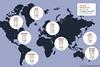
Global ETFs Industry in August 2023
At the end of August 2023, the Global ETF industry had 9,374 ETFs, with 19,378 listings, assets of US$10,359 Bn, from 671 providers on 79 exchanges in 63 countries. At the end of August 2023, the Global ETF/ETP industry had 10,967 ETFs/ETPs, with 22,593 listings, assets of US$10,595 Bn, from 707 providers on 81 exchanges in 63 countries.
-
 Special Report
ETFs Guide 2023: Innovation challenges concentration as investors spread their ETF wings
ETFs’ steep upward trajectory continues, driven, as industry participants note, by their low cost, simplicity, and flexibility as an allocation tool. Globally the value of assets invested in ETFs, some $10.7trn (€10trn) at the end of August 2023, is 17.5% higher than at the same point in 2022, according to consultancy ETFGI. In Europe the increase was greater, at 20.8%, but from a much smaller base, with total investment in ETFs now standing at $1.7trn, with the lower take-up still being attributed to less favourable tax treatment.
-
 Special Report
Active ETFs power ahead
While active managers are out of favour, their strategies embedded in an exchange traded fund package are gaining traction. In fact, they are outpacing passive ETFs as investors look for liquidity and robust risk-adjusted returns with a relatively low price tag.
-
 Special Report
Bonds are back and aligned with a greener future
Bonds are back in vogue and, of the current fixed income opportunities available, we believe euro-denominated investment-grade credit offers one of the most compelling risk/reward profiles.
-
 Special Report
The hidden power of an ESG approach to sector investing
Adding an ESG filter to a sector ETF could help investors mitigate risk and may increase returns – while improving ESG and carbon intensity scores.
-
 Special Report
Case study: Varma - A bespoke approach to ETFs
Varma, the €57.4bn Finnish pension insurer, has been at the forefront of sustainable investing for several years and has used exchange-traded funds to get there.
-
 Special Report
Case study: Caja de Ingenieros Gestion - The rise of smart beta
The Spanish pension provider Caja de Ingenieros Gestion serves more than 215,000 members, predominantly from the Spanish engineering sector, using an investment style based on independent analysis, with a bottom-up approach.
-
 Special Report
Faith-based investing: how to build Shariah-compliant investment portfolios
Ethical investing can be a nuanced task, as aligning one’s investment principles with their beliefs can often be contradictory. On the one hand investors want to maximise their return and minimise their risk to ensure they benefit from the best possible investment outcome. However, on the other hand, they may want to ensure they don’t fund any enterprise which derives revenue from provision of ‘unethical’ goods or services.
-
 Special Report
Case study: Ilmarinen - Building a climate-focused future
Finland’s second-biggest pension provider is a keen investor in exchange-traded funds (ETFs), having allocated more than €6bn to a range of equity vehicles in recent years.
-
 Special Report
Case study: How CalSTRS uses ETFs to support the energy transition
The California State Teachers’ Retirement System (CalSTRS) manages US$315.6bn (€294.3bn) on behalf of teachers and education staff in the state of California. Environmental considerations and the transition to a low-carbon economy are high priorities for the pension fund, which is one of the biggest public sector funds in the US.
-
Special Report
Case study: MHPF - Searching for greater transparency
Transparency is one of the most important elements of exchange-traded funds (ETFs) for many investors. For some, however, there is always room for improvement.
-
 Special Report
Innovation and choice challenge the established players
The wonderful breeding ground of ETFs means that you can now allocate to any sector or specialism you like, from artificial intelligence to recycled gold; export-tilted Japanese companies to carbon credits. New launches this year include Texas Equity, following the fortunes of companies headquartered in the Lone Star State; the euphoniously named Clouty Tune, which brings global exposure to music, entertainment and media; and Breakwave’s Tanker Shipping ETF, which tracks an index for crude oil tankers.
-
 Special Report
Decarbonisation outcomes: preparing portfolios for a low-carbon world
The climate challenge is clear, and more investors are looking to include climate investing solutions in their portfolios. Next to funding climate solutions and enabling negative emissions, the decarbonisation of portfolios is one of the most important objectives for climate investing.
-
 Special Report
Focus returns to fixed income ETFs
Fixed income is back, baby! In the seven months to the end of July 2023, flows into European-domiciled fixed income exchange-traded funds were €39bn compared with €14bn for the same period last year, according to Morningstar.
-
 Special Report
Sustainable fixed income products gain ground
Institutional investor exposure to sustainable investment products has declined in recent months as macroeconomic developments have driven a shift back into fixed income products.
-
 News
NewsDutch pension funds’ move to segregated mandates knock alternative funds
EFAMA sees gradual shift towards ETFs and index funds
-
 News
NewsIlmarinen anchors biggest ETF launch yet
Finnish pensions giant prompts creation of tracker fund based on new MSCI climate index – switching €1.86bn into new ETF
-
 News
NewsEuropean roundup: Consolidated tape could attract capital into smaller markets, says EFAMA
Plus: PEPP platform launched by UK technology provider
-
 News
NewsUK roundup: The Pensions Regulator to be reviewed by Mary Starks
Plus: Smart Pension adds JP Morgan ETF to sustainable default growth fund


