






ETFs – Page 4
-
 Special Report
Why investors use sustainable fixed income ETFs
Sustainable fixed income investing is growing at a rapid rate as investors increasingly seek to address climate risks, meet new regulations, and adapt to new investment preferences. The majority of investors who are choosing indexed exposures to build their sustainable portfolios are currently following SRI indices, with 93% of AUM in sustainable fixed income UCITS ETFs tracking such indices.
-
 Special Report
ETFs offer a firmer footing in shifting sands
The ETF market has experienced a sea change over the past few months. While net inflows of $463.8bn (€463.8bn) into ETFs and ETPs listed globally during the first half of 2022 are the second highest on record, the total value of assets in these products fell from $10.3trn at end-2021 to $8.9trn at the end of June 2022, according to research firm and consultancy ETFGI. There was a 6.4% fall in value during May alone.
-
 Special Report
Post-Brexit flux in Europe
Although Brexit has changed the dynamics of the European asset management landscape, the checklist for choosing a location for an exchange-traded fund (ETF) has not altered: a solid legislative foundation, requisite skillsets, favourable tax treatment and cross-border distribution acumen.
-
 Special Report
Inflation: expectations … and reality
In 2022, inflation surprised only on the upside, and surrounding economic conditions became increasingly uncertain. As short-term inflationary pressure has moderately spilled into inflation expectations – 10-year German inflation breakevens rose from 0.5% to more than 2% in 24 months1 – our DWS Long View capital market expectations for the next decade remain below historical averages.
-
 Special Report
Transparency: getting it taped
It’s much harder for European ETF investors to get detailed information on liquidity, volumes and best execution than it is for their US counterparts. That’s because this data isn’t aggregated into a consolidated tape as it is on the other side of the Atlantic.
-
News
New thematic ETFs seen increasingly as active investment vehicles
Investors also keen to see more focus on social issues, according to poll
-
News
Thermal coal mining bond in ESG ETF but now sold, data coverage rectified
Bond was issued by SPV that was initially not linked to the parent, Siberian Coal Energy JSC
-
News
BlackRock: Institutions to help drive global bond ETFs to $5trn by 2030
Asset manager upgrades forecast ‘despite the most challenging fixed income market in decades’
-
News
Varma gains €300m exposure to low-emission Japanese stocks via tailored ETF
Finnish pensions firm seeds Nomura-run exchange-traded fund amid low availability of ESG ETFs in Japan
-
News
Amundi sets out post-Lyxor acquisition AUM aims
Lyxor is now a subsidiary of Amundi and in a second phase will be merged into Amundi
-
 Special Report
From fixed weights to all-weather: rethinking the 60/30/10 portfolio
In the current environment of low interest rates, policy uncertainty, large dispersion of global growth outlooks and gyrating equity markets, asset allocation is one of the foremost considerations for investors. Fixed weight portfolios such as the 60/40 portfolio (ie, 60% equities and 40% fixed income) have been widely used – the main benefits being their conceptual simplicity, ease of implementation and, historically, the diversification benefits across equity and fixed income returns.
-
 Special Report
Bonds, boutiques and Bitcoin: ETF trends in 2021
The extreme events of 2020 sent ripples through the exchange-traded fund (ETF) market. Highly volatile markets in the first quarter gave way to a huge rally later in the year, with thematic products in particular reaping the benefits of significant inflows.
-
 Special Report
ETFs Guide 2021: A story of scale, scope and sophistication
In tandem with continued strong inflows, which you will see illustrated in granular detail in the data supplied by research and consultancy firm ETFGI at the back of this year’s ETF Guide, the scope of ETFs’ role is broadening with the adoption of what one asset manager describes as a ‘whole portfolio’ approach.
-
 Special Report
ESG outperformance: not about one factor
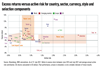
The recent outperformance of many ESG indices relative to broad market indices is well documented. The resilience of ESG strategies during the COVID-19 crisis has broadened the appreciation and appeal of ESG.
-
 Special Report
Theme regime: thematic investing and asset allocation
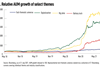
Portfolio construction has come a long way from the early work of Markowitz back in the 1950s. In the late 1990s and early 2000s, investors found more sophisticated quantitative methods to assess risk, expected return and the associated investment opportunities through mathematical machinery such as factor modelling.
-
 Special Report
Semi-transparent ETFs: balance and confidence
For now, active semi-transparent or non-transparent exchange-traded funds are likely to remain unique to the North American and Australian investment markets; their European counterparts appear reluctant to take the plunge, although some industry experts believe this will change in time.
-
 Special Report
Enhanced index strategies offer the best of both worlds
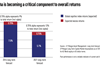
Passive investing strategies have been some of the biggest beneficiaries of above-average equity market performance over the past decade: they produced strong returns for investors without needing to take any active risk to generate performance.
-
 Special Report
The ETFs that could gain from the Biden presidency
US President Joe Biden has set out ambitious spending plans since taking office in January. Investors are looking closely at what this means for markets and monetary policy.
-
 Special Report
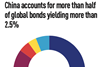
China bond ETFs: the path to a new opportunity
Historically, investors outside of China have struggled to access the country’s full range of unique investment opportunities. But this story is changing as policymakers seek to liberalise Chinese stock and bond markets to allow greater access to onshore Chinese investments.
-
 Special Report
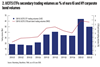
The European bond market is modernising
The European bond market is modernising at a rapid pace, and fixed income exchange-traded funds (ETFs) are playing a crucial role in driving this progress. ETF liquidity, price transparency and versatility are propelling many of the developments we see in the market today and are supporting a more robust and structured bond ecosystem.