







ETFs – Page 3
-
 Asset Class Reports
Equities – Thematic funds tap into future trends
Themes have long captured the imagination of retail investors. Now institutions are showing interest, despite the lack of clear definitions
-
News
German church schemes opt for passive high-yield strategy, exclude ETFs
The pension funds have switched to indexed products, partnering with Insight Investment and steering away from its active high-yield managers
-
 Special Report
IPE ETF Investor Survey 2022
IPE’s first survey of investors focusing specifically on ETFs, conducted between mid-July and mid-August 2022, drew responses from institutional investors across nine European jurisdictions, of which 24% were invested in ETFs. Respondents were located in Belgium, Denmark, Germany, Italy the Netherlands, Portugal, Spain, Sweden and the UK.
-
 Special Report
ETFs Guide 2022: Better tax treatment could prompt European ETF takeoff
First the good news: Globally, investment in ETFs continues to surge, with the first half of 2022 seeing the second highest inflows on record. The flexibility and ease of access they offer helped them play an instrumental role achieving the highest volume fixed income trading day being recorded in June, as $58bn of assets were moved from EM debt and high yield into government bonds (see p7). This helped cement ETFs’ position as an essential tool of the fixed income ecosystem.
-
 Special Report
Active ETFs: five myths debunked
Demand for exchange-traded funds (ETFs) has grown rapidly in Europe in recent years. While much of this growth has been driven by passive funds, research shows that investors are increasingly looking at active ETF strategies. Nevertheless, there are still lots of common misconceptions that are hindering the take-up of active ETFs. Here, we debunk the the most common myths about active ETFs.
-
 Special Report
Global emerging markets index investing: the case for an active component
Emerging market (EM) equities have an important role to play in broadly diversified institutional portfolios. Our data analysis shows that for investors who have a buy-and-hold strategy, an active component is needed to stay close to the benchmark because of trading costs and, more importantly, because of higher slippage costs by passive managers in downward markets.
-
 Special Report
Active ETFs: mixed fortunes
Tax efficiency and regulatory change have been the key drivers of the development of active exchange-traded funds in the US. As there are no similar tax benefits nor regulatory change in Europe, growth in this region has been limited.
-
 Special Report
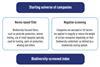
Adding to the biodiversity protection toolbox
Biodiversity is intricately linked with economic growth and development. Since the industrial revolution ecosystems have been under constant threat with the advent of large towns, cities and industrial complexes. The rate of deterioration has accelerated over time and we are now destroying natural capital at an unprecedented rate, which will have long-term consequences for economies, societies and the planet.
-
 Special Report
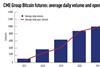
Crypto ETFs: exploring the keys to mass adoption
The ProShares Bitcoin Strategy ETF (BITO) made history last October as one of the strongest ever ETF launches, amassing more than $1bn (€1bn) in assets in just two days.
-
 Special Report
To Paris and beyond: capturing energy transition and climate investment opportunities with ETFs
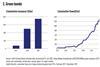
The climate emergency is arguably the greatest challenge of our lifetimes. We must use every tool at our disposal – including financial – to stand any chance of success. Thankfully, investors are ever more aware that incorporating climate in their portfolios can help them manage asset-specific risk, access opportunities from the shift to clean energy and achieve something meaningful with their money. And they are ever more aware they can do it in flexible, cost-effective ways.
-
 Special Report
New kids on the ETF block
Inflows into exchange-traded funds (ETFs) may have taken a hit in the latest bout of market turmoil, but this is not expected to deter new entrants from joining the fray. It is always challenging to break into a new market, especially one dominated by a handful of firms but, those players with innovative, specialised solutions and strategies are expected to make their mark.
-
 Special Report
From seed investor to prospective investor: the case for ETFs
Investor & manager trends
-
Special Report
Legal and regulatory developments: EU plays catch-up
While the European framework for establishing ETFs has not changed substantially in recent times, developments within the legislative bodies of the EU present a number of current and potential hurdles for ETFs in the short to medium term. This article will look at each legal development in turn. It is also important to note that the COVID-19 pandemic has highlighted a number of areas that need to be strengthened.
-
 Special Report
How green are green derivatives?
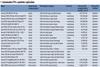
On 6 April 2022 the European Commission announced that derivatives, including futures, swaps and many other instruments routinely used by ETF providers, cannot be classified as ESG or sustainable or green in investment fund reports.
-
Special Report
RFQ platforms and the institutional ETF trading revolution
What do ETFs, RFQ and ESG all have in common? Aside from being some of the most popular acronyms in the history of financial services, the three-letter abbreviations for exchange-traded funds (ETF), electronic request-for-quote (RFQ) trading, and environmental, social and governance (ESG) driven investing, have all come together at the centre of a revolution in asset management.
-
 Special Report
Why investors use sustainable fixed income ETFs
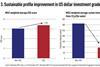
Sustainable fixed income investing is growing at a rapid rate as investors increasingly seek to address climate risks, meet new regulations, and adapt to new investment preferences. The majority of investors who are choosing indexed exposures to build their sustainable portfolios are currently following SRI indices, with 93% of AUM in sustainable fixed income UCITS ETFs tracking such indices.
-
 Special Report
ETFs offer a firmer footing in shifting sands
The ETF market has experienced a sea change over the past few months. While net inflows of $463.8bn (€463.8bn) into ETFs and ETPs listed globally during the first half of 2022 are the second highest on record, the total value of assets in these products fell from $10.3trn at end-2021 to $8.9trn at the end of June 2022, according to research firm and consultancy ETFGI. There was a 6.4% fall in value during May alone.
-
 Special Report
Post-Brexit flux in Europe
Although Brexit has changed the dynamics of the European asset management landscape, the checklist for choosing a location for an exchange-traded fund (ETF) has not altered: a solid legislative foundation, requisite skillsets, favourable tax treatment and cross-border distribution acumen.
-
 Special Report
Inflation: expectations … and reality
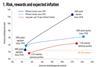
In 2022, inflation surprised only on the upside, and surrounding economic conditions became increasingly uncertain. As short-term inflationary pressure has moderately spilled into inflation expectations – 10-year German inflation breakevens rose from 0.5% to more than 2% in 24 months1 – our DWS Long View capital market expectations for the next decade remain below historical averages.
-
 Special Report
Transparency: getting it taped
It’s much harder for European ETF investors to get detailed information on liquidity, volumes and best execution than it is for their US counterparts. That’s because this data isn’t aggregated into a consolidated tape as it is on the other side of the Atlantic.


