

- Latest
- Countries
- Reports
- Pension Funds
- Investment
 Barings CEO Michael Freno: "The private credit opportunity extends well beyond direct lending"
 Index providers adapt IPO inclusion rules for SpaceX: the governance trade-offs for institutional investors
 Investors prepare for future equity markets, IPOs, and challenging governance models
 M&G Investments' Joseph Pinto pinpoints partnerships and the insurance win-win
- AI
- Research
- Events
- Podcasts
- Membership Options




Spain & Portugal Investment and Pensions
Spain: Reforms passed in 2022 introduced a simplified multi-employer pension scheme (PPES), which can be used by the self-employed, as well as so-called public-promoted pension plans (FPEPPs). Take-up has been limited though – in part attributed to a 40bps cost cap. There were 50 PPESs managing €952m by end-June 2026, with 1.2 million participants, but this equates to a very low account balance of just €810 per saver. The fund association INVERCO points to an increase in PPEP accounts in the first half of 2026 of over 88,000. VidaCaixa runs a PPES for the construction sector, which accounts for most of the activity in the sector – with over just under €240m in assets and 725,000 enrolled members by end-November 2025. Some 3.3 million Spanish workers are enrolled in workplace pensions overall. Total pension assets reached €42bn as of end-June 2026, with 10.6 million accounts. FEPPs do not appear to have got off the ground, although the government has identified five providers – Caser, BBVA, Ibercaja, Santander and VidaCaixa – which have reportedly set up 15 schemes between them.
Portugal: Portuguese pension assets amounted to just under €20bn as of end-March 2026, according to ASF, the insurance and pensions supervisor. Average annual returns to end-September 2025 for the country’s 238 funds were a meagre 2.3% and total assets barely moved over the previous 12-month period, registering just a 1% increase. This is unsurprising given the conservative asset allocation profile, with 47% in fixed income on average. The regulator reported successful IORP stress tests, however, with sufficient liquidity and shock absorbent capacity among domestic Portuguese funds.

Portuguese pension funds return 5.1% for 2025
2025 was a strong year for European equities, which had lagged US equities in most recent years, says WTW
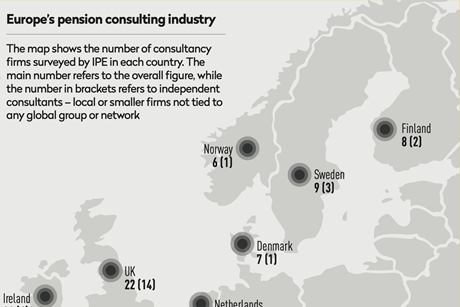
Trusted partners: Advising Europe’s pension funds
IPE’s survey of European consultants reveals a complex patchwork of client preferences

Dutch lawmakers under pressure to allow shareholder ‘say-on-sustainability’
Upcoming debate on CSRD transposition will reveal whether politicians follow in footsteps of Spain, Estonia and Switzerland

Spain: Pension policy in paralysis
Spain is nowhere near on track to enrol 13m of its citizens in occupational pensions over the next five years

Portuguese pension funds return 6.3% for 2024, despite low bond returns
Global equities made strong returns in Q4, but not enough to compensate for the low returns from bonds, says WTW

Spanish country report 2024: Pension funds eye a new rate environment
Buoyed by strong returns, pension funds have been lengthening the duration in their fixed-income portfolios

Private equity remains a key building block for pension schemes
While allocations vary, pension funds value solid returns and private equity’s role as a diversifier. Funds use PE to gain both domestic and international exposure.

Pension funds on euro fixed income: navigating the rate cycle
We asked pension funds in Spain, Germany and Finland about their current views on European fixed income and credit as the ECB looks carefully at the timing and sequence of its rate cuts

Portugal: Sticking to the pension promise
The country’s new government has vowed to increase retirement payments
Spain: Sweeping pension reforms fail to get off the ground
The country’s unstable political environment means pensions are not a priority

Spanish pensions report 2023: funds ride a wave of uncertainty
Diversification remains a key tool in pension fund portfolios

Spanish pension funds mirror global market surges with 2.3% return to June 2023
Asset allocation figures show that fixed income still dominates portfolios, although in declining proportions, with an average 55.3% allocation at end-June

Portuguese pension funds return 1.6% for Q2 2023
Global equities had the highest impact on performance over the quarter, with returns close to 6%, according to WTW
TOP SPANISH & PORTUGUESE PENSION FUNDS 2026
Pension fund/entity | Assets (€’000)
Spain
- Pensions Caixa 30 | 8,000,000
- LagunAro, EPSV | 8,000,000
- Geroa Pentsioak EPSV | 3,685,320
- PSE Grupo Endesa | 3,199,786
- Empleados Telefónica de España | 2,923,819
- BBVA Fondo de Empleo | 1,822,531
- Loreto Mutua M.P.S. | 1,389,000
- Santander Empleados | 1,085,143
- Empleados Iberdrola | 900,489
- Repsol II | 867,488
Portugal
- FEFSS | 41,947,000
- Grupo Banco Comercial Português | 3,488,912
- BPI Vida e Pensões | 3,439,000
- Novo Banco | 1,628,097
- Banco de Portugal - Beneficio Definido | 1,502,935
- Grupo EDP | 1,339,369
- Banco Santander Totta | 1,187,773
- CGD Pensões | 823,120
- Montepio Geral | 815,313
- Aberto Horizonte Valorização | 403,989
©IPE Research; View the Top 1000 European Pensions Funds 2026 for a comprehensive market overview

IPE BEST PENSION FUND IN SPAIN AWARD WINNERS
- 2025 - Geroa Pentsioak EPSV de Empleo Preferente
- 2024 - Pensions Caixa 21, Fondo de Pensiones
- 2023 - GM Pensiones | Pensions Caixa 30
- 2022 - GM Pensiones
- 2021 - GM Pensiones
- 2020 - Plan de Pensiones Nestlé
IPE BEST PENSION FUND IN PORTUGAL AWARD WINNERS
- 2025 - Fundo de Pensões Aberto BPI Acções
- 2024 - Ageas Pensões - Fundo de Pensões do Grupo EDP
- 2023 - FP Banco Santander Totta
- 2022 - FP Banco Santander Totta
- 2021 - Ageas Pensões | Fundo Pensões Banco Santander Totta
- 2020 - Ageas Pensões



Copyright © 1997–2026 IPE International Publishers Limited, Registered in England, Reg No. 3233596, VAT No. 685 1784 92. Registered Office: 1 Kentish Buildings, 125 Borough High Street, London SE1 1NP

Site powered by Webvision Cloud