

All articles by Carlo Svaluto Moreolo – Page 12
-
 Features
Perspective: Manager selection in a pandemic
The social distancing restrictions imposed to contain COVID-19 have made external asset manager selection more demanding, but investors are adapting
-
 Opinion Pieces
Talking to strangers
In his recent book, Malcolm Gladwell discusses how people’s natural lack of ability to detect lies can lead to unpleasant consequences.
-
 Interviews
On the Record: Investing in the time of COVID-19
We asked three institutions how they are working to tackle the pandemic, from an investment and organisational perspective
-
 Interviews
Strategically Speaking: Ambienta
In the early 1990s, when Nino Tronchetti Provera started his career at McKinsey, the management consultancy, sustainability in business seemed little more than a nice idea. But having graduated from Luiss University in Rome with a thesis on the subject, Tronchetti Provera believed in the disruptive potential of making businesses environmentally sustainable.
-
 Features
Briefing: Growth beyond COVID
The outlook for institutional investors may be gloomy, with the global economy in recession and interest rates stuck at extremely low levels.
-
 Opinion Pieces
Pension funds should reflect on their true purpose
With COVID-19 infection rates rising across Europe it seems clear that lockdowns are not over yet. Europe will suffer economically as well as socially and politically.
-
 Interviews
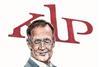
How we run our money: KLP
Aage Schaanning (pictured), chief financial officer at Norway’s Kommunal Landspensjonskasse (KLP), talks to Carlo Svaluto Moreolo about the fund’s risk framework
-
Features
Briefing: The long march to deleveraging
Global debt reached a new record during the first quarter of this year, reaching 331% of GDP, or $258trn (€229trn), according to the Institute of International Finance, the global association of the finance industry.
-
 Interviews
How we run our money: comPlan
Roman Denkinger (pictured), head of asset management at comPlan, tells Carlo Svaluto Moreolo about managing the fund’s portfolio during the COVID-19 crisis
-
 Interviews
On the record: Crisis talks
IPE asked three pension funds how they implemented their crisis communication strategies during the COVID-19 emergency
-
 Interviews
Interview: Dambisa Moyo on the geopolitics of global debt
When asked a simple question about global debt, economist and author Dambisa Moyo introduces a far more complex discussion about geopolitics.
-
 Opinion Pieces
The post-pandemic economy could be more of the same
There seems to be a consensus that COVID-19 will bring momentous change to the global economic order. Commentators point to several developments to support this idea.
-
 Special Report
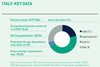
Italy: Pandemic paves the way for the next phase of reform
Italian policymakers will be under pressure to upgrade the three-pillar pension system over the coming years
-
 Country Report
Interview: Vincent Chaigneau, Generali Insurance Asset Management
‘We think it is very unlikely that we will witness a v-shaped recovery. The catch-up this summer will be strong, but demand will then be impacted by second-round effects’
-
 Interviews
On the record: Safety in asset-backed credits
Simon Davy, head of private markets at the UK’s Local Pensions Partnership, discusses the outlook for alternative credit
-
 Country Report
Italy: Ready for the challenge
Italy’s occupational pension funds are primed to deal with the after-effects of the COVID-19 pandemic
-
 Asset Class Reports
Credit: High yield managers embrace uncertainty
Managers are constructive about high yield, loans and alternative credit despite the volatile outlook
-
 Opinion Pieces
Growing debt levels spell trouble
Credit investors would be wise to reflect upon the growing debt burden weighing on the global economy.
-
 Interviews
How we run our money: ENPAB
Danilo Pone, CIO of ENPAB, the first-pillar scheme for Italian biologists, talks about the fund’s new proprietary asset allocation model
-
News
Italy’s Covip expects drop in contributions due to pandemic response
Padula calls for stronger fiscal incentives in order to encourage workers to restart contributing after the crisis