







Italian pension funds are working to adjust their operations to meet the requirements of the country’s occupational pension reform, which came into force in July.
The reform introduced auto-enrolment for new hires, life-cycle investment options for their contributions, portability of employer contributions and more flexible benefit payouts.
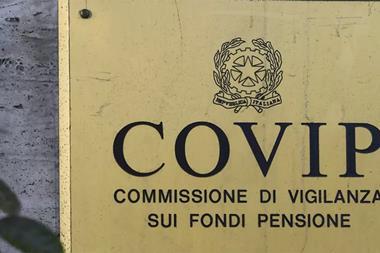
Lucia Anselmi, director general of pension regulator Covip, told IPE that pension funds are “working hard” to adapt to the new rules, including by designing new life-cycle options and “activating agreements” with asset managers.
The effects of the “structural” reforms were already visible before July, with membership steadily increasing, she said.
Industry-wide pension funds, known as Fondi Negoziali, recorded particularly “robust” growth, with membership rising by 10% in the first nine months of the year, according to figures published by Covip earlier this week.

The system has benefited from a “renewed focus on supplementary pensions” in the months leading up to the introduction of auto-enrolment, Anselmi said.
Covip is therefore “confident” that pension funds will complete the adjustments required by the reform by the end of the transition period in June 2027, she added.
During the transition period, the regulator is asking pension funds with multiple sub-funds to allocate automatically enrolled members to specific sub-funds according to their age when joining. “This represented the first phase of a life-cycle approach”, Anselmi explained.
Silvio Bencini, senior adviser at LCG Advisory, said life-cycle investment strategies were gradually gaining traction among pension funds, with younger members also encouraged by the strong performance of equity markets.
“More recently, the adoption of life-cycle strategies has also provided an opportunity for some pension funds to either launch new, higher-risk investment options, or to increase exposure to equities within existing ones,” he added.
For example, Prevedi, the pension fund for employees in the construction sector, has established a new sub-fund, Dinamico, with a 60% allocation to equities.
The pension fund for employees of BNL/BNP Paribas in Italy is restructuring its pension plans around four investment options under its Life Cycle Next initiative.
Previambiente, which serves workers in the environmental hygiene sector, and Fon.Te, the pension fund for the commerce sector, introduced life-cycle options for automatically enrolled workers on 1 October.
Andrea Nanni, partner at financial advisory firm Prometeia, said the reform could encourage greater risk-taking and long-term investment.

“In theory, the combination of life-cycle investment paths and benefit provisions directly offered by pension funds represents an ideal solution for increasing participation in more “aggressive” investment options – suitable for younger workers – and for capturing the illiquidity risk premium, thereby fostering investment in the real economy, including infrastructure,” he said.
Auto-enrolment could also improve coverage among younger workers. In Italy, fewer than one in three workers under 35 is enrolled in a supplementary pension scheme, Nanni added.
However, extending the portability of employer contributions to other types of supplementary pension schemes risks undermining the reform’s underlying objectives and could put industry-wide pension funds at a particular disadvantage, he said.
The reform also introduced a fixed-term annuity, paid over a specified number of years, unrestricted withdrawals and staggered instalment payments over a period of at least five years.
Bencini expects the new payout options to have a positive impact on assets under management by reducing the incentive for members approaching retirement to withdraw their savings.
Members are “showing a great deal of favour” towards payout options that allow them to remain invested in pension funds, Anselmi said.