







All Investment Briefing articles – Page 4
-
 Features
Custodians will be key as investors move into digital assets
Digital assets may seem to be the latest investment trend, but institutions are taking their time in embracing them. Moving interest to the next level will require not only greater regulation but also a solid network of custodians to provide the required security and protection.
-
 Features
‘Painful’ private equity fees are hard to avoid
The Netherlands’ €551bn ($576bn) civil service scheme ABP paid a record €2.8bn in performance fees to private equity managers in 2021, prompting the fund’s president Harmen van Wijnen to announce an external investigation to assess ABP’s rising asset management costs. The €277.5bn healthcare scheme PFZW paid €1.26bn in performance fees to private equity last year, accounting for two thirds of total asset management costs.
-
 Features
A flawed EU crypto regulatory framework
The EU will soon have a specific regulatory framework for crypto currencies and markets. Under proposals soon to be adopted, only crypto coins authorised in the EU will be allowed to be offered to investors. But crypto assets and exchanges will have a very light supervisory regime, much less than what is in place for financial instruments and exchanges. This raises the question about the rationale for distinct rules. This question is even more acute in the context of the big decline in the crypto markets over the past weeks.
-
 Features
Emissions reporting: taking stock of indirect emissions in Scope 3
Disclosure proposals by the US Securities and Exchange Commission (SEC) in March could guide the regulatory searchlight beyond companies’ direct and indirect C02 emissions (Scope 1 and 2) and towards upstream and downstream (Scope 3) emissions.
-
 Features
UK venture: new kids on the block
Google the venture firm 2150 and you won’t find an investment strategy but a manifesto.
-
 Features
Yen’s swift dive surprises market
For several decades, the Japanese yen has not been in the limelight too often. However, earlier this year it became headline news as the currency began to depreciate rapidly against the US dollar. Although investors were not overly surprised that the yen would weaken, the speed of its decline was certainly startling. Over the course of about 15 months, between the start of 2021 to early April 2022, the yen has lost about 25% of its value against the dollar, with nearly half the move occurring in that final month.
-
 Features
Investors sceptical on Tokyo equity market reforms
In April, the Tokyo Stock Exchange (TSE) implemented its biggest overhaul in over 60 years in an attempt to attract foreign investors. However, many industry experts see the move as largely symbolic and believe more needs to be done to create a roster of high-quality companies with strong corporate governance practices.
-
 Features
Ukraine & Russia: Asset allocation and investing in a time of war
It is a well-known fact that geopolitical events have no lasting impact on financial markets. However, Russian president Vladimir Putin’s decision to wage war on Ukraine has forced institutional investors to reassess their strategies. While stock market indices tend to recover fairly soon after the initial shock of a geopolitical event, the conflict between Russia and Ukraine has potentially wide-ranging consequences beyond a sudden spike in volatility.
-
Features
The case for an EU consolidated tape
Liquidity. Equality. Fragility. With apologies to the French Republic, these three words almost act as a lodestone in discussions about a consolidated tape (CT) for EU securities. The need for such a tape is becoming more apparent than ever, but it could still be three years or so before it become a reality, according to Susan Yavari, regulatory policy adviser at the European Fund and Asset Management Association (EFAMA) and the author of a detailed official position paper on the subject published in mid-February.
-
 Features
Briefing: High yield off to a rough start to the year
High yield did not have a good start to the year. Rising inflation and a more hawkish central bank tone in the US and UK triggered panic selling in January. However, as the dust settles and bad news is priced in, the asset class looks more appealing than other fixed-income segments. Easy pickings may be gone, though, and opportunities will have to be selected carefully.
-
 Features
Briefing: Now is not the time to give up on emerging markets
“Just when I thought I was out, they pull me back in!” This classic Al Pacino line has applied to many emerging market investors in recent years. Like Michael Corleone, drawn by the potential offered by bold business opportunities, they have accepted to take higher levels of risks in a quest to obtain better results. However, similarly to the family at the heart of The Godfather saga, the outcome of such bets has often caused a lot of pain.
-
 Features
Briefing - Private equity: the case for transparency
A recent paper published by US-based academic Ashby Monk and others arguably says it all in its title – *An Economic Case for Transparency in Private Equity*.
-
 Features
Briefing: EU strengthens rules on green disclosure
Investment firms need to familiarise themselves with a range of new environmental issues to prepare for a European Union law aimed at consistent environmental disclosures that also support investment decisions on environmental sustainability.
-
 Features
Briefing - CLOs: a post-pandemic resurgence
Exactly a decade after the collapse of Lehman Brothers, the collateralised loan obligation (CLO) market was breaking records. In 2018, nearly $130bn (€113.6bn) worth of CLO paper was issued in the US and €45bn in Europe, a sign that the crisis of confidence caused by the Great Financial Crisis was over.
-
 Features
Briefing: PE fees under scrutiny
The balance of power between private equity firms and investors typically swings with the fundraising cycles.
-
 Features
Briefing: Is equity duration risk about to step into the limelight?
In his memoirs, Sir Laurence Olivier tells how, in 1967, he was suddenly taken ill during a National Theatre production of August Strindberg’s Dance of Death. His understudy stepped into the role for just four nights, but in that short time, “.…walked away with the part of Edgar like a cat with a mouse between its teeth”. A star was born. Fifty-five years later, Sir Anthony Hopkins, with a career just as stellar as his one-time mentor, was the oldest-ever recipient of an Oscar for best actor.
-
 Features
Briefing: Private market fees
In today’s low-interest-rate and low-return environment, investing in private markets has become a requirement for virtually every institutional investor. Private markets are where investors can obtain the extra returns they need and can no longer earn from listed assets, thanks to the liquidity premium and higher risk/return profile of non-listed assets.
-
 Features
Briefing: Germany’s Spezialfonds are weathering the crisis well
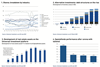
Institutional investors in Germany continue to invest in funds despite the challenging conditions. In the middle of 2021, the volume of Spezialfonds – Germany’s vehicle for professional investors – on the Universal-Investment platform stood at almost €474bn. This represents an increase of 36% over the past 12 months. According to most observers, it has been one of the most exceptional periods in a long time.
-
 Features
Briefing: The sustainability missing link
Love him or loathe him, no one can doubt that Tesla CEO Elon Musk has a penchant for self-publicity and a talent for disruption in industries from automobiles to space. He has lately taken an interest in the metals and mining sector. In June, he tweeted that he would provide a “giant contract for a long period of time if you mine nickel efficiently and in an environmentally sensitive way”.
-
 Features
Briefing: Why gold is different
Why does gold behave so differently from industrial metals and, indeed, most commodities in general? Despite the obvious contrasts – such as its shininess and its use in jewellery – it is not immediately clear why this should be the case.


