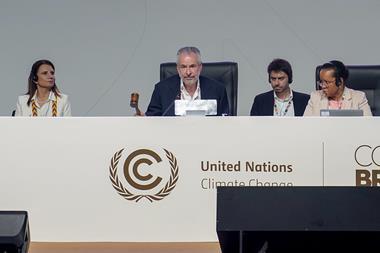






Asset owners want negotiators at COP31 to stop talking about climate investing “in the abstract” and start working with them to mobilise capital.
The Principles for Responsible Investment (PRI) published a report today based on interviews with 21 unnamed asset owners about the state of climate finance globally.
In conclusion, it urged policymakers and governments to work more closely with pension funds and others to better understand their investment needs.
Some green projects are uninvestable for fiduciary investors for reasons including inappropriate risk-adjusted returns, but the PRI insisted that “governments do not need to remove all risk”.
“They need to establish credible pathways and create projects in which risk is transparent, appropriately allocated and adequately rewarded,” it wrote.
“Investors, for their part, can contribute decision-useful evidence, identify the risks they can manage and remain candid about the limits of their own action.”
COP31 should therefore “shift the debate from capital mobilisation in the abstract to the practical conditions required for long-term investment,” said the PRI.
“Its lasting value will depend on whether it establishes a continuing, bottom-up programme of country, sector and policy engagement that converts commitments into investable outcomes.”
The asset owners that participated in the interviews called on governments and policymakers to establish channels through which they can share useful case studies and examples. These should include both successful and unsuccessful deals and opportunities.
COP organisers should develop a “concise COP asset-owner message”, the report proposed, and identify a small group of willing asset owners to work with.
Workstreams on system-level investment analysis, developing a shared public-interest physical-risk data resource, and practical country or sector partnership should also be set up.
Another request made by the group was for the creation of a 12-month engagement calendar linking COP31 to domestic and regional policymaking processes, as well as the work of the G20 and multilateral development banks.
“Use regionally grounded workstreams to address the differences in mandates, benchmarks, market structures and policy barriers, and feed the resulting lessons into the global agenda,” said PRI.