






The Church Commissioners for England voted against management at 218 companies over human rights concerns in 2025, more than five times the 43 companies targeted in 2024, its latest stewardship report reveals.
The increase followed a more systematic approach to voting, with the Church Commissioners engaging S&P to obtain data on companies’ human rights policies across a wide range of markets and sectors.
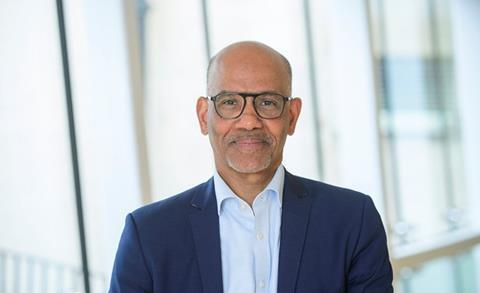
“We are seeing human rights and sovereignty re-emerging as live, critical issues on the global stage. The impulse to be extractive in business often comes at the expense of fundamental rights. It also has real long-term financial costs, often borne by the most vulnerable,” Alan Smith, First Church estates commissioner, wrote in the report.
The votes targeted the re-election of chairs and lead independent directors, as well as other management resolutions, at companies that failed to demonstrate a commitment to respecting human rights, according to the report.
The findings come as asset owners reassess their responsible investment approaches in response to systemic challenges including geopolitical risks and climate change. In May 2026, Sweden’s AP2 strengthened its human rights, deforestation and climate requirements for external managers.
The Church Commissioners’ key stewardship priorities in 2025 included human rights and social inequality, climate change and the energy transition, and nature and biodiversity. Other areas included responsible technology, with a focus on human rights risks associated with artificial intelligence and technology companies, as well as conflict and defence, and governance and accountability.
In 2025, the Church Commissioners also revised its defence investment policy, replacing a revenue-based exclusion with a more detailed assessment of companies’ activities.
The report sets out the organisation’s next phase of climate goals towards 2030, with a shift from targets focused on financed emissions towards assessing investments’ alignment with net zero.
Its overarching target of net zero by 2050 represents a commitment to contributing to a net-zero world, rather than achieving net zero solely across its portfolio, the report said.
The Church Commissioners sets climate-related goals every five years. It established its first interim targets in 2021, with a 2025 deadline, before publishing its next set of goals in 2025, to be met by 2030.
The revised approach links investment actions more closely to desired outcomes, prioritising measures that improve climate-related outcomes while remaining aligned with investment objectives.
Goals are tailored to different parts of the portfolio to ensure that metrics and actions are appropriate for each asset class and support real-world change, the report added.
The Church Commissioners was named Natural Capital Investor of the Year at the 2026 IPE Real Assets Infrastructure & Natural Capital Awards, where it won the Agriculture & Farmland Strategy and Nature-based Solutions categories.