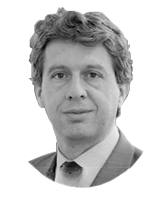
Healthy, well-run and transparent public sector pension schemes strengthen the public sector and, in turn, European democracies, argues the EAPSPI’s chair

Public sector employees tend to work away from the spotlight. They include schoolteachers, emergency workers, university researchers, hospital and care home workers. They are often the people we turn to when we are most in need.

A reliable and transparent public sector is important for building trust in governments and maintaining public services.

As Claudia Wegner-Wahnschaffe, chair of the European Association of Public Sector Pension Institutions (EAPSPI), says: “Social peace and democracies as a whole need professional, stable and trustworthy public services.” EAPSPI represents 20 European institutions, with over 20 million members and retirees.

About EAPSPI

  • Based in Munich
  • Represents public-service pension organisations across Europe.
  • Membership of 20 institutions providing pensions for public sector employees and civil servants in 13 countries in Europe, managing first, second and third-pillar pensions.
  • Members collectively cover 22m active members and retirees
  • Focus on knowledge exchange on topics relating to pensions, know-how, and advocates for sustainable public-sector pensions

Wegner-Wahnshaffe has spent two decades at VBL, the German public-sector pension fund managing €37bn in assets for some 6.7 million beneficiaries. She represents VBL in various stakeholder groups including aba, Germany’s occupational pensions association.

Claudia Wegner-Wahnschaffe

  • 2022: Chair, ETS Association eV
  • 2020: Member, EIOPA Expert Group on Pension Tracking
  • 2019: Chair, EAPSPI
  • 2019-22: Programme manager and coordinator of pilot project for EU co-funded European Tracking Service for Pensions (ETS)
  • 2009: Head of international department, VBL
  • 2003-09: Adviser, strategic, association and European affairs, VBL
  • 1995-2003: Litigation department, VBL (supplementary pension scheme for German federation and states)

Public-sector pension funds are working to keep that trust intact, by providing benefits for public employees, in turn strengthening the public sector, Wegner-Wahnschaffe argues.

She adds that pension provision can work as an incentive for highly skilled workers looking for a job in the public sector, and to encourage them to remain in the job, even when remuneration is less attractive than in the private sector.

European public pension funds, she argues, are working to reinforce the role of the public sector and its employees, while dealing with major structural challenges.

“It is obvious that we are living in difficult times that are challenging and pressing for everyone and, as it has been repeatedly stated, one of the most challenging aspects in European countries are the demographic changes,” says Wegner-Wahnschaffe, who has also taken an active role in the development of the nascent European Tracking Service for Pensions.

“The public sector has the need to recruit the staff needed to fulfil its tasks. The use of AI or just more digitalisation will probably not solve the problem,” she adds. 

Driving sustainability

Public sector pension institutions are addressing climate change in different ways, but they are aware that the climate crisis, with its multiple negative impacts on nature, society and economy, is one of the greatest global risks of our time.

“With respect to the regulatory framework of supplementary pension funds, these risks have to be considered in the context of investment decisions,” says Wegner-Wahnschaffe.

“I trust the rationality of the majority of the people,” she says. “This brings us to our business: we are convinced of our work, meaning providing pensions and giving people a long-term perspective, and to support employees in the public sector.”

Like their private sector counterparts, public pension funds have expressed concerns about the burden of regulations on sustainability at EU level, and reporting obligations, while remaining aware of their responsibility to consider and tackle climate change.

“You still have to take it into account when structuring your risk analysis because it won’t disappear. In recent discussions, and without any doubt, the role of proportionality was rightly raised by pension institutions,” Wegner-Wahnschaffe says.

Large public sector pension funds remain rigorous in pursuing sustainability strategies, and Wegner-Wahnschaffe adds that she ”would not expect radical change regarding how they address climate change because they look at the long term”.

Claudia Wegner-Wahnschaffe_EAPSPI

Claudia Wegner-Wahnschaffe, chair of EAPSPI

Supporting growth

Economic growth, a more competitive Europe, and the question of how to use pension savings to prop up the real economy, have taken centre stage in EU policy, following the reports written by Mario Draghi and Enrico Letta. The Commission listened to their recommendations when drafting the Savings and Investment Union (SIU) strategy.

The members of EAPSPI vary in size, with investment portfolios depending on the number of their employees. Not all EAPSPI members are fully funded and some are pay-as-you-go (PAYG) schemes.

As large institutional investors, however, they base their long-term investment decisions on the principle of responsibility. Their first and foremost goal is to secure the pensions for the beneficiaries, and therefore to achieve the necessary return on investment.

“For this, we have to find the most suitable investments,” says Wegner-Wahnschaffe. “We agree with PensionsEurope that the fiduciary mandate of pension funds should never be relativised by overly narrow investment requirements. The IORP directive should remain a stable legislative framework for occupational pension providers,”

Strategic, collaborative and transparent decision-making, with fellow shareholders and company boards, gives legitimacy to the role of public sector pension funds, EAPSPI’s chair says, adding that it is important that public sector pension institutions work on communication, highlighting that their role is anchored to the rule of law. 

“For me, this is the most important thing. We have to protect our common European values; we have to do this as the European Union and as a continent. We have to be competitive economically, but without turning back the clock,” Wegner-Wahnschaffe concludes.