
German corporates are increasingly shifting towards fully funded pension liabilities, a move seen as supportive of growth and profitability but constrained by complex regulation.
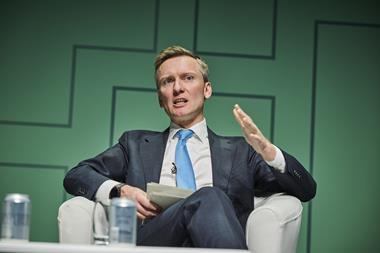
Florian Burg, managing director at Aon Solutions, told IPE the German market is on a “path towards more fully funded structures”, particularly among companies listed on the DAX and MDAX.
Companies in Germany are not required by law to fully or partially match pension assets with liabilities.
However, many DAX and MDAX-listed firms have built up substantial asset bases, strengthening governance structures and aligning investment strategies more closely with their liability profiles.
“The funding of pension obligations [in these companies] is well established,” Burg said.
Mid-market companies are catching up at pace, managing pension risk, funding and employee strategies in a more integrated way, he added.

“Larger mid-sized companies are instead turning to partially funded or insurance-based models to make pension risks more predictable and to limit administrative burdens,” Burg explained.
By contrast, smaller companies often rely primarily on on-balance-sheet provisions, but are increasingly seeking financially sustainable occupational pension designs to attract and retain employees.
Funding pension benefits through contractual trust arrangements (CTAs), support funds (Unterstützungskassen), pension funds or insurance-based vehicles can reduce net pension obligations, strengthen equity ratios and lower corporate leverage.
Aligning assets with liabilities also helps to avoid volatility under International Financial Reporting Standards (IFRS) accounting, as interest rate changes affect liabilities and corresponding plan assets in similar ways.
Fully funding liabilities is also a key lever for corporates seeking to influence share price performance and profitability, according to an analysis of around 200 companies listed on the CDAX, conducted by the Frankfurt School of Finance and Management in partnership with Fidelity International.
CDAX companies hold €481bn in pension liabilities on their balance sheets, equivalent to an average of 37% of their market capitalisation, the analysis found.
Lower funding risk is associated with an innovation premium of 5.4% per year and a pension risk discount of 2.2% annually. In terms of share price performance, the innovation premium rises to 7.3% per year, while the pension risk discount is 1.1% per year.
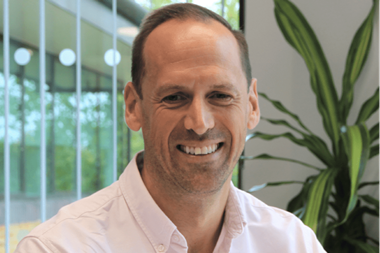
However, Wolfgang Murmann, head of workplace consulting at Fidelity International, warned that some companies in Germany still rely on business models that are stagnating or in decline.
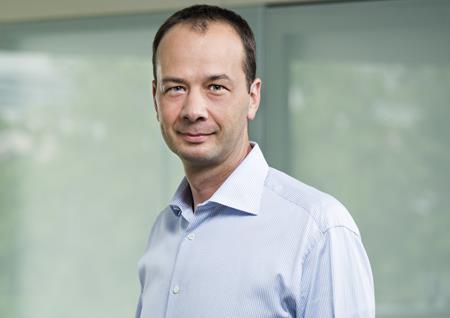
“[In these cases] it is significantly more difficult to fulfil pension and benefit promises if they were not previously fully funded,” he said.
Financing pension liabilities through operational business represents a risk if companies become insolvent, added Olaf Stotz, professor for asset management and pension economics at the Frankfurt School of Finance and Management.
Governance and structural challenges
Fully funding liabilities is becoming an increasingly important component of financial and HR strategy for companies competing for talent in a tight labour market.
Effective funding strategies require a “structured approach, clear allocation of responsibilities and specialised expertise” to manage balance sheet and HR objectives, alongside legal and operational risks, according to Aon’s Burg.
However, complex regulatory and tax frameworks remain a key barrier to further progress.
Vehicles used to provide occupational pensions are subject to differing labour, tax and supervisory requirements.
“This must be reflected consistently in funding structures, governance frameworks and administrative processes. In addition, liquidity needed to build up plan assets is a scarce resource and needs to be carefully allocated between pension funding and other strategic priorities,” Burg said.