





Germany’s occupational pension association aba is calling for greater investment flexibility, including the possibility of waiving guarantees, as part of measures to expand occupational pension coverage.
The association is demanding “more flexibility” or even “waiving guarantees” to enable occupational pension schemes to invest in assets with higher return potential.
Guarantees requiring the repayment of the full amount of contributions paid by employees can lead schemes to invest primarily in fixed income, which offers lower long-term return potential, aba said.

“Seeking higher company pensions and broader coverage of occupational pension schemes means tangibly improving framework conditions,” chair Beate Petry said in a statement commenting on aba’s proposals ahead of the social partner dialogue.
The Ministry of Labour and Social Affairs will begin discussions with social partners next month on ways to expand occupational pension coverage, which has remained broadly stagnant.
In a statement, the ministry said it had asked stakeholders to submit their views ahead of the meetings and had also received “additional unsolicited statements”, but declined to comment on their content.
The urgency to improve coverage
The number of employees entitled to occupational pensions in Germany has remained unchanged at 20.82 million, approximately half of the total workforce, since 2019, according to labour ministry figures.
To improve coverage, aba is calling for the further development of opt-out models, greater support for low earners, and the expansion of occupational pensions to “non-unionised businesses” and small and medium-sized firms.
The Federation of Chemical Employers’ Associations (BAVC) will focus on several key points during the discussions.
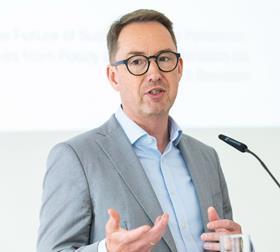
These include a “broad expansion of company pension schemes”, including by integrating the mandatory capital-funded component recommended by the pension commission for the first pillar into occupational pension plans, Lutz Mühl, BAVC’s managing director for economic and social policy, told IPE.
Other key topics include opening up the social partner models underpinning defined contribution (DC) plans and the “comprehensive implementation” of the recommendations laid out by the pension commission in June, he added.
Social partner models provide DC pensions without guarantees.
“These models need to be strengthened – based on agreements between collective bargaining parties – and made accessible to all companies, including those not bound by collective agreements. This would make attractive occupational pension schemes widely available to small and medium-sized firms,” Mühl noted.
Occupational pensions with an ‘opt-out’ mechanism are “already legally viable today”, he said, pointing to such an arrangement in place in the chemical and pharmaceutical industry.