




A group of national pension industry groups in Europe have put their name to a paper calling for greater recognition and support of what they are calling the “Rhineland Model of Pensions”.
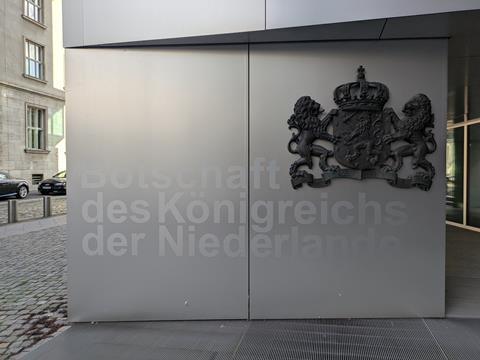
Presented at an event at the Dutch embassy in Berlin yesterday evening, the paper is backed by the main pension fund associations in Austria, Belgium, Germany and the Netherlands: WKO, PensioPlus, aba and Pensioenfederatie.
It presents the idea of a Rhineland model of pensions, drawing on a 1991 book by French economist Michel Albert that contrasts an Anglo-Saxon model of capitalism against a Rhineland model of capitalism.
The Rhineland pensions model initiative comes at a critical juncture for pensions reform in the EU. Under its plans for the Savings and Investments Union (SIU), the European Commission is due to later this year put forward legislative initiatives for reform of the legal frameworks for occupational pension funds (IORP II) and the pan-European personal pension product (PEPP), with recommendations on auto-enrolment and pension tracking systems also on the agenda.
The Commission is also planning a new action plan to implement the European Pillar of Social Rights.
According to the pension industry groups behind yesterday’s event in Berlin, the Rhineland pension model – characterised by paritarian governance, solidarity and long-term responsibility – is well-suited to addressing Europe’s “creeping” ageing crisis and “provides a fertile basis for the EU’s ambition to create a true Savings and Investments Union”.
In the eyes of the Rhineland pension industry groups, however, and in keeping with comments made by the European Court of Auditors, EU policymaking has been casting pension providers primarily as financial market institutions rather than as social institutions.
“In the Rhineland Model, pension policy’s primary goal is ensuring a retirement income that is sufficient to ensure a decent standard of living for older people,” the paper states.
“In the EU’s Savings and Investments Union Strategy, that goal threatens to be subjugated to the development of financial markets.
“The perspective of pension as a social right needs strengthening at the European level.”
Auto-enrolment action
In addition to reminding policymakers of their commitment to Principle 15 of the European Pillar of Social Rights, which regards old-age income and pensions, in the paper, the industry groups said a European working group on ageing should be formed and tasked with formulating a “Pension Policy for a Social and Competitive Europe”.
The social partners should be invited to participate in this group, which could for example, issue recommendations covering best practices related to auto-enrolment and pension tracking systems.
Overall, the Commission’s recommendations on auto-enrolment and pension tracking services are arguably more important than a review of the IORP II Directive, according to the Rhineland model industry groups.
They should be seen as “a starting point of a structural exchange of good practices between member states, facilitated by the European Commission,” their paper noted.
The PEPP could be useful in some countries, but member states should be free to choose in which direction they want to steer their occupational pension system, according to its backers.
Member states should be encouraged to formulate more measurable goals and concrete policy measures and milestones to address the challenges of pensions and ageing, the paper added.
It cited the Recovery and Resilience Facility (RRF), the EU’s instrument for supporting member states in their post-COVID-19 recovery, serving as a useful precedent for encouraging more structured action by member states.
Pensioenfederatie and its Rhineland model partners also said they are in favour of making EU funding conditional on making progress on economic and social goals.
Dashboard for policymakers
The industry groups are also calling for a European Pension Dashboard to give policymakers more insights, saying this should be developed by a collaboration of the Commission’s employment and social affairs (DG EMPL) and financial services (DG ECFIN) departments and member states.
On the whole, DG EMPL, DG ECFIN and the Commission’s financial services department (DG FISMA) should “coordinate social, economic and employment aspects and make ageing and occupational pensions more prominent in the European Union,” the paper concluded.
Read the digital edition of IPE’s latest magazine