








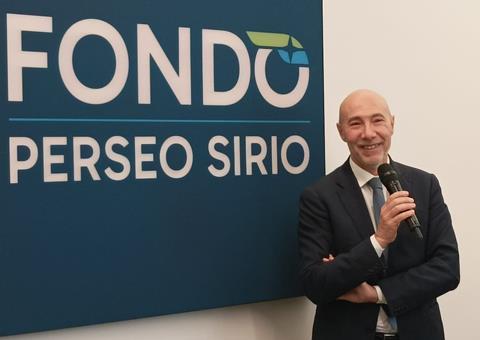
Riccardo Realfonzo, president of Fondo Perseo Sirio, the pension fund for employees in Italy’s public administration, has proposed creating a public fund to protect pension funds’ investments in private markets and support the domestic economy.
In a paper — Il risparmio previdenziale per la crescita italiana (Pension savings for Italian growth) — Realfonzo proposed that the public fund, promoted by Italy’s finance ministry, would underwrite junior, subordinated or protection tranches in vehicles investing in domestic private markets, alongside partly state-owned investment bank Cassa Depositi e Prestiti.
Pension funds would instead underwrite senior “protected” tranches across different asset classes, according to the paper.
The public fund would therefore assume risks through a protection mechanism that varies by asset class, improving the overall risk-return profile of investments and aiming to mobilise Italy’s pension savings in private markets while curbing the “flight of capital” abroad, Realfonzo wrote.
The protection mechanism should not cover individual venture capital investments, which could lead to adverse selection and reduce manager accountability, but should instead apply to multi-vintage, multi-manager fund-of-funds.
Pension funds would rank ahead of other investors when it comes to distributing returns, up to a certain threshold, according to the paper.
The public entity should take over a share of potential significant first losses in venture capital investments, subject to strict criteria including a minimum size of underlying funds, a focus on strategic technologies and follow-on capacity.
For private equity, the protection provided by the public fund would be lower and cover risks including ultimate loss, illiquidity and poor manager selection by pension funds, according to the paper.
For private debt, public protection should be linked to legal commitments included in financing contracts, including covenants, as well as diversification and seniority. For infrastructure investments, it should focus not only on financial losses but also on risks beyond investors’ control, including permits, regulation and construction timelines.
The proposal comes as Italian pension funds face pressure to increase allocations to support the domestic economy.
Assets in industry-wide pension funds, open and pre-existing pension funds, and individual pension plans reached €262.6bn in March, but only 2.6% was invested in Italy, according to figures published by pension regulator Covip.