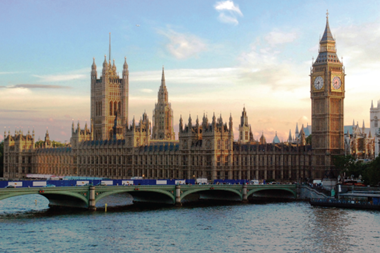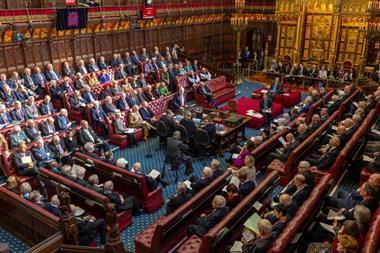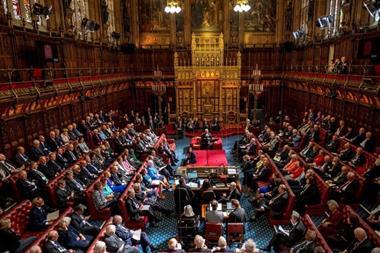




The UK Pension Schemes Bill is set to receive Royal Assent after the House of Commons and House of Lords agreed final wording on the reserve power clause, ending the parliamentary “ping-pong” process.
The government introduced a fourth amendment to clause 40 late last night, opting to retain the clause while addressing concerns raised in the upper house.
Presenting the amendment in the House of Commons, pensions minister Torsten Bell said it was intended to “do justice” to points raised by both houses, while “retaining the original policy intent”.
The revised clause introduces a requirement for The Pensions Regulator (TPR) and Financial Conduct Authority (FCA) to assess barriers to private market investment, including the extent to which these reflect a collective action problem.
Bell said: “This assessment would be required to be incorporated into the ex-ante report that the secretary of state must produce before any use of the reserve power that the bill provides for.

“Our amendment, importantly, also placed a duty on the government to have regard to this regulatory assessment before any use of the power; this will ensure a secretary of state behaves reasonably as they are required to do. Must place weight on the assessment of the regulators on this matter.”
The government has previously amended the clause to include an exemption where forced asset allocation would cause material financial detriment to members. It has also brought forward the sunset clause from 2035 to 2032 and limited the reserve power to a maximum of 10% of default fund assets and 5% of UK-based assets.
Bell added: “It was always the government’s intent to evaluate progress against the Mansion House Accord commitments in terms of the broad direction of travel over a substantial period of time, rather than short-term movements in private asset exposure.
“To reinforce this, we also propose to add to the face of the bill that the power cannot be exercised any earlier than 2028. Our second set of changes builds on the savers’ interest test to reinforce the central role of trustees and providers.”
The latest changes were accepted by the House of Lords.

Sharon Bowles (Baroness Bowles of Berkhamsted) said: “I am still no fan of mandation, but I think we have not got it suitably under control. There are reasonable guardrails to make sure that it doesn’t go wrong, and that we can hopefully never use it, and that we do get the additional investment that we all agree in principle are needed.”
James Younger (Viscount Younger of Leckie) said: “The situation is far from perfect. We remain of the view that the mandation power is wrong in principle, but this settlement, which we might now call ‘mandation-lite’, is far better than that in the bill as originally drafted.”
Stephen Budge, defined contribution partner at LCP, said it is “disappointing” that the mandation measure remains in the bill, despite industry concerns.
However, he welcomed the additional constraints agreed upon. He said: “This now includes the final amendment to reference competitive pricing pressures which could restrict master trust and group personal pension investment into UK private markets.”
Yvonne Braun, director of long-term savings policy at the Association of British Insurers (ABI), said: “We’ve long said that the Pension Schemes Bill sets a new direction for UK pensions and we strongly support the overall package. The Bill’s ambitious reforms will help improve people’s retirement by driving a focus on value, making pensions easier to manage, and supporting long-term economic growth.

“We remain concerned that the Bill includes a reserve power to mandate how pension funds invest. However, the many additional safeguards we proposed should help to limit any potential negative impact.”
She noted that, in particular, “the concessions now reflect our calls for an independent assessment before the power can be used. We’ll now work closely with our members as they start implementing the wide-ranging measures introduced through this landmark legislation”.
Helen Forrest Hall, chief strategy officer at the Pensions Management Institute (PMI), also welcomed the added safeguards.
She said the focus now shifts to “working with government, regulators and the industry to ensure these reforms strengthen the pensions system, support long-term growth and, above all, deliver better outcomes for scheme members”.
Royal Assent is expected later today.