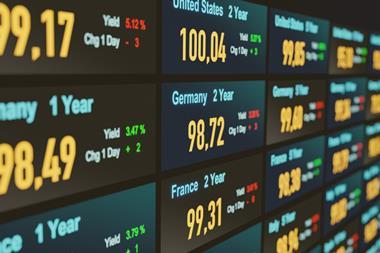





The five largest pension funds in the Netherlands made overall investment returns in 2025 ranging between -1.6% (ABP) and -5.9% (PMT), mainly because of large losses on their interest rate hedges.
As a consequence, four of the five funds (ABP, PFZW, PMT and Bpf Bouw) saw their assets under management (AUM) fall over the year, losing some €19bn between them.
Technology industry fund PME’s AUM rose by €100m to €59.5bn, despite a negative investment return of -3%. This was as a result of two company pension funds, TDV and Honeywell, with €622m and €705m in AUM, respectively, joining PME over the course of the year.
Funding ratios, however, increased significantly at all funds thanks to a rise in interest rates. The 20-year risk-free rate benchmark used by pension regulator DNB as a reference rose from 2.36% at the start of January 2025 to 3.31% at the end of the year.
Not a good investment year
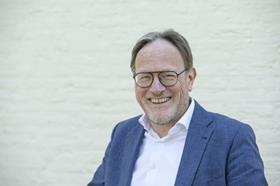
Harmen van Wijnen, president of the Netherlands’ largest pension fund ABP, said that 2025 was “not a good investment year”, despite the MSCI World equity index being up 20% last year.
“The unrest on financial markets because of trade tariffs” and “ongoing wars in Europe and beyond” made it difficult to navigate markets, he noted.
And while the MSCI World All Country index was up by 22.34% over the year, ABP’s listed equities portfolio only returned 6.2%. This was in large part due to the weak dollar, which all but wiped out the gains made in US equities.
In December 2024, ABP had started reducing the dollar hedge for its return portfolio from 50% to 25%. This decision also contributed to negative returns (-4.2%) on its private equity portfolio and real estate investments (-5.1%).
PFZW, the fund for the healthcare sector, also delivered negative returns on both asset classes. This contrasts with the positive returns of PMT, PME and Bpf Bouw on real estate. The latter three funds invest mostly in Dutch real estate, while PFZW and ABP invest more abroad, including in the US.
Rising rates
Reflecting on the year, president Alae Laghrich of PME, the pension fund for the electronics and technology industry, called 2025 “an exceptional year in many regards”.
The fund’s return portfolio delivering more than 9% “was undone by a negative return on our matching portfolio because of higher interest rates”, he said.

Dutch funds were especially vulnerable to rising rates in 2025 because most pension funds have been increasing their interest rate hedges in the run-up to their conversion to defined contribution (DC) arrangements as part of the Dutch pension reform. As a result, PME made a loss of 17.9% on its matching portfolio. At the end of this year, it had hedged 70% of its liabilities, up from 60% a year earlier.
Metals sector scheme PMT, which had a hedging ratio of 75% at year-end, reported a loss of 23.8% on its matching portfolio.
While PME’s Laghrich said that the US remained an economy “where positive returns can be made”, he also noted there had been a fundamental change: “Within Europe, people are now aware of the fact that the United States is no longer the reliable ally it once was,” he said.
“Trade tariffs, threats, breaking of existing agreements, it is commonplace now. This realisation hurts, but it emphatically offers the opportunity for a closer, stronger and more independent Europe,” he added.