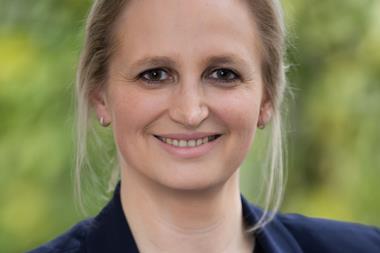









Investor net-zero targets risk encouraging performative portfolio decarbonisation without delivering emissions cuts in the real economy, according to London School of Economics (LSE) professor Tom Gosling, as Caisse des Dépôts (CDC) defended its 1.5°C climate target.
Speaking at PRI in Person in Amsterdam, Gosling questioned whether investors should maintain 2050 net-zero commitments when government policies are inconsistent with achieving them, and investors cannot control the outcome.
He compared portfolio decarbonisation to shifting waste elsewhere: “I’m going to reduce what I send to landfill by throwing my rubbish over my neighbour’s fence.”
Gosling said portfolios had decarbonised faster than the real economy, while securing corporate targets through engagement did not automatically translate into changes to investment decisions.
“When you set a target and you find out it’s not actually possible to achieve, there’s a very strong incentive to do stuff that looks like you’re achieving it, but isn’t,” he said.
Earlier this year, Gosling co-authored the LSE report What can investors do about climate change? with Hans-Christoph Hirt and Fernanda Gimenes.
The paper argued that credible net zero strategies must be better aligned with policy, technology and economic realities, advocating a shift from market-led portfolio targets towards a policy-led approach.

CDC defended its approach, arguing that targets had secured management backing and provided the infrastructure to translate climate ambition into investment practice.
“Setting a target was essential to get management’s attention and support,” said Josselin Kalifa, CDC’s chief investment officer, who described the 1.5°C target as the institution’s “north star”.
The French institution said portfolio emissions reductions were split roughly equally between asset reallocation and improvements at investee companies. Its engagement approach sought interim milestones alongside corporate targets.
Last month, CDC announced it would stop providing new debt financing to oil producers, except for eligible green and sustainable bonds, under its updated climate policy.
Jimmy Yan, head of ESG integration at the New York City Comptroller’s Office, defended pragmatic, tailored targets. During manager due diligence, managers were asked to provide written plans aligning their funds with the pension funds’ net-zero ambition.
New York City’s comptroller says its pension funds are progressing towards net zero by 2040 and recommends replacing managers that fall short on climate action, as well as stopping new investments in fossil fuel infrastructure.
“We’re emphasising engagement, not exclusion,” Yan added.
Panellists agreed on the need for clearer expectations of managers and engagement on climate policy. Gosling warned, however, that investors could not substitute for missing policy momentum.
Earlier this year, People’s Pension dropped its 1.5°C portfolio target, citing what it described as real-world inconsistency.
In a separate plenary, Dan Mikulskis, chief investment officer of People’s Partnership, said portfolio decarbonisation needed to reflect developments in the real economy and the investment risks they created.
“The market hasn’t decarbonised in the way the index is trying to,” he said.
Reaching the Paris Agreement’s 1.5°C goal requires global net-zero emissions by 2050, according to climate scientists. However, an expert survey conducted for the Inevitable Policy Response recently found that a net zero global economy this century was considered the most likely outcome, consistent with limiting warming to around 2°C.
Asset owners have been grappling with the implications for their net zero commitments, although there has been reluctance to abandon 2050 targets.
Off stage, some investors told IPE they shared Gosling’s concerns about performative targets. One responsible investment head questioned whether net zero targets should be scrapped altogether.
Another investor described asset owners as “sleeping lions” in the climate fight. “They could do so much more,” the investor told IPE.