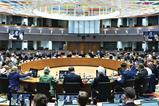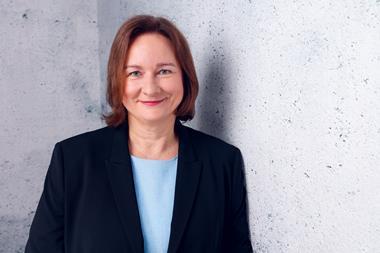





Edith Maat, the managing director of the Dutch Federation of Pension Funds, yesterday addressed members of the European Parliament (MEPs) as they gear up to examining the European Commission’s supplementary pensions package.
Presented in November, the Commission’s pensions package includes legislative proposals for changes to the IORP II Directive and the Pan-European Personal Pensions Regulation, as well as recommendations for member states on topics such as auto-enrolment and pensions tracking.
The Commission’s legislative proposals will now be reviewed by the European Parliament and Council ahead of eventual trilogue negotiation further down the line.
Speaking to MEPs, Maat said that funded occupational pensions “sit precisely at the intersection” of two structural challenges facing Europe: a rapidly ageing population and an investment gap to finance the green transition, digitalisation and economic resilience.
She said the Dutch pension system was recognised as delivering on both of those challenges, and that two features of the system were in particular worth highlighting “because they are relevant for the interaction with the European investment agenda and the review of the IORP II Directive”.
These features, according to Maat, are collective participation, with nearly all employers participating in the second pillar and workers mandatorily enrolled, and the role of social partners, meaning that employers and employees jointly design and govern pension schemes.
With respect to the IORP II review, she told MEPs the EU needed to provide a regulatory framework that enabled rather than constrained the role of pension funds. As previously set out by Pensionfederatie, Maat said the pension fund group welcomed a genuinely risk-based prudent person framework, but that elements of the IORP II proposal such as the proposed approach to benchmarking, could pull in the opposite direction to the objectives of the Savings and Investments Union (SIU) strategy.
Other elements of the proposal would increase costs and complexity, without clear benefits, she added.
Meanwhile, at the member state level, the priority should clearly be on expanding funded occupational pensions, Maat argued.
She said the Commission’s recommendations provided a solid roadmap and that Pensionsfederatie “encourage[s] the European institutions to actively promote and monitor the implementation of these recommendations, while fully respecting national competences and the role of social partners”.
If member states took such action and the IORP II review led to a proportionate, enabling framework, then “pension funds can play a central role in strengthening both Europe’s social model and its economic future”, Maat said.