

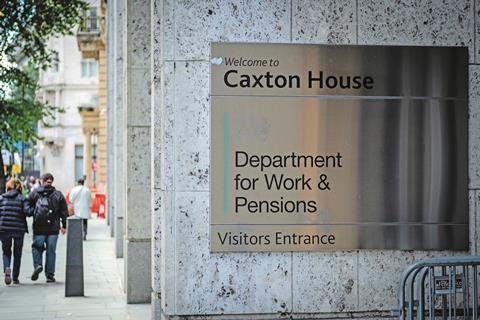
The Department for Work and Pensions (DWP) has launched the long-awaited UK Pension Schemes Bill in Parliament today.
The Labour government had announced its intention to introduce a Pension Schemes Bill during the King’s Speech last summer, following the party’s landslide election win last July.
The bill aims to transform the £2trn (€3.6trn) pensions industry to ensure savers receive good returns for each pound they save, and drive investment into the economy, through a suite of measures.
This will include requiring multi-employer defined contribution (DC) pension funds, unless exempt, to have at least £25bn of assets in their main default arrangement by 2030 or be en route to achieving that scale by 2035 through having £10bn in their main default options.
For defined benefit (DB) pension funds, the bill will allow trustees of well-funded DB schemes to release surplus back to employers and their scheme members, when safe to do so, unlocking some of the £160bn of surplus funds to be reinvested across the UK economy, boosting business productivity and delivering for members.
The bill will also legislate for DB pension scheme superfunds to encourage the growth of the superfund market and underpin the security of members’ benefits.
After a long campaign by the Pension Protection Fund (PPF) and consultants, the government confirmed the bill will remove the restriction that prevents the PPF board from reducing the annual pension protection levy it collects, when it is not required – allowing the PPF to collect less from businesses up and down the country.
Better outcomes for savers
To ensure better outcomes for savers, the Pension Schemes Bill will also introduce a Value for Money (VFM) framework to enable a shift in focus from cost towards value and protect savers from becoming stuck in underperforming arrangements for extended periods.
In addition, the bill will implement default pension benefit solutions which will mean savers will still have the options available to them through pension freedoms, but they will get an extra offer of support – through being enrolled into default solution(s) – which could include collective DC (CDC) provision, and they can accept this or make their own choices.
The bill will also authorise providers to act as a consolidator scheme, which will see members’ pots automatically transferred to their largest pot. This, the DWP has said, will also aid the building of scale with pots worth £1,000 or less consolidated into a small number of large, good-value schemes.
Lastly, the bill will support the introduction of pensions dashboards to improve engagement by providing users with their whole pensions picture, including workplace and state pensions, securely and all in one place online.
The DWP said that by providing this comprehensive overview of retirement savings, pensions dashboards will address key barriers to engagement, such as information fragmentation and lack of visibility.
The Pension Schemes Bill is part of this government’s significant pension reform agenda. It follows the major consolidation of the UK pension system set out in the Pension Investment Review.
The DWP said that today’s legislation will create a more “efficient, resilient pension landscape”, and lay the foundation for the upcoming Pensions Review to examine outcomes for pensioners and set out how to develop a “fair and sustainable pensions system, ultimately benefiting both individual savers and the broader UK economy”.
Work and pensions secretary Liz Kendall said that the bill is about securing “better value for savers’ pensions and driving long-term investment in British businesses to boost economic growth in our country”.
“As part of our Plan for Change, we’re helping people find work, stay in work, and ensuring that work pays them back to give them the secure income in retirement they deserve,” she added.
Chancellor of the Exchequer, Rachel Reeves, added that the bill is a “game changer” delivering bigger pension pots for savers and driving £50bn of investment directly into the UK economy, while putting more money into people’s pockets through the Plan for Change.
Minister for pensions Torsten Bell said: “Pension saving is a long game, but getting this right is urgent so that millions can look forward to a higher income in retirement.”
Pivotal moment

Nausicaa Delfas, chief executive officer of The Pensions Regulator (TPR), said the Pension Schemes Bill is a “once in a generation” opportunity to address unfinished business in the UK pension system.
She said: “Making sure all schemes are focused on delivering value for money, helping to stop small, and often forgotten pension pots forming, and guiding savers towards the right retirement products for them, will mean savers benefit from a system fit for the future.”
Delfas added that TPR has long advocated for fewer, larger well-run schemes with the size and skill to deliver better outcomes for savers. “As such, we are also pleased to see the proposed legislative framework for DB superfunds, providing options and choice in defined benefit consolidation.”
Patrick Heath-Lay, CEO of People’s Partnership, branded the launch of the bill a “pivotal movement” in pensions reform.
He said: “The bill contains many measures that will require providers to deliver better outcomes for savers and improve the workplace pension system.”
Heath-Lay particularly welcomed the introduction of default consolidator schemes, which he said would be the most effective way to solve the dormant small pots problem.
He added that value for money metrics within the bill will help savers better understand the “real value” that is offered by different providers.

He said: “These reforms must prioritise savers, and we look forward to participating in a constructive dialogue with the government on how all the measures in this bill can be implemented to achieve this, while continuing the success story of automatic enrolment.”
Sophia Singleton, president of the Society of Pension Professionals (SPP), added that the bill creates the foundation for changes that should positively impact members, sponsors and trustees.
She said: “We will support policymakers with the considerable work that lies ahead to develop the regulations and guidance that must underpin and deliver these initiatives.
This was echoed by David Lane, CEO of TPT Retirement Solutions.
He said: “The Pensions Bill represents a signal of intent, laying the foundations for a more coherent and sustainable pensions system, focused on improving outcomes for members. In drawing together several policy threads that have been under discussion for a long time, the bill is a comprehensive step forward for the industry.”
He particularly welcomed the renewed focus on DB schemes, following initial focus on DC pension funds.
Missed opportunity
However, while the bill has been widely welcomed and contains many “worthy measures”, Steve Webb, partner at LCP, highlighted that the bill missed an opportunity to get more money flowing into pensions.
“The government’s own projections show that more than 12 million people are not saving enough for retirement, and yet the first major pensions legislation of the new Parliament does nothing to address this ‘elephant in the room’,” Webb noted.
“The very fact that the adequacy of pension saving is not going to be considered until the second phase of the government’s pensions review shows that this issue is unfortunately on the back burner,” the former pensions minister said.
Webb added that measures such as consolidating tiny pension pots are “helpful tidying-up measures”, but “do nothing to tackle the fundamental problem that millions of us simply do not have enough money set aside for our retirement”.
He continued: “With every passing year that this issue goes unaddressed, time is running out for people already well through their working life to have the chance for a decent retirement.”
Read the digital edition of IPE’s latest magazine




Topics
- Collective Defined Contribution (CDC)
- Defined benefit
- Defined contribution
- Department for Work & Pensions (DWP)
- LCP
- Legislation
- Pension Protection Fund (PPF)
- Pension Schemes Bill
- Pension System
- People’s Partnership
- Reform & Regulation
- Society of Pension Professionals (SPP)
- The Pensions Regulator (TPR)
- United Kingdom
- value for money