

The UK’s House of Lords has voted to remove controversial powers that would have allowed the government to direct how pension schemes invest, dealing a setback to ministers’ plans to steer capital into priority areas such as UK growth assets.
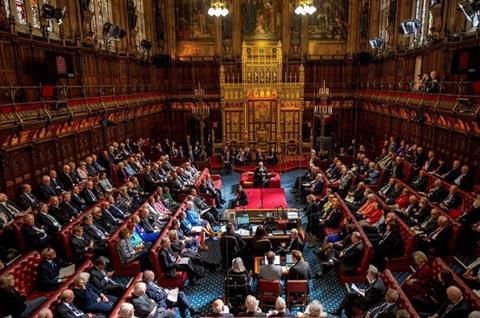
Peers backed an amendment to the Pension Schemes Bill that strips out so-called “mandation” powers, which would have enabled the government to require pension funds to allocate assets to specific sectors or projects.
The bill will now return to the House of Commons, where members of parliament (MPs) will reconsider the scope of the provisions.
The proposal had been championed by ministers as part of a broader push to unlock pension capital for domestic investment, particularly in infrastructure and private markets. However, it faced mounting opposition from across the pensions industry and in the Lords, where critics argued it risked undermining fiduciary duties.
It was tabled by Liberal Democrat peer Sharon Bowles, Conservative peers Deborah Stedman-Scott and Thérèse Coffey, and independent peer Ros Altmann, winning a vote in the upper chamber by 217 to 113.
Industry body Pensions UK welcomed the vote.
Zoe Alexander, executive director of policy and advocacy, said: “The Lords’ amendment to remove the power in the Pension Schemes Bill for government to direct how retirement savings are invested is a win for savers. Having the power on the statute book would expose millions of workers’ retirement savings to political cycles and undermine the duty of pension trustees to act at all times in the interests of savers.”
She added that the organisation favours a voluntary approach to increasing investment in UK assets, supported by measures to improve the investment environment.
The debate over mandation has become a focal point in the wider discussion around the government’s Mansion House reforms, which seek to encourage pension funds to increase allocations to productive finance.
While ministers have argued that stronger powers may be needed if voluntary efforts fall short, opponents have warned that compulsion could distort investment decisions and weaken governance standards.
Pensions UK pointed to existing industry initiatives as evidence that mandates are unnecessary.
“The Mansion House Accord, a commitment by 17 of the largest UK pension providers to back unlisted UK and global investment opportunities where they are in the best interests of savers, shows there is already strong support,” Alexander said.
The Lords vote reflects broader unease among peers about granting ministers sweeping powers over pension fund asset allocation, with some arguing that such intervention could blur the line between public policy objectives and trustees’ fiduciary responsibilities.
Before today’s vote, Altmann wrote in a blog: “The government must not be given powers to micro-manage pension scheme investments.”
“Incentivising investment in UK growth assets makes sense, but forcing schemes into high-risk private unlisted assets is a step too far,” she added.
Attention now turns to the Commons, where the government could seek to reinstate the provisions. The outcome will be closely watched by institutional investors, as it will determine whether the UK adopts a more directive approach to pension fund investment or continues to rely on voluntary commitments from schemes and providers.