




A new superannuation advocacy body has been established in Australia. Known as the Super Members Council of Australia (SMC), it will become the voice of Australia’s rapidly-growing profit-to-members super funds.
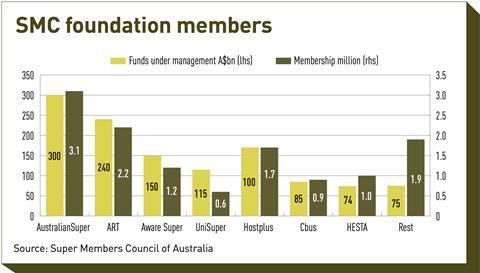
The influence of the new group will be considerable. Australia’s top eight industry funds are founding members, collectively managing A$1.4trn (€857bn) on behalf of more than 10 million members.
The funds are Australian Retirement Trust, AustralianSuper, Aware Super, Cbus Super, HESTA, Hostplus, Rest Super and UniSuper. A few smaller and medium-sized funds have also signed up.
The entity was created through the merger of the Industry Super Association (ISA), which had a small membership, and the Australian Institute of Superannuation Trustees (AIST), which had a wider membership base. Both were previously key bodies for profit-to-member super funds.
A board of directors drawn from member funds has been appointed, with the former federal Labor health and ageing minister, Nicola Roxon as interim chair. She is also chair of HESTA.
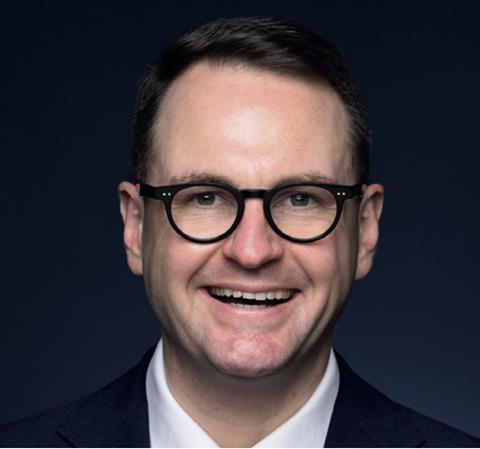
“Many former Labor ministers sit on super fund boards. Super funds are a retirement home for former Labor politicians”
Andrew Bragg
Roxon says a key driver in establishing SMC was the need for deliberate and thoughtful leadership in superannuation policy that reflects a modern society and economy in a changing environment.
“The nature of work and the workforce itself are changing, as are patterns and expectations in retirement,” she says. “As many members’ balances grow, those in lower paid or less secure work risk being left behind.
“The long-term interests of millions of Australians will be well-served by a new collective body that can advocate to all levels of government and industry.
“Our promise is member-centric advocacy that seeks to work with all political parties to deliver the best possible retirement outcomes for the millions of Australians we represent.”
SMC launched in October but is still operating in start-up mode. Its inaugural chief executive, Misha Schubert, appointed in November, will take up the position in February.
Schubert, who among her previous roles was a journalist, has been welcomed in some quarters as someone not overtly aligned with the Labor side of politics or the union movement. She is not seen as an ‘insider’.
Schubert is widely-known across the spectrum of the country’s decision-makers, and will bring a new perspective to what is an influential position, according to Roxon. She joins SMC from Science & Technology Australia, where she was CEO.
The incoming CEO says she looks forward to writing “the next chapter of the great Australian superannuation story”.
Reservations
Said to have been initiated by AustralianSuper and Australian Retirement Trust (ART), the Super Members Council of Australia was originally met with some reservations. The traditionally non-Labor or non-union-aligned funds (Aware Super, Rest and UniSuper) were allegedly concerned that they would become part of what is sometimes referred to as the ‘Melbourne Mafia’. Melbourne is home to both the majority of industry super funds and the Australian Trade Union Council.
Roxon has therefore pledged that the council will engage with all political parties and levels of government and industry to advocate for “stable, effective and equitable” super policy.
Garry Weaven, a key industry super architect, told the Australian Financial Review, a national financial newspaper, that although the new entity is still pondering exactly how it will be led, its leadership and board will be “very important” as the sector broadens its advocacy in Canberra.
“A number of the funds are now so large that clearly their main voice will be their own voice,” he said. “But there are a number of collective concerns, including responding to various political proposals. They absolutely realise they have got to get their message across to all the parties in Canberra – and not just the major ones.”
Weaven played a key role in the development of industry superannuation and, in 1994, founded Industry Fund Services, forerunner to a number of collectively-owned financial service providers, including IFM Investors, which today manages A$215bn on behalf of Australian and global institutional investors. He went on to serve as a chairman of IFM Investors for 16 years until 2018.
‘Vested interest’
But not everyone is impressed with the new council.
Andrew Bragg, a Liberal senator for New South Wales in the Federal Parliament, has sat in Senate hearings into financial services, including industry super. He sees the formation of SMC as further proof and enhancement of the political influence of industry super.
“In Australia, the Labor government has shown itself incapable of saying ‘no’ to its favourite vested interests in ‘Big Super’. Many former Labor ministers sit on super fund boards. Super funds are a retirement home for former Labor politicians,” he says, pointing to former Labor federal treasurer Wayne Swan, who is chair of Cbus Super.
Bragg says that super funds will use the SMC to continue to lobby the government to remove transparency measures and to funnel more money into Big Super and to inflate their influence in the economy.
His biggest concern has been the use of super fund resources. “Integrity measures brought in by the former Liberal government prohibit super funds from making investments unless they are in the best financial interest of their members,” he says.
In the lead-up to the last election, which Labor won, Bragg says super funds contributed more than A$13m to unions (which in turn funded the Labor election campaign). “These payments are against the law and are currently being investigated by the Australian Prudential Regulation Authority (APRA). However, APRA enforcement in this space is weak.”
Wait and see
Alex Dunnin, head of investment at Rainmaker, which specialises in super funds, says it will take time to get the SMC merger working. “These [mergers] are always harder than people expect,” he says.
“Given the massive disruption happening in the wealth management sector and superannuation in particular, they’ll have to morph their role from what the component [previous] organisations did.”
Dunnin says the council’s biggest task will be demonstrating that it represents super fund members rather than simply funds. “They aren’t the first financial services interest group that has tried to claim this as their mantle. A good barometer of this will be how membership of the group will operate.”
Other interest groups, including bodies representing super consumers, have so far refrained from commenting on the new entity, preferring to adopt a ‘wait and see’ attitude.