

Climate resilience and adaptation emerged as dominant themes at Climate Week NYC last week, as investors grappled with the implications of geopolitical tensions, energy security and the rapid build-out of artificial intelligence (AI) infrastructure.
“If last year was characterised by people making sense of the disruptions throughout the year, then this year was more about thoughtful, focused work on some hard questions,” Daniel Gallagher, senior lead on climate change at Principles for Responsible Investment (PRI), told IPE of the mood at the event.
There was greater awareness of the intersections between energy security, geopolitics and climate change, he said, while investors were also considering how to manage rapidly evolving climate risks, including those associated with AI data centre expansion.
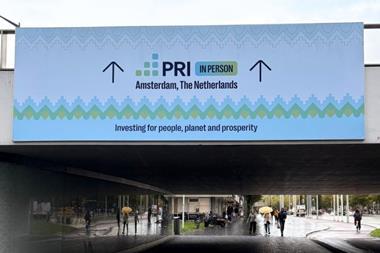
The unevenness of the global transition and governments’ responses to risks identified by investors were core themes at PRI’s Investor Day, Gallagher said.
Hetal Patel, head of sustainable investment research at Standard Life, also highlighted a shift in the political language around climate change. In a post on LinkedIn, Patel noted that the last time he attended Climate Week NYC was before Donald Trump’s presidency and that the atmosphere felt noticeably different.
“The language is understandably more cautious. Terms such as ESG and transition have given way to resilience and energy security. Yet despite this shift, I came away with a strong sense of resolve among practitioners and leaders who recognise that climate risk remains a material financial risk that must be managed in stakeholders’ best interests,” Patel wrote.

The question of companies revising their climate targets was also discussed. Sabine Hoefnagel, chief executive officer of London-based sustainability consultancy ERM, told IPE: “The credibility test is not whether a company resets a target, but how it does so. A credible reset is transparent about the reasons for the change and is backed by a detailed implementation plan, clear interim milestones, investment commitments, and measurable indicators of progress.”
Responsible AI
AI featured in almost every conversation throughout the week, according to Patel.
“Investors are actively debating and collaborating on the role AI can play in addressing climate challenges. Alongside ongoing discussion about AI’s environmental footprint, including energy and water use, there was significant focus on its potential to accelerate climate solutions,” he wrote.
The rapid expansion of data centres was a particular concern. Gallagher attended a roundtable involving investors, hyperscaler companies and civil society groups, where discussions were characterised by “seriousness and urgency”.
“Investors are deeply concerned about the pace of the data centre build-out in the US and are seeking to ensure that it is done in a responsible manner. The AI and tech industry needs to learn from the experiences of other industries that, over decades, have developed good community engagement, community participation and community involvement in decision-making,” he told IPE.
Gallagher also took part in discussions about incorporating energy security into climate risk assessments.
“That integration of climate into related macro trends is definitely a recent development in investor practice,” he said.

Adaptation and resilience
While discussions in recent years have focused heavily on physical climate risk and tools for assessing how hazards could affect investment portfolios, this year saw greater attention on the investability of adaptation solutions.
“For me, adaptation and resilience emerged as the dominant theme,” Patel wrote.
Discussions focused on both the investment opportunities presented by adaptation and how more capital could be directed towards resilience solutions, he said.
“While no one is giving up on mitigation, attention is increasingly turning to how societies and economies adapt to a changing climate. One observation that resonated was that mitigation is inherently global, while resilience is often local and place-based, creating clearer ownership and accountability,” he added.
At PRI’s Investor Day, discussions also focused on where institutional capital could contribute to adaptation investments alongside government planning and public funding, Gallagher said.
The discussions centred on the investment case for adaptation and how such investments could promote the resilience of portfolios and wider systems, he added.

On decarbonisation, Science Based Targets Initiative (SBTi) CEO David Kennedy wrote in a LinkedIn post: “The business case for decarbonisation is becoming more immediate. Extreme weather is exposing vulnerabilities in operations and supply chains, while geopolitical shifts are putting a premium on reliable, affordable and low-carbon energy.”
Following the event, ERM’s Hoefnagel told IPE: “Companies should be prepared to adapt projects when community engagement reveals legitimate concerns that have the potential to negatively affect local communities and impact development timelines.”
Defining resilience
Gallagher said some discussions showed a need for greater sophistication in how resilience is defined and assessed.
“We should be thinking more about the dependencies assets have on wider economic systems and regions. We should also consider the interplay between the role of investors in relation to the assets they own and the role of governments, regional authorities and those responsible for planning, public safety and the public good,” he added.