
As a statutory body whose decisions deprive some investment fund providers of billions of Swedish kroner under management, it was only a matter of time before the Swedish Fund Selection Agency (Fondtorgsnämnden, FTN) was taken to court.
Now it has happened. On Friday, and facing the delisting of its fund offering from the premium pension funds platform, Indecap Fonder submitted an appeal in the Administrative Court of Stockholm against the FTN’s decision not to award it a mandate for the new reformed platform, in the agency’s SEK200bn (€18.8bn) procurement of actively-managed global equity funds.
One of the criticisms from Indecap Fonder, which is owned by Swedish savings banks, of the way the FTN is carrying out the premium pension funds platform reform, is that replacing the global and Sweden funds category with a global funds only category may lead to some savings capital flowing to the US from Sweden “in the opposite direction to what many savers are demanding”, according to Indecap’s CEO.
The FTN, which has a week to give the court its response, says it believes the procurement – its largest so far – obeyed the rules.
In Finland, a new debate around pensions is in full swing as political parties develop their positions ahead of next year’s general election. Pension cuts are among solutions being proposed to alleviate weak state finances.
Pensions lobby TELA has set out a number of proposals of its own, focusing on some very long-term issues such as education to bolster future pension provision, as well as increasing funding in the partly-funded occupational pension system.
Speaking at an event to launch the ideas, Mika Maliranta, professor of economics at the University of Turku, said: “The long-term playing field is politically difficult – that is, to talk about solutions that do not give immediate results, and to find the patience to wait.”
Also with the long-term in mind, Denmark’s AkademikerPension has been undertaking a considerable transformation in the way it manages equities, bringing much of the asset class in-house and adding an extra layer of risk. None of which would have been possible without the changes the pension fund made to its IT, as well as the introduction of a new market-rate, lifecycle pension product.
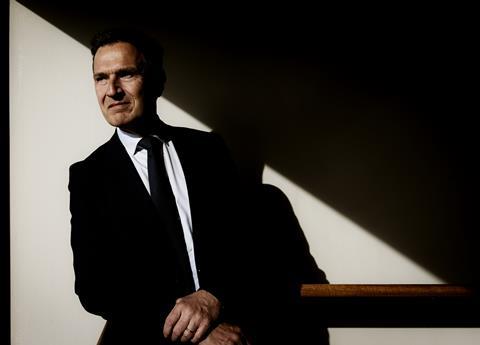
“It’s not that we’ve entirely given up on active management, or don’t want external management anymore, but we wanted to create a model where we ended up with something that was more stable and controllable – with clearly segregated and transparent results,” AkademikerPension’s CIO Anders Schelde told IPE in an interview.
Considering asset allocation on an even larger scale, the Norwegian government is moving closer to taking action to reduce the sovereign wealth fund’s eye-watering exposure to big US technology stocks. It has now written to the Government Pension Fund Global’s manager, Norges Bank Investment Management (NBIM), asking it to assess the investment strategy for bonds as well as the geopolitical risk and concentration risk for the fund’s equity portfolio – as part of the follow-up to the recent report from the sovereign wealth fund’s new expert council on risks around the fund.
The SWF’s eight largest equity holdings are technology stocks, which collectively made up a fifth of the fund’s entire value at the end of 2025.
Items to note:
- IPE Real Assets is holding a seminar at Copenhagen’s Nimb Hotel on Tuesday 17 March, as a forum for discussion about private markets strategies, including real estate, infrastructure, and natural capital.
- Lars Wallberg, who retired as CEO of Velliv Foreningen at the end of last month, has shared insights from his long career in Danish pensions with IPE in an interview.
Rachel Fixsen
Nordic Correspondent
This news briefing was published earlier in the week. If you would like to receive it regularly, on your IPE profile, go to My Newsletters and select any from the list.