
From Norway’s NOK21trn sovereign wealth fund to Sweden’s buffer funds, Nordic institutional investors are integrating AI tools across their operations. Whilst the technology promises efficiency gains and novel insights, pension funds are proceeding cautiously on governance and data protection.
Nicolai Tangen doesn’t mince his words about the potential for artificial intelligence. At Norway’s annual parliamentary hearing on its sovereign wealth fund in May, Norges Bank Investment Management’s (NBIM) chief executive officer declared AI to be “the most important thing happening in the world at the moment”.
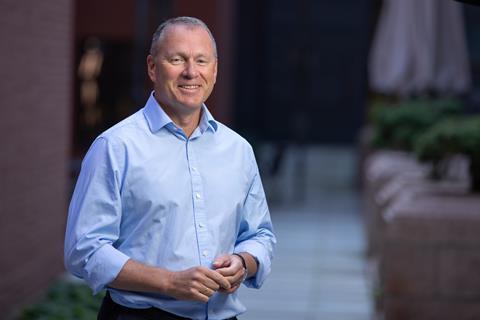
All staff at NBIM, manager of the NOK21.1trn (€1.9trn) Government Pension Fund Global (GPFG), now use AI tools, Tangen told members of the Storting, and more than half use coding tools too. He also put a NOK5bn reduction in NBIM’s trading costs between 2020 and 2025 partly down to the use of the technology.
Large pension funds across the Nordic region are embracing the rapidly developing technology, to achieve direct cost savings but also to improve performance and gain particular insights.
They also cite concerns about aspects of AI integration and adoption such as data privacy and ethics, though.
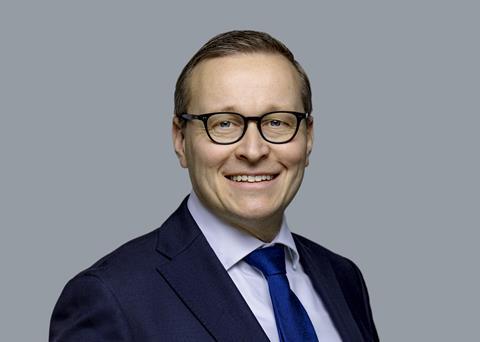
In Finland, Elo singles out a specific use of the technology that could have a real impact on its clients’ lives. The mutual pensions insurance company has used AI to identify population‑level phenomena within large datasets that may weaken employees’ work ability – such as the prevalence of different workload factors and their underlying causes, and patterns observed behind mental‑health‑related work disability.
“By using AI‑generated analysis, client companies can develop their work communities and processes and thus reduce the risk of work disability,” says Carl Pettersson, Elo’s CEO.
The Espoo-headquartered pension fund says it is also using AI in many ways within the organisation, from renewing costly ICT systems to streamlining background processes and improving customer service, as well as within investment operations.
“AI doesn’t make investment decisions, but it supports investment operations, above all in the preparation of analyses, for example by collecting and processing data,” Pettersson says, adding: “In investing, it’s essential to prepare for different scenarios, and AI is useful in modelling them.”
In Oslo, municipal pensions giant KLP is in the early stages of adopting AI to improve efficiency across individual and organisational workflows, according to Rune Hørnes, executive vice president of technology at the NOK1.27trn institution.
In concrete terms, KLP uses Microsoft Copilot, and tools such as Edge and M365, to boost individual productivity in drafting documents and structuring information, for example, and is gradually scaling in AI use across the organisation in several areas for corporate productivity.
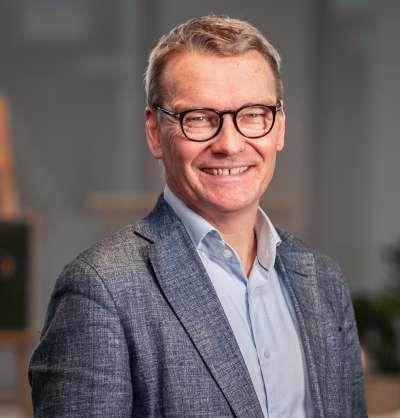
“One is internal assistants such as Pythia, which is a KLP-developed AI assistant that helps employees find and use internal knowledge across systems and domains,” states Hørnes.
Domain-specific solutions are also used, he says, such as BankingGPT or PropertyGPT, while GitHub Copilot is used for software development.
“On new services for customers we’re just beginning to explore how AI can be used to improve our customer-facing services and provide tangible end-user value,” he says, citing decision support, more efficient case handling, and “enhanced digital experiences” as areas.
“We’re enthusiastic about the possibilities AI presents here,” notes Hørnes, adding that KLP sees clear indications of improved individual productivity through the use of AI and efficiency gains in software development too.
Stockholm-based AP3, now managing a much larger portfolio after Sweden’s buffer fund reform, sees AI becoming an integral part of how it works, according to CEO Staffan Hansén.
“Ensuring that our teams use AI to improve both efficiency and quality is a top priority,” he says, adding that the fund is taking a structured, organisation-wide approach to the technology, seeing it as an enabler in day‑to‑day work.
“Just last week, during our annual team conference, we dedicated significant time to ideation, sharing learnings and identifying best‑practice use cases that can be scaled across the organisation,” he continues.
The SEK800bn (€74bn) national pensions buffer fund also uses Microsoft Copilot along with a handful of other AI tools, which Hansén says now form an integral part of the fund’s digital workplace, and are integrated into the tools employees already use.
“We focus on leveraging proven, secure solutions that can be deployed at scale – allowing us to move faster while maintaining high security standards,” he says.
“We have some way to go, but we see AI becoming an integral part of how we work, helping us deliver even higher quality and efficiency over time”
Staffan Hansén at AP3
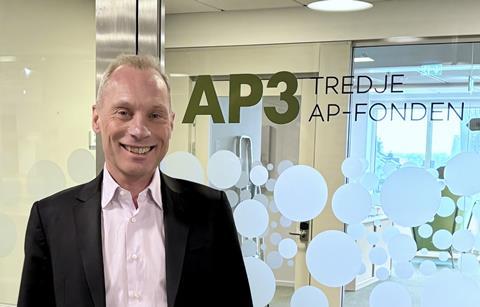
For AP3, efficiency gains from AI are plain to see, especially in areas such as information gathering, analysis and documentation, where the technology is saving time in a meaningful way, according to Hansén.
“Beyond efficiency, it frees up time for more value‑adding tasks – deep analysis, decision-making and collaboration.”
“In that sense, AI is not only about doing things faster, but about doing them better,” he notes.
Advantages aside, the AP3 chief also has reservations.
“As a public entity, trust is our most valuable asset. Our key concern with AI is ensuring that governance and ethics keep pace with technical capability - which we all know is evolving at unprecedented speed,” he says.
KLP has concerns too.
“On a general level, we’re concerned about GDPR and data privacy, especially related to the handling of personal and sensitive customer data,” Hørnes says.
“We’re also concerned about the risk of losing control over where corporate information is stored or processed. We need to ensure that internal and confidential data is not used in non-approved tools. And we need clear governance, guidelines, and user awareness,” he explains.
There are also broader considerations linked to use of AI in a pension fund context, he says, such as data privacy and confidentiality, given the sensitive nature of member and investment data – and transparency and traceability, especially where AI might influence decisions with financial or regulatory impact.
“Then we have the risk of bias or unintended consequences in models used for analysis or decision support,” Hørnes says.
“And last, but not least, we are committed to clear accountability, that is ensuring humans remain responsible for decisions, with AI used as support rather than authority,” the KLP technology EVP states.
Meanwhile, Alecta recently sounded a warning about people’s increasing use of AI to make pension decisions, after a poll showed more than one in 10 people who had transferred their pension to Alecta said ChatGPT had helped them compare occupational pensions.
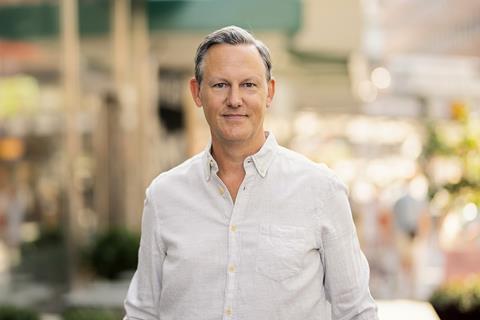
Staffan Ström, pension economist at Alecta, says it was not unexpected that AI has also emerged as a tool in that way.
“But it’s important pension savers are aware of the shortcomings of AI tools and know what they can do to get the best possible basis for their decision,” he said, introducing a guide the SEK1.4trn pension fund has devised on getting good information about occupational pensions from AI.
As AI uses roll out, pension funds are helping each other by comparing notes, according to Hørnes.
“There isn’t yet any formal collaboration on AI among pension funds in our region.
“But there is a lot of informal knowledge exchange, and AI is often a topic in more general forums within the sector,” he says.
Looking ahead, KLP sees AI becoming an integrated part of how it works across the organisation.
“We don’t see AI replacing human decision-making, but as a key enabler for improved productivity, insight, and service quality,” Hørnes continues.
Hansén envisages every team at AP3 using AI agents in time, essentially adding an extra team member or two that supports daily work, tailored to each function’s needs.
“We have some way to go, but we see AI becoming an integral part of how we work, helping us deliver even higher quality and efficiency over time,” the AP3 CEO says.