
When Icelandic pension funds Almenni-Lífsverk and SL announced on 9 July that their boards had agreed a merger, the news came just over a month after the two funds had begun formally exploring the idea.
The combined fund would be the fourth largest pension fund in the country with ISK1.03trn (€7.18bn) based on end-2025 figures, according to a joint statement by the pension funds.
Almenni-Lífsverk and SL said: “The merger of the pension funds aims to strengthen the foundation of good pension rights with a larger fund that will be better equipped to meet increased demands for operational security and provide better service.”
The goal was also to achieve operational efficiency that could contribute to lower costs and higher returns for fund members, they added.
The background to the prospective merger between Almenni-Lífsverk and SL contains a powerful story of the consolidation that has been going on in the Icelandic pensions industry over the last few decades – with Almenni-Lífsverk itself formed from a merger just six months ago, after which it came to encompass a total of eight former pension funds.
The pace of change at the pension fund, and the speed of the decision-making around the new merger, gives the impression not only of more urgency in the sector to find partners, but also that pension fund boards may be making their minds up more rapidly.
IPE asked experts in Iceland if this was the case.
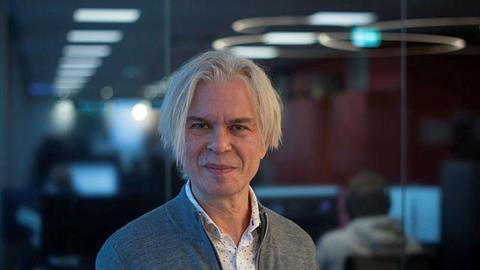
Már Wolfgang Mixa, associate professor at the University of Iceland and an Almenni-Lífsverk board member, said merger activity among Icelandic pension funds was just the latest chapter in a long-running consolidation trend.
“Over the past 25 years, the number of pension funds has dropped from roughly 60 to around 20, and mergers have been the main driver of that shift. This year, the number could fall to close to 15,” he said, adding that recent mergers had drawn more attention simply because the funds involved were now much larger.
“That said, the pace does seem to have picked up this year,” he added.
“One likely reason: much of the analytical, actuarial, legal, and administrative work done for the large mergers over the past two or three years can now be reused, adapted, or, in some cases, simply replicated,” the associate professor said.
“That accumulated experience makes it faster and less resource-intensive to assess and carry out the next round of mergers,” he said.
One industry insider said the increased intensity of merger activity could reflect the fact that some smaller funds were finding it harder to meet the ever more demanding requirements of their operating environment, but also pointed to an additional factor that had coincided with these developments.
“Many pension fund CEOs and senior executives have now reached, or are approaching, retirement age. Understandably, they would like to leave their funds in a strong position, and some may see a merger as the best way to achieve that,” the source told IPE.
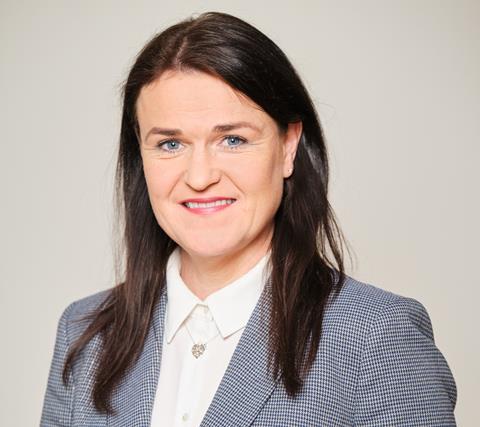
At the Icelandic Pension Funds Association (Landssamtök lífeyrissjóða, LL), chief executive officer Thórey Thórðardóttir, said that while merger activity had become more visible in recent years, it was part of the long-term consolidation trend rather than a sudden acceleration driven by urgency.
“There is no immediate need for pension funds to merge, as the Icelandic pension system is generally strong and well managed,” she said, but added that there were several factors encouraging consolidation – mergers were generally expected to strengthen operations, improve efficiency, and create economies of scale, she said.
Larger funds could often support more robust governance frameworks, broaden their specialist expertise, and achieve better diversification of investment and operational risk, she added.
“I also think that pension fund boards have become more familiar with the merger process over time,” she said, adding that as more examples became available and experience accumulated within the sector, boards were better equipped to assess both the opportunities and the challenges involved.
“This may contribute to decision-making becoming somewhat more efficient,” Thórðardóttir noted.
Gylfi Magnússson, professor at the Faculty of Business, University of Iceland, said the logic for mergers between pension funds in Iceland was based on several factors, including economies of scale and greater diversification of risk – both on the asset and liability side.
“The demographics vary considerably across pension funds, mainly because most of them serve particular professions and unions. Increasing diversity of the membership through mergers is therefore beneficial,” he said.
The fixed cost of information systems, regulatory compliance, etc. was also quite high for the smallest funds, he continued.
“Legislation on pension funds has shifted its emphasis from quantitative restrictions to the prudent person approach”
Gylfi Magnússson, professor at the Faculty of Business, University of Iceland
“Regulatory requirements have increased somewhat in recent years and are bound to increase even more as the legislation on pension funds has shifted its emphasis from quantitative restrictions to the prudent person approach,” he said.
“That said, there is no urgent pressure for mergers; the funds are generally viable without mergers,” Magnússson said.
However, Magnússson pointed to potential problems for Iceland’s domestic economy resulting from the continued shrinkage in the small nation’s pension fund tally.
“Mergers can make the problem of horizontal ownership even worse than at present - when a large investor holds equity positions in two or more competing firms.
“It could also, to some extent, reduce turnover in local markets and affect price discovery for local assets,” he said.