After a major review, the AP fund’s Council on Ethics has expanded its team and resources to give it more heft

Key points

  • Strategic review started in 2021 to address sustainability of the AP funds 
  • The overall purpose remains the same, but the increased resources allow the organisation to do more, particularly in its proactive work addressing systemic and more complex ESG risks
  • ESG issues are more or less systemic and becoming increasingly complex, says council’s executive director

After a hiatus of almost two years, the body that helps Sweden’s big pensions buffer funds coordinate sustainability-related stewardship activities is reinvigorating its work programme.

The four parallel national pension buffers – AP1, AP2, AP3 and AP4 – created the Council on Ethics of the Swedish AP Funds (AP-fondernas Etikråd) in 2007, six years after their system was set up in its present form.

In the council’s first year, the corporate ownership collaboration held talks with 14 companies, in pursuit of its goal of increasing sustainability at listed, non-Swedish companies and getting them to make positive changes.

The body’s purpose may not have changed, but in October 2021, the four AP funds announced a strategic review of the organisation, marking the departure of secretary general John Howchin.

Because rapid evolution around the issue of sustainability had put increasing demands on the AP funds’ own sustainability work, the CEOs of the four APs said that they had developed  the council so its work could continue to support the AP funds in addressing sustainability-related risks.

The result of the revamp was revealed a year later, with its purpose “clarified”, long-term objectives set and the council remodelled to consist of a board of directors with one member from each buffer fund and a three-strong secretariat, consisting of an executive director and two sustainability analysts.

This year, the council has been chaired by Magdalena Håkansson, AP1’s head of sustainability and governance.

Top job filled

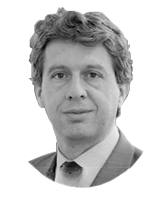
Jenny Gustafsson, previously head of responsible investments for the large Swedish pension fund AMF, who had also worked in a similar position at Handelsbanken’s fund business, was hired this year as executive director, and took up the top role in June.

“Overall, it is exciting to be involved and play an active role in further developing an institution that combines value-creating influence on sustainability issues with working for the AP funds, which have such an important role in the Swedish pension system,” she says.

Following the review, the council reinforced its three main aims: strengthen the AP-funds as responsible investors and responsible owners; contribute to positive change among portfolio companies from an economic, environmental and social perspective; and to manage sustainability risks and achieve greater outcomes in a resource-efficient way.

Improved governance

A new governance structure has been introduced and the secretariat has more dedicated resources. 

The history of Folketrygdfondet

Folketrygdfondet (National Insurance Scheme Fund) was formed in 1967 and was initially  divided into five regional units, each with a separate board, to manage the surpluses in Norway’s national insurance scheme. A decade later, those surpluses had turned to deficits and 1979 was the last year in which there was a transfer from the National Insurance Scheme to the fund. 

In 1990, the regional boards were wound up and the fund came directly under the auspices of the Ministry of Finance. 

Norway established its sovereign wealth fund for oil revenues in its current form, known as the Government Pension Fund, in 2006. Folketrygdfondet was then tasked with managing the domestic and Nordic part of the SWF, the Government Pension Fund Norway (GPFN). During the financial crisis a few years later, Folketrygdfondet took on responsibility for a new bond fund to improve the functioning of the bond market. The Government Bond Fund was subsequently reprised during the COVID-19 crisis.

“This gives us increased opportunities to do more – not least in our proactive work, focusing on addressing systemic and more complex ESG [environmental, social and governance] risks,” Gustafsson says.

Jenny Gustafsson

“You need to see where within the system around an issue you can add value and where you want to prioritise your efforts”

Jenny Gustafsson

The council has set out five focus areas for the proactive work (see box) that it does alongside the reactive work of engaging with firms that fall short of its expectations. In practical terms, this work can take different forms, depending on the issue, scope and available opportunities for engagement.

One example is the council’s engagement with the mining industry, which is a priority area not just because of the sector’s significant sustainability-related risks and impacts, but also its importance for society and the green transition. 

“Everything from electric car batteries to renewable energy production requires solutions that are mineral-intensive,” says Gustafsson.

The council plans to work with mining companies in cooperation with others to mitigate ESG risks as the industry expands to meet the increased demand for critical minerals. It will channel its efforts primarily through the Global Investor Commission on Mining 2030, where it has a seat on the steering group.

Focus on human rights

Another example of proactive work is the council’s action on big tech and human rights, which it has worked on since 2019, producing  an investor expectations document in conjunction with the Danish Institute for Human Rights in 2020.

“There are emerging topics but the old topics are still there, and they’re changing, both within company efforts and the regulatory work streams surrounding them”

Jenny Gustafsson

“Online platforms play an increasingly important role in society. This comes with many benefits but also entails several human rights challenges,” Gustafsson says.

In March 2023, the council launched a collaborative engagement, supported by more than 30 investors with over €7trn in combined assets under management. It is a three-year initiative aiming for change in alignment with the United Nation’s Guiding Principles for Business and Human Rights.

The council’s extra muscle in resources and mandate following the review gives the body a more focused and efficient set-up that can operate more independently, while still under board oversight, Gustafsson explains.

From her own long professional involvement with ESG issues, the council’s executive director says the issues are systemic and increasingly complex. 

“At the same time some of them are becoming more urgent, and this is one of the reasons why the strategy process we’re in needed more muscle. Because we have to analyse and simply process what’s going on out there – and be really mindful and work with both quality and engagement in the areas where we’re active.

“There are emerging topics but the old topics are still there, and they’re changing, both within company efforts and the regulatory work streams surrounding them,” Gustafsson says, while admitting that change is not always in the right direction.

“You also need to see where within the system around an issue you can add value and where you want to prioritise your efforts,” she concludes.

Nordic Region pensions funds report 2023: Norway's sovereign fund pivots north

Tromso

Plans are afoot to set up a new base in northern Norway to manage sovereign wealth assets