





The Dutch finance minister has warned EU regulators that revisions to the bloc’s pension rules must not come at the expense of thriving national models.
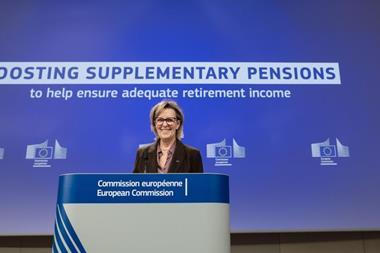
Senior figures from across Europe met in Brussels on Tuesday to discuss a planned update to the Institutions for Occupational Retirement Provision Directive (IORP II), and changes to the Pan-European Personal Pension Product (PEPP) regulation.
Eelco Heinen, the finance minister of the Netherlands, welcomed the proposals in his remarks, and said his country “stand[s] ready to share best practices”.
But, he continued, “existing pension systems are deeply rooted in the national social and labour law context, and changes to the rules can only be made in a way that does not disturb well-functioning schemes, such as in the Netherlands”.
His concerns about national safeguards were echoed during interventions from Bulgaria, Malta and Poland.
Bertrand Dumont, the director of the French Treasury, argued that “a number of points in the proposal need to be improved”.
He called for the rules to put more emphasis on equity investments, in order to support finance flows to “innovative companies” in Europe.
“Pensions are an excellent instrument to do this because they are long-term savings which authorise greater risk taking and don’t need immediate availability; and thus allow for this kind of investment in equity funds to be financed,” Dumont said.
He also urged the European Commission not to grant new powers to the European Insurance and Occupational Pension Authority as part of the updates.
Further simplifications
Many senior figures speaking at the meeting said their countries would push for further simplifications to the two proposals as they move through negotiations.
“On IORP, we share the objectives of the proposals, but there is a risk of overburdening smaller IORPs with significant additional governance and transparency requirements,” warned Luxembourg’s finance minister, Gilles Roth.
“In order to allow smaller IORPS to achieve economies of scale, asset pooling solutions should be explored,” he added.
The Netherlands’ Heinen said it was “crucial that the proposed changes remain proportionate and flexible, and do not create unjustified administrative burden, especially for smaller market participants”.
For the PEPP proposal, the biggest point of contention highlighted by member states was tax treatment.
There was disagreement about whether the regulation should include tax provisions at all, and whether those provisions should treat PEPPs as favourably as other comparable pension schemes.
The Dutch said they agreed with the principle, as long as the rules were clear, while Austrian finance minister Markus Marterbauer stated: “Austria firmly opposes the tax provisions contained in the proposed PEPP regulation, and considers the inclusion in this regulation to be inadmissible under EU law.
“In our view, the tax treatment of the PEPP has to remain the prerogative of the member state,” he added.