



Latest analysis – Page 19
-
 Analysis
Analysis: Will German government backtrack on public fund for third pillar pensions?
Stakeholders proposing reforms show little appetite for plan laid out by coalition partners
-
 Opinion Pieces
Notes from the Nordics: NBIM still learning on equal pay after winning employment case
Norway’s sovereign wealth fund has hailed the benefits of litigation abroad to drive its corporate governance agenda. Closer to home, victory in an Oslo employment case may have rung decidedly hollow for Norges Bank Investment Management (NBIM).
-
 Opinion Pieces
Letter from US: Annuities move into the US market
Three of the largest players in the US pension industry are launching new products that offer annuities as a retirement savings distribution option. Millions of Americans will soon have access to pension-like investments in their 401(k) plans thanks to BlackRock, Fidelity Investments, and State Street Global Advisors. The other large player in the US market, Vanguard, will not take part in this new trend.
-
 Opinion Pieces
Letter from Australia: Retail funds lured by private markets
Australia’s retail funds are trying to navigate the unfamiliar terrain of private markets as they seek to lift their performance.
-
 Analysis
Analysis: Pension funds need flexible mind to invest in circular economy
Pension funds must remove barriers and relax financial and accounting requirements to allow for circular investments, according to investors and investee companies
-
 Analysis
Analysis: German states realign €30bn pension fund assets to stricter ESG standards
Four German states have recently revised their sustainable investment strategies, sticking to stricter ESG rules
-
 Opinion Pieces
US: state enrolment systems gain traction
There are signs that the US state-facilitated retirement savings plans are starting to have a positive impact on both the creation and uptake of private pension plans.
-
 Features
Career development: Reaching to the next generation in pensions
Pensions can be seen as a dry industry, but an array of initiatives is seeking to support younger professionals
-
 Opinion Pieces
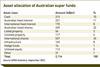
Australia: volatility stirs valuations debate
As a disconnect in the valuation of listed and unlisted assets widens in today’s volatile markets, the torchlight is again being trained on Australia’s guardians of retirement savings.
-
 Analysis
Analysis: How to navigate cyber security crisis management
More than 400 pension funds using Capita’s services should check whether their scheme’s data could be affected
-
 Features
Greenwashing: Teasing out the intentional from the accidental
Greenwashing is increasingly under the spotlight as investors and rulemakers try to figure out whether the chief concern is untruthfulness or the unintentional misleading of clients with environmental claims
-
 Opinion Pieces
Australia: Caps, concessions and class war
The Australian Federal government recently moved to make a “modest” change to the nation’s superannuation system which, it says, will save A$2bn (€1.2bn) a year for its over-stretched budget.
-
 Opinion Pieces
US: Politics drive ESG debate
Three Republican candidates for the White House are vocal advocates against pension funds adopting environmental, social and governance (ESG) investment practices.
-
 Analysis
Analysis: Opinion split over SFDR updates
Rulemakers have maintained that the function of the regulation is to mitigate greenwashing by promoting transparency, not by setting standards
-
 Features
Ukraine: The mother of all impact investments
Institutional investors can play a crucial role in rebuilding Ukraine in a post-war future
-
 Opinion Pieces
US: Private equity losses weigh on pension funds
US public pension funds should brace for a big negative surprise when they prepare their reports for the fiscal year ending 30 June 2023. Only then will their returns reflect losses from 2022 in their private equity (PE) portfolios.
-
 Opinion Pieces
Australia: Super funds shift to fixed income
With fear of recession in Australia and globally, superannuation funds have gone into defensive mode. Cash and liquidity are two key considerations for CIOs, and some are waiting to take advantage of attractive market opportunities.
-
 Analysis
Analysis: Synergies and obstacles of a potential UBS/Credit Suisse asset management merger
The outcome of the merger is positive for UBS which ‘is buying the asset manager of Credit Suisse for nothing’, says Ray Soudah
-
 Opinion Pieces
Might Ukraine’s distressed assets one day look attractive to pension funds?
Russia’s invasion of Ukraine in February 2022 has tested Europe’s political and economic resolve. But where Vladimir Putin attempted to sow discord, he instead has failed to divide the West.
-
 Opinion Pieces
How to define natural capital and greenwashing
Last month, I wrote about recent challenges that have arisen from the terminology of sustainable finance – the legal and political consequences of the sometimes careless ways that terms like ESG, ethics, risks and impact have been interchanged depending on audience and public mood.