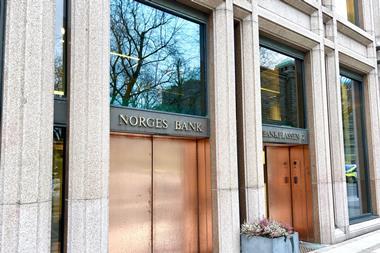









Norway’s sovereign wealth fund is pushing Germany to change rules for listed companies to force more frequent elections and shorter terms for supervisory board members, arguing it would make firms more accountable to shareholders.
Norges Bank Investment Management (NBIM) took the opportunity to press the matter in its response to a consultation on proposals released on 5 August to revise the German Corporate Governance Code — aimed, the government commission on the code said, at making the guidelines clearer, streamlined, and aligned with international standards.
NBIM, which runs the NOK22trn (€2trn) Government Pension Fund Global (GPFG), told the commission that Germany was the fund’s fourth largest market with investments of €75bn at the end of June 2026 — €38bn of which is in equities.
NBIM’s chief governance and compliance officer Carine Smith Ihenacho and Alexis Wegerich, interim head of policy engagement, said in the letter: “We continue to prefer more frequent board elections, ideally every year.”
“Accountability to shareholders is strengthened when board members stand for re-election more often, and this does not shorten the tenure of individual members, who can be re-elected,” the Oslo-based manager said.
“In 2018 we welcomed the proposed shortening of the maximum board term to three years, and we would encourage the Commission to reconsider it,” the pair wrote.
“We see positive momentum on this issue in the German market and would appreciate the Code explicitly formulating such an expectation,” they added.
NBIM also said management board members could contribute to the supervisory board, but should not be seen as independent until significantly more than two years had passed.
However, Smith Ihenacho and Wegerich also said they welcomed how expectations on board members had been strengthened over time in Germany, and said most of the points NBIM raised in 2018 were now reflected in the code.
Those points included the expectation that more than half of shareholder-elected members be independent, that supervisory board and remuneration committee chairs be independent, and the limit on how many mandates a supervisory board member may hold, according to the letter published on Monday.