




Dutch pensions giant ABP has revealed it is not hedging its significant equity risk in the six-month run-up to the transition of its €518bn scheme for civil servants to defined contribution (DC) from defined benefit (DC) — because it is not deemed worth the expense.
Last week ABP won approval from the Dutch central bank DNB for the pension fund’s plan for the transformation, which is set to take effect on 1 January 2027, as part of the Dutch pensions reform currently underway.
How much money the Netherlands’ largest pension fund can distribute in DC pension assets to its three million participants on that day depends – as for other Dutch pension funds – on its financial position at the time, with a higher funding ratio allowing it to distribute more and a lower one leaving less to share out.
At the end of May, ABP’s funding ratio stood at 126.6%.
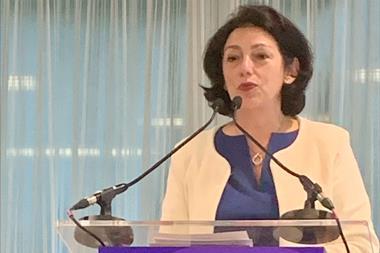
In an interview with IPE’s sister news service Pensioen Pro, ABP executive board member Yolanda Verdonk-van Lokven said the pension fund was not taking extra measures to limit its equity risk in the meantime.

She said: “That issue has been on the board’s agenda several times. We review it periodically. So far, there has been no reason to take extra measures to protect the funding ratio.”
Asked why not, given the proximity of the transition itself, higher share prices, significant risks and the fact that many Dutch pension funds were hedging, Verdonk-van Lokven said: “We determined that the costs outweigh the benefits.
“Given the context and the long-term outlook, it wouldn’t be prudent to do so,” she told Pensioen Pro.
Responding to the question of whether ABP’s size was a factor in the decision, she said the pension fund had elaborated on that in its implementation plan.
“It does indeed state that options involving derivatives are of limited feasibility, given ABP’s size. Physically selling off shares entails significant costs and disadvantages,” she said.
However, the pension fund had drawn up contingency plans, she said in the interview.
“Naturally, there is a Plan B involving various scenarios, but I cannot elaborate on that. If the funding ratio drops below 110%, we will consult with the social partners.”
“Decisions regarding the course of action in such an event would be made at that time,” said Verdonk-van Lokven in the Pensioen Pro article.
Relating details of the DNB review of ABP’s transition plan, leading up to the final approval issued last week by the supervisor, Verdonk-van Lokven said the main point of discussion had been about providing further substantiation for its net benefit analysis.
“We needed to provide deeper analyses regarding how we arrived at our net benefit calculations and our considerations regarding balance and fairness,” she said.
Overall, she described the process with DNB as intensive, constructive and orderly, “with respect for each other’s roles and responsibilities.”
“The decision arrived six months before the actual transition. Just in time,” she told Pensioen Pro.