
ATP has been warned by the external evaluators it commissioned a year ago that key elements of its much-criticised business model create reputational risk for the DKK691bn (€92.4bn) statutory pensions giant, while the experts also heaped praise on the organisation.
The main conclusions and recommendations of the external evaluation of ATP’s investment strategy were made public on 24 June, along with initial responses from the pension fund, ahead of the full report’s release in late August and a promised conference on it and related topics in September.
Jesper Berg, the former Danish FSA chief chairing the three-strong evaluation group, said: “Our conclusions and recommendations reflect an in-depth analysis, and we hope they can contribute constructively to the further development of ATP’s investment strategy.”
Presenting their overall conclusions, Berg – along with Andrew Ang, adjunct professor at Columbia University and Magnus Dahlquist, professor of finance at Stockholm School of Economics – said ATP’s investment beliefs and overall investment strategy were “largely in line with best practice and make use of ATP’s comparative advantages”.
The major elements of ATP’s investment strategy were “grounded in modern portfolio theory and consistent with its investment beliefs”, the experts said, adding that “the use of leverage and derivatives to scale a risk parity strategy exploit the comparative advantages of ATP’s product”.
“ATP has built a strong investment organisation, and the execution of the investments has been excellent with no major operational incidents identified during the review,” they said.
However, in their eight recommendations, Berg’s group advised ATP to make several changes to the way it invests.
The pension fund should reconsider its beliefs on illiquid assets and rethink the level of risk in the investment portfolio; prioritise risk-taking in the market return portfolio over the supplementary hedge portfolio; develop its illiquid investment framework further, and develop a quantitative framework for Danish equities, the experts said.
On top of that, they said ATP should adopt a more return-focused investment framework, and advised consistent communication that was centred on pensions – in the face of what they said were persistent misunderstandings about ATP in public discussion on costs, the role of leverage and derivatives, and the function of its huge hedging portfolio.
“The high required return on investments, the risk of failing to deliver on the guaranteed nominal pensions or meet the intended indexation of pensions, the complexity of the investment strategy, and the operation of the Supplementary Hedge Portfolio all create reputational risk for ATP,” the experts warned in the report.
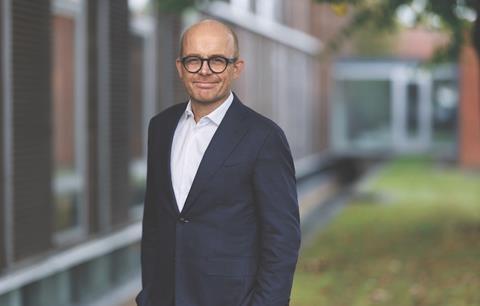
Receiving the initial portion of the report, Martin Præstegaard, ATP’s chief executive officer, said it was important that ATP’s investment strategy was continuously challenged from an external perspective, since the pension fund managed part of the Danish population’s basic financial security.
“We will actively use this independent assessment of our choices and approach in the further development of the strategy,” he said.
The evaluation project has been criticised for not being conceived as a fully independent, arms-length exercise.
In a post on LinkedIn a week ago, Berg addressed two criticisms of his team’s work — that the experts had been paid by ATP, and that their mandate had been limited to the investment strategy.
Of the former, he said this had not influenced the conclusions, saying: “Those, who know me, know that one of my career-destroying features is that I only sign up to what I believe in.”
On the latter point, Berg said readers of the conclusions would see the trio had also covered ATP’s role in the Danish pension system and the ATP act. “We cannot evaluate ATP’s investment strategy, if we did not see it as part of something bigger,” he said.