








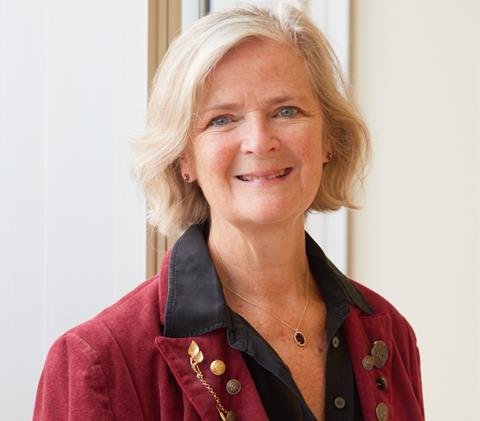
Along The Strand in London, a series of flags celebrate people who have helped shape the neighbourhood. Among the beaming faces fluttering above the street is the honorary group captain Sally Bridgeland of 601 Squadron of the Royal Auxiliary Air Force, also associated with St Clement Danes Church.
To the pensions industry, however, Bridgeland is better known for her work spanning pension fund leadership, investment governance and sustainable investment. She is a pioneer in responsible and impact investing, and has built an unusually broad portfolio career, which includes her current role as chair of Nest Invest and chair of the Development Bank of Wales, as well as former senior positions as chief executive of the BP Pension Scheme, chair of Local Pensions Partnership Investments, and chair of Impax Asset Management, among others.
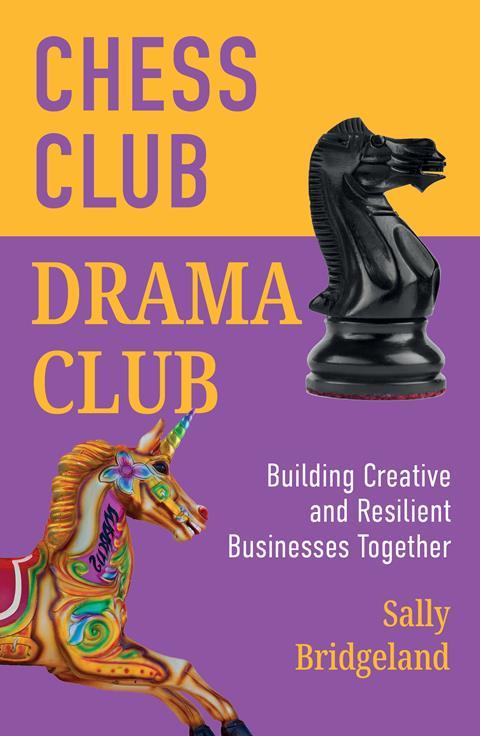
And now Bridgeland can add author to that list. Chess Club, Drama Club: Building creative and resilient businesses together, was published this week. The book is a call to action for inclusivity in decision-making and team dynamics, arguing about the need to bring different types of thinking into each room to ensure that both creative instincts and analytical rigour work alongside each other to drive business success.
Club Mixes
Bridgeland suggests that organisations need to encourage people to use a broader range of skills, a so-called ‘Club Mix’, to really thrive. People who relish ‘the quantitative delights of investment analysis and reporting; those who are passionate about the rules of governance, compliance and controls; those who enjoy getting the finance and the rules right,’ embody Chess Club skills.
In contrast, people who ‘love telling stories about the investment philosophy, the people and the processes; those who look forward to the eyeball to eyeball, cut and thrust of negotiating deals; those who are passionate about leading teams and get a buzz out of motivating people’, enjoy using Drama Club skills.
Lessons for asset owners
The book has many takeaways for the pensions industry. Traditionally Chess Club-focused, the pensions sector tends to prioritise rules, models, measurement, and carefully sequenced decisions. But it needs some Drama Club perspective, Bridgeland tells IPE.
“When we talk about things like purpose and beliefs, that’s where the Drama Club comes in. The Chess Club is good at translating that into things we’re looking for, like metrics, but quite often the purpose of the Drama Club is to not lose sight of those investment beliefs, and we’ve seen that when we do things like climate reporting. As soon as people get the numbers, they start focusing on them, but then they’re looking backwards, because things change, and you might need to change your beliefs or add new beliefs,” she explains.
The Drama Club also helps the pension industry recognise the importance of telling stories. It is not enough, Bridgeland argues, to simply tell members about their money, especially when retirement figures and the value of money changes over time. Pension funds should also talk to their members more about how their money is being put to work.
“Stories around the impact, the hope, and the future world they are going into is more engaging for members. We have to make sure we are being fair and providing value for money and charging a fair price, but people also need to be able to engage with the stories about what their money is doing in the meantime and the impact it is having,” she says.
Beyond the narrative
What distinguishes Chess Club, Drama Club: Building creative and resilient businesses together from other management works is its combination of personal anecdotes –we learn about Bridgeland and her family, and even about a remarkable near-death experience she had – and case studies that draw on a range of real-life businesses, from start-ups to behemoths, which look at where Club Mixes have made a material impact, and where a reliance on either too much Chess Club or Drama Club has created complexity.
Typically, Bridgeland uses a Chess Club/Drama Club analogy for why she included those stories and case studies. “There is plenty of Chess Club reading with evidence of the facts, but I also wanted members of the Drama Club to also enjoy reading this. I want to celebrate individuality, and it’s the personal stories that make you different.”
There are also moments for useful reflection – questions for the reader after each chapter which help with generating insight into behaviour, thinking and decision-making.
Bridgeland, a former pension fund and investment consultant, ties all these examples together with a rich range of ideas from the world of management, psychology, and behavioural science, from Kahneman’s Thinking, fast and slow to Armstrong’s sacred nature: How we can recover our bond with the natural world.
You would think that Bridgeland herself, a mathematician and first woman to serve as master of the Worshipful Company of Actuaries, would be very much in the Chess Club. However, she describes herself as both ‘ruthlessly analytical’ and ‘someone who dances freestyle and doesn’t care who is watching’ – she is, in fact, firmly a Club Mix, which is why the book ends with a moment of reflection on how the book was put together, and the different skill sets that were required to bring it to life.
In a world where asset owners and asset managers alike need to foster more resilient and creative cultures, Chess Club, Drama Club: Building Creative and Resilient Businesses Together is a useful and engaging addition to the lexicon.