
PFA, Denmark’s biggest pensions institution, today reported a flip in year-to-date investment returns for its customers since the end of the first half — on the back of a summer stockmarket rally, but also citing its dollar hedging as a positive factor.
In the market commentary published today, PFA said strong financial statements from companies had breathed new life into the stock markets lately, with market participants also appearing to be reacting more calmly than in the spring to US president Donald Trump’s changed tariff announcements.
“But a weaker dollar is eating away at the returns for Danish investors – and the conflict between Trump and Powell continues to keep the markets on their toes,” the DKK828bn (€110bn) group said.
Although the S&P500 had risen by around 8% so far this year, PFA said the dollar had fallen by roughly the same percentage against the Danish krone, which had eroded the return in krone terms.
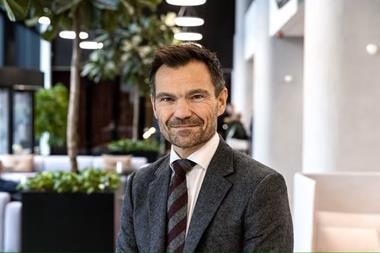
Tine Choi Danielsen, PFA’s chief strategist, said: ”The dollar is at its lowest level against the Danish krone in the past three years, so even with great equity returns in the US, the gain has been more modest for Danish investors.”
“At PFA, we have continuously protected our customers against the risk of a weaker dollar, and this has contributed positively to the return, which for a typical PFA customer here at the start of August is just under 5%,” she added.
“A weaker dollar is eating away at the returns for Danish investors”
PFA
Danielsen said she was generally more optimistic about market developments than in the spring. But continued uncertainty about customs duties, inflation, interest rates and currency developments meant PFA expected the full-year return to come in at anywhere between 0% and 10%.
According to Danish pension fund return figures for the first half recently compiled by consultant Nikolaj Holdt Mikkelsen, PFA’s standard pension product had produced a 2.1% return for moderate-risk profiles and 15 years to retirement by the end of June.
That H1 return was just below the average for the industry of 2.3%, according to the ranking.
AkademikerPension’s AlfaPension product stood out in Holdt Mikkelsen’s comparison table as the lowest, and only negative first-half return, at minus 0.9%.
In a commentary earlier this month, the labour-market scheme put the blame primarily on the sharp decline in the US dollar for the weak result.
AkademikerPension chief investment officer Anders Schelde said: “It has been a challenging half-year where an unpredictable Trump has unfortunately loomed far too large, not only in the media, but also in the financial markets.”
“Consciously or unconsciously, Trump has sent the dollar crashing, but fortunately we hedge a lot of our exchange rate risk, but not enough to shield ourselves 100%,” Schelde noted.
Pension and insurance firms in Denmark ramped up their US dollar hedging significantly in the first half of this year, according to recent figures from the country’s central bank, Danmarks Nationalbank.
Firms in the sector had increased their currency hedging of investments in US dollars to 73.5% from 61.8% since the start of the year, it said, adding that 30% of the industry’s investments were in dollars — around DKK1.4trn.
“The majority of the exchange rate loss [for pension and insurance firms] this year is due partly to the fact that the dollar exchange rate has fallen significantly since the beginning of March, and partly to the fact that approximately a quarter of the investments in dollars are not currency hedged,” the bank’s analysts said.
While the sector made an overall investment loss of DKK4bn in the first half, the bank said, it added that currency hedging had reduced the potential losses by around DKK80bn.
Read the digital edition of IPE’s latest magazineRead the digital edition of IPE’s latest magazine