






Corporate restructurings are increasingly driving changes to German companies’ pension liabilities, investment strategies and risk management, according to consultants.
Industries across Germany are undergoing profound transformation as business models evolve. Companies are divesting businesses, making acquisitions and reorganising their corporate structures.
The number of restructurings is increasing, while transactions are becoming more complex and time-consuming, according to the Restructuring Study 2026 published by Roland Berger.
In the survey, 87% of respondents identified the automotive industry as the German sector with the greatest need for restructuring, followed by mechanical and plant engineering, which is structurally dependent on the automotive cycle.
The need for restructuring has risen most sharply in the hospital and care sector, affected by structural underfunding and rising operating costs, and in the chemical industry, according to Roland Berger.
Occupational pension schemes are also coming into focus during corporate restructurings.
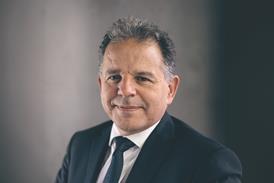
Hanne Borst, head of retirement at WTW, said a recurring question during reorganisations was how to restructure occupational pension schemes to support companies’ strategic realignment.
“It is often clear that pension systems developed over decades no longer align perfectly with a company’s future structure, and can entail significant financial risks, balance sheet burdens, and administrative complexity,” she said.
For many employers, the challenge is striking the right balance between risk management, financial flexibility and their attractiveness as employers, she added.

“On the one hand, the aim is to reduce pension-related risks and simplify administrative processes; on the other, occupational pensions remain a vital tool for attracting and retaining employees,” Borst said.
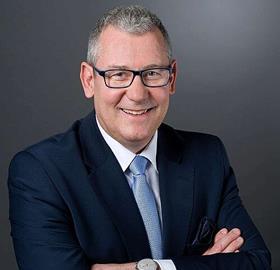
Corporate restructuring is currently the primary driver of changes to German companies’ occupational pension investments, according to Uwe Rieken, founder and managing partner of Faros Consulting.
During restructurings, companies “fundamentally reorganise” the asset allocation of their occupational pension schemes to separate pension liabilities from their core business operations, he continued.
CTAs are ‘dominant’ vehicle
Contractual trust arrangements (CTAs) are the “dominant” vehicle used by German companies to separate assets backing existing direct pension promises (Direktzusagen) from operating assets, Rieken said.
In carve-outs, an “equivalent subsequent arrangement” is usually established for the buyer, making mergers and acquisitions a key growth driver for the CTA market, he added.
Large corporations such as Airbus, TÜV Süd, Evonik and ZF Friedrichshafen operate their own CTAs, while small and medium-sized enterprises use group CTAs.
For smaller companies, transferring retiree portfolios and assets to a dedicated pension entity is often a prerequisite for selling a limited liability company (GmbH), according to Faros.
Companies also restructure their pension arrangements through changes to governance and future benefit promises. Defined benefit (DB) plans may be closed to new members, while accrued benefits for existing members generally remain unaffected.
De-risking
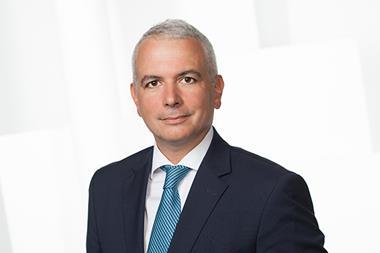
Many companies are also considering “more extensive de-risking measures”, including transferring obligations to Pensionsfonds or executing buyouts to reduce balance sheet risks, simplify plan management and secure the long-term funding of pension obligations, Borst said.
Volkswagen told IPE in a statement that it continuously monitors all relevant developments and options across the group regarding the management of pension obligations, regardless of current or future planning.
The carmaker has approved its Future Plan 2030, described as the most far-reaching strategic transformation programme in its history, to refocus on its core business.
In September, Volkswagen’s largest shareholder, Porsche, sold its stakes in Bugatti Rimac and the Rimac Group to generate proceeds of approximately €1bn. Porsche is using €250m of the proceeds to further fund its pension obligations.
BASF, meanwhile, has no current plans to transfer existing domestic pension obligations to a company outside the group through a buyout, a spokesperson said.
WTW expects the restructuring of occupational pension schemes to remain high on companies’ agendas in the coming years.
Restructuring, portfolio adjustments, M&A activity and the continued drive to de-risk pension obligations will remain key factors shaping the market, Borst said.
“Against this backdrop, we anticipate continued high interest in CTA structures, Pensionsfond transfers, and, in particular, buyouts, to sustainably reduce or fully outsource pension risks and focus more closely on their core business,” Borst said.




.jpg)