




German unions Ver.di and the Education and Science Union (Gewerkschaft Erziehung und Wissenschaft, GEW) are urging employers to lift their opposition to introducing auto-enrolment into occupational pensions.
Ver.di chair Frank Werneke said in an interview that the Pension Commission’s (Alterssicherungskommission) proposal for retirement income equivalent to 70% of net income, after tax, across the three pillars of the pension system is feasible only “if all employees receive an occupational pension”.
Achieving this goal requires opening up existing occupational pension systems in companies, according to Werneke.
Ver.di is ready to support expanding occupational pensions underpinned by the social partners to all employees.
“This also needs a statutory requirement for mandatory occupational pensions with compulsory employer contributions for employees,” he added.
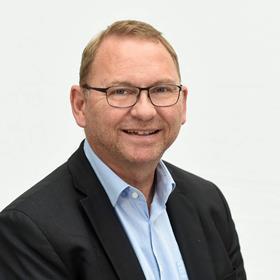
Ver.di will present its arguments for reaching an agreement with employers during the social partner dialogue (Sozialpartnerdialog) in Berlin on 8 October, under the leadership of the Federal Ministry of Labour and Social Affairs (BMAS).
The Pension Commission recommended in its report, published in June, that the dialogue should identify measures to significantly increase occupational pension uptake.
“I do not hold out much hope that employers’ associations will voluntarily reach an agreement with us during the upcoming dialogue. Ultimately, it is up to the government to mandate occupational pensions for all employees by law,” Werneke added.
Maike Finnern, GEW’s chair, separately urged employers’ associations to abandon their “obstructionist stance” on binding, industry-wide collective bargaining agreements for occupational pensions.
“This would also bind small and medium-sized enterprises,” Finnern said.
Occupational pensions in Germany have struggled to gain traction, particularly among small companies. Only 25% of employees at companies with up to 10 workers have a company pension, compared with more than 85% of employees at firms with 1,000 or more staff, according to a study published in April by the German Institute for Economic Research (DIW Berlin).


.jpg)