The Norwegian government is ordering a review of investments in Israeli companies made by the Nordic country’s huge sovereign wealth fund, after confirmation yesterday morning that the fund holds a significant stake in a firm supplying fighter jets used to bomb Gaza.
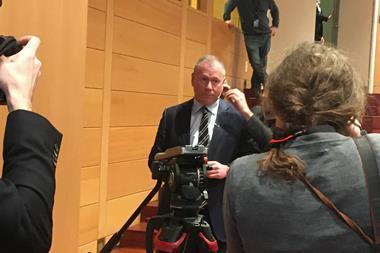
In response to questions, Nicolai Tangen, chief executive officer of Norges Bank Investment Management (NBIM), told reporters yesterday in Oslo that the Government Pension Fund Global (GPFG) remained invested in Bet Shemesh Engines Holdings.
Norwegian newspaper Aftenposten reported on Monday that the NOK20trn (€1.7trn) SWF held shares in the Israeli company, which the paper said maintained and produced parts for Israeli planes used in Gaza attacks.
Bet Shemesh Engines states on its website that it is “particularly proud to support IAF’s front-line Fighter Aircraft and Helicopters!”.
The Norwegian government is already under pressure from the United Nations over its continuing investments in Israel, given legality concerns around Israel’s occupation of Palestinian territory in the West Bank and the Gaza conflict.
While being interviewed around the launch of his new book on management yesterday, Tangen told Norwegian business daily DN the GPFG had increased its ownership stake in Bet Shemesh Engines from the end of 2023 to 2024 to just over 2% of the company, was still a shareholder, and had ramped up its holding to about 205,000 shares today from some 190,000 at the end of 2024.
The value of the investment is around NOK345m currently, DN reported.
Tangen also confirmed that the Israeli company was not part of the fund’s benchmark index, and a spokeswoman for NBIM told DN that shares in the engineering firm had been bought by external managers on behalf of the fund.
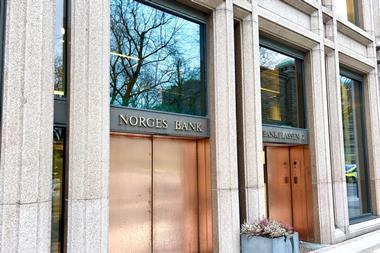
The NBIM CEO said in an interview with national broadcaster NRK yesterday that there was a clear division of roles regarding the GPFG’s investment, and it was the Council on Ethics which considered ethical issues – and that for this Israeli company, there had been no instructions from the council.
Asked by NRK whether questions had been asked about the company profiting from the war in Gaza by maintaining Israeli fighter jets, Tangen said: “New information has emerged here that we must deal with, and we must also make decisions accordingly.”
A year ago, NBIM’s ethical council indicated a tougher stance on businesses helping Israel’s operations in the occupied Palestinian territories, and since then, has announced two exclusions of Israeli companies.
Norway’s prime minister Jonas Gahr Støre told NRK that he had been “very worried” when he became aware of the investment yesterday.
“I have asked the minister of finance to contact Norges Bank to find out what the situation is,” Støre said.
He said there were clear provisions around the GPFG that it should not be invested in companies that violated international law, and stated to NRK that he believed there were many violations of international law by Israel in its warfare in Gaza.
Finance minister Jens Stoltenberg said he would now ask Norges Bank and the Council on Ethics to review the oil fund’s investments in Israeli companies, NRK reported.
“The purpose is to ensure that the fund is not invested in companies that contribute to the illegal occupation of the West Bank and the war in Gaza that violates international law,” he said.
Meanwhile, Svein Richard Brandtzæg, leader of the Council on Ethics, stated the panel had not made any recommendation to exclude Ben Shemesh Engines, according to the NRK report, but he added that the council was currently investigating several companies as a result of what he called gross violations of norms in Gaza.
“Once we have made a decision and sent a recommendation, it may take six months before the fund has divested, and it’s only then that a press release is issued,” he said, adding that until then, the council’s decision was considered insider information.
Read the digital edition of IPE’s latest magazine