




Ethical scrutiny around the Norwegian sovereign wealth fund’s investments in Israeli companies is being tightened up, with more firms linked to the occupation of the West Bank and the war in Gaza being thrown out, it was announced in Oslo today.
A fortnight ago, Norway’s finance minister Jens Stoltenberg formally requested the fund’s management – and its Council on Ethics – review Israeli investments and consider new measures in regard to them amid a furore around a company maintaining fighter jets used to bomb Gaza.
Days later, NBIM announced it had divested 11 of the 61 Israeli companies it had in its portfolio, and taken other measures.
In a letter to the finance ministry today, Norges Bank Investment Management (NBIM), manager of the NOK20trn (€1.7trn) Government Pension Fund Global (GPFG), said: “Based on the letter from the ministry of finance, Norges Bank Investment Management has also conducted a new review of the Israeli companies in the fund’s equity portfolio.”
The central bank division said, inter alia, it had used public information to assess whether companies had operations in occupied areas or had financed the development of settlements, contracts with Israeli defence.
“Based on this review, Norges Bank Investment Management has sent the Council on Ethics information about several Israeli companies,” it said.
“Norges Bank and the Council on Ethics have delivered thorough and good reports, and the measures that are now being notified are important for the pension fund”
Norway’s finance minister Jens Stoltenberg
NBIM said that as of 14 August, the fund had NOK19bn invested in 38 companies listed in Israel – down NOK4bn and 23 companies from 30 June 2025.
“The portfolio has been reduced by six smaller companies since 11 August,” it added, without naming the companies, but saying that at the 2025 half-year stage, GPFG had NOK11bn less invested in Israeli companies than its benchmark index.
In the letter signed by Norges Bank governor Ida Wolden Bache and NBIM chief executive officer Nicolai Tangen, the bank also detailed a number of measures it was taking to bolster its work on observation and exclusion of companies.
They said NBIM had recently strengthened the analysis tools for risk assessments, including through expanded use of artificial intelligence – and would ensure that the Council on Ethics could also benefit from those tools, “especially in acute or heightened situations”.
“In light of the current situation, Norges Bank Investment Management has sent the Council on Ethics additional information about several international companies,” they wrote, indicating the fund may also divest companies outside Israel as part of the current purge.
“In line with the Guidelines for Observation and Exclusion, we will also assess using Norges Bank’s right to formally request the Council on Ethics to assess companies,” the Norges Bank leaders said.
Council of Ethics steps
Meanwhile, the Council on Ethics published a letter from its leader, Svein Richard Brandtzæg, describing steps it would take to improve scrutiny of investments and speed up processes.
Brandtzæg said the council would implement a systematic and regular review of companies associated with Israel’s occupation of the West Bank and the war in Gaza, and make a renewed assessment and review of firms previously assessed in that connection.
Other measures the council is to take, according to the letter, include strengthening the secretariat’s capacity to work with companies’ connections to conflicts, intensified information sharing with Norges Bank, and more use of consultants to meet the need for increased investigative capacity.
Stoltenberg responded to the letters, saying: “Norges Bank and the Council on Ethics have delivered thorough and good reports, and the measures that are now being notified are important for the pension fund”.
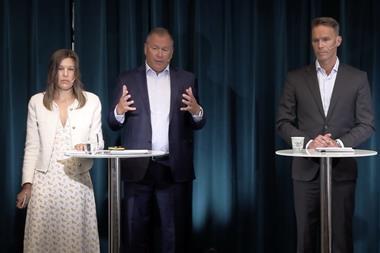
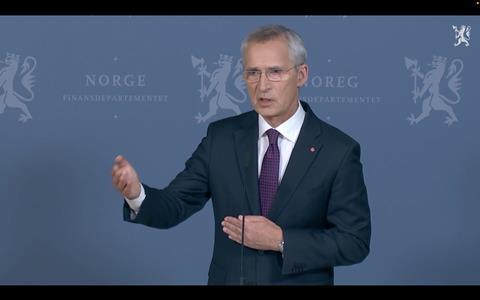
He also went into detail about many issues around the GPFG, its governance and the political aspects of it, at a press conference in Oslo today lasting more than an hour.