




Licking its wounds after losing money on Norway’s now-bankrupt Morrow Batteries, Danish pensions investor PKA says it can’t go on investing in such Europe-critical businesses without state support, and called on politicians to act.
Morrow Batteries announced on 6 May it would file for bankruptcy after efforts to secure new financing ran out of time.
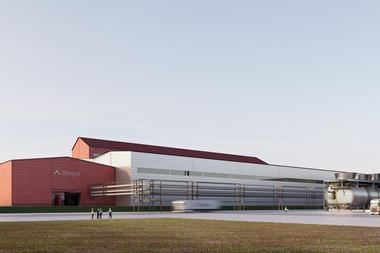
Despite having won supply contracts, the Arendal-based start-up said its problems had included oversupply in a more competitive global battery market, higher capital costs, and delays in the industrialisation process.
PKA, which manages DKK500bn (€67bn) for four pension funds, lost all of the DKK388m it had invested in Morrow via Danish investment manager Maj Invest, a spokesman for PKA confirmed.
“We don’t expect to salvage any of the invested money,” he told IPE.
Morrow, whose financing included NOK3.3bn (€300m) of equity, in January 2025 listed PKA as one of its main investors, alongside Norwegian energy firm Å Energi, which is owned by municipalities and the state hydropower company Statkraft, German corporate Siemens, Swedish-Swiss listed technology firm ABB, and Norwegian state investment vehicle Nysnø Klimainvesteringer.
IPE is not aware of any other pension investors exposed to Morrow, whose collapse echoes the demise of Swedish battery startup Northvolt in 2024, which left major pension funds such as Sweden’s AP1-4 and AMF, and Denmark’s ATP out of pocket.
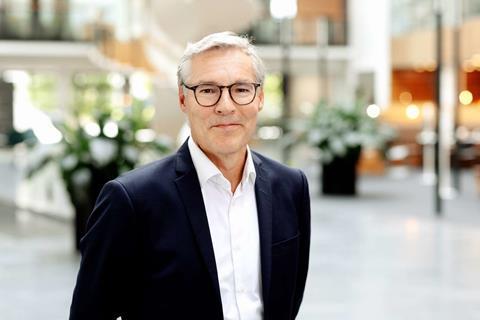
In an interview with Danish financial daily Borden on Saturday, PKA’s chief executive officer Jon Johnsen called on politicians to give state support for such investments that were critical to Europe’s green transition and defence needs.
“We want to support Europe. We want to contribute to the green transition. But the fine words from politicians must be converted into real action,” he said.
“If we are to invest in industries that are important for society, then there has to be political backing. Or else we can’t defend making more investments in industries that are doomed to lose to their Chinese and American competitors,” the CEO said in Børsen.
Johnsen said Europe stood “as the last bastion of the world order that we thought applied to the Western world”.
“We see fantastic technological development in the US and China, but maybe we’re also starting to doubt the extent to which they are our friends. So we have to build up our own competencies,” he said.
It was a geopolitical consideration too, he said, because battery production mattered if Europeans had to defend their countries with drones.
“We know we can’t produce batteries in Europe on competitive terms. We don’t even need to discuss that. Even if we come up with something brilliant tomorrow, I don’t think we’ll beat the Chinese.
“So if there’s a desire for us to be able to produce it ourselves, we have to get some government support,” he said, citing the electricity price guarantees given to wind farm developers as an example of what could be done.