
With the pace of merger activity among Iceland’s pension funds speeding up, experts see the continuing consolidation within the industry as positive for business and members – and expect the tally of pension funds to shrink still further.
Thórey Thórðardóttir, chief executive officer of the Icelandic Pension Funds Association (Landssamtök lífeyrissjóða, LL), notes the recent spate of merger announcements and the prospect that, after a number of consolidations, the tally of pension funds will drop to just 16.
“This is a very positive development that strengthens the operational foundation of the funds,” she told IPE.
“In 1980, there were 96 funds, and by the turn of the millennium, they had merged down to 62. At the end of 2024, there were 20 operational funds, and the number is now decreasing rapidly,” the lobby group’s CEO said.
November has heralded several merger announcements, with Frjálsi Pension Fund and Iceland’s Farmers’ Pension Fund (Lífeyrissjóður bænda, LSB) deciding to start formal discussions on a possible fusion, less than two weeks after Frjálsi’s merger with the Icelandic Dental Association Pension Fund (LTFÍ) was approved by the latter fund’s members — and a merger between pension funds Almenni and Lífverk won member approval.
In a discussion paper last autumn on the Icelandic pension system, the Central Bank of Iceland (Seðlabanka Íslands) said that even though the number of pension funds had fallen markedly in recent decades, it was likely to decline even further, which it said accorded with international trends.
The central bank, responsible for pension fund supervision, expects the number of pension funds to stand at 16 at the end of 2026, after all the mergers currently in the approval process, and assuming the Frjálsi/LSB merger goes ahead.
Thórðardóttir said: “Fewer funds mean stronger and more robust entities, although it is always good to have some diversity to ensure competition and offer different investment approaches.”
“Fewer funds mean stronger and more robust entities, although it is always good to have some diversity to ensure competition and offer different investment approaches”
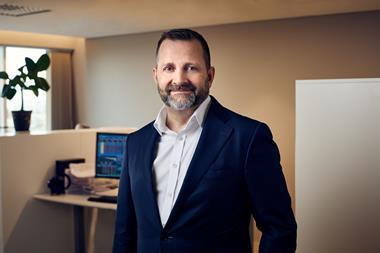
Thórey Thórðardóttir, CEO of the Icelandic Pension Funds Association
“At the same time, it is difficult to say what the optimal number will be in the future,” she added.
Outlining current pressures on pension funds which could drive mergers, the central bank said the funds’ growing investment needs would present them with a challenge in coming years.
“There have also been calls for increased streamlining and internal controls, which will be more difficult for smaller pension funds than for their larger counterparts,” the central bank said in the paper.
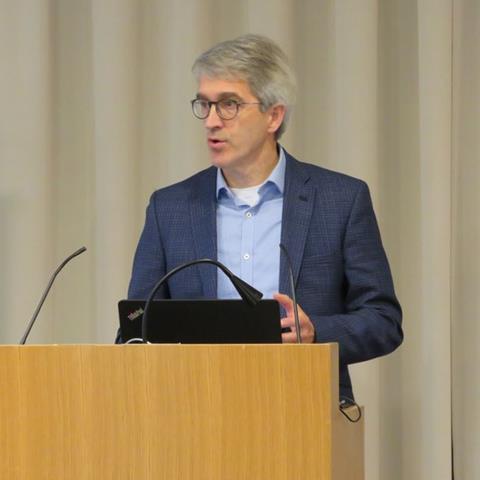
Björn Ásgrímsson, senior risk analyst for financial stability at the Icelandic central bank, said that even though the bank does have concerns about smaller and closed pension funds being forced to merge because of such pressures, there are, nevertheless, benefits to be gained from mergers, both for members and the efficiency of the pension saving system.
“One would expect that economies of scale will be positive for members in the long term, and there are also important potential improvements, such as lower cost-effective asset and risk management and more robust internal infrastructure,” he told IPE.
Már Wolfgang Mixa, associate professor at the University of Iceland and board member of the Almenni Pension Fund, said the opportunities for further mergers were becoming more limited.
While the number of pension funds still existing was high for a small country like Iceland, he pointed out that the percentage of GDP within the Icelandic pension fund system was among the highest in the world.
In terms of the advantages for the pension system and members, a consolidation within provision is positive, according to Mixa, especially up to a certain point.
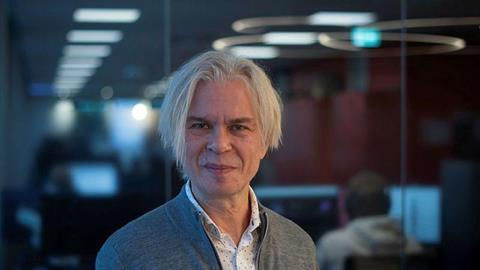
“The costs of running the pension fund system as a percentage of assets under management are, however, low and much lower than those for most investors owning shares in mutual funds,” he told IPE, adding: “The number of funds reaching a size at which additional mergers create such value has obviously decreased over the last quarter of a century.”
As to whether more mergers were good or bad for competition in the Icelandic pensions market, Ásgrímsson said there was limited competition anyway between pension funds in the mandatory part of Icelandic pension savings, as the membership is, in most cases, based on collective wage agreements.
In any case, Mixa commented that while the number of options had decreased a great deal in recent years, people still had ample choices.
“It must be kept in mind that all the funds must adhere to strict asset allocations, so it is not as if people are choosing between high-risk investments and various bank account options,” he said.
Asked whether he thought it possible that the number of Icelandic pension funds could shrink to as few as five or six, Mixa said that one limitation to pension fund consolidation was that some of the funds were owned mainly by people with different life expectancies, making it harder to lump them into the same pension scheme.
“While this is not impossible, one might question whether such a low number would force one to re-evaluate whether pension fund industry consolidation is good or bad for competition, regarding people’s choices,” he noted.
“An obvious way to lower costs for pension funds is to focus more on index funds and concentrate more on asset allocation and put more care into illiquid investments, such as start-up companies,” he said, adding that this was a trend many pension funds had been following in Iceland in recent years.
Read the digital edition of IPE’s latest magazine