
Investors often struggle to act amid global conflict and instability, but a new initiative is urging them to take a different approach. Rather than pulling out of conflict zones, a coalition representing $18trn (€15trn) in assets is focusing on engagement.
Led by the Church of England Pensions Board (CEPB), the Global Centre for Peacebuilding and Business (GCPB) aims to shift from divestment to facilitating dialogue.
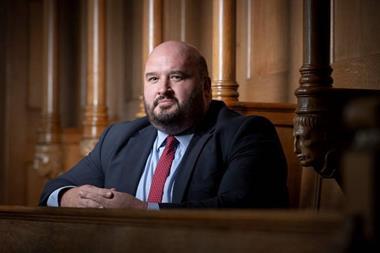
“It is important to be able to engage in a dialogue with your enemy and not dehumanise them. It’s just common sense, and it’s good business practice,” Adam Matthews, chief responsible investment officer of CEPB, told IPE.
Supply chain at risk
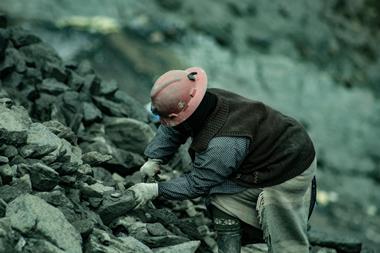
The green energy transition depends on minerals sourced from regions such as the Democratic Republic of Congo (DRC) and Mozambique, where instability is high.
According to CEPB, exiting amid conflict not only raises moral questions but also threatens supply chains.
The board said conflict linked to mineral extraction destabilises communities, undermines investment, and hinders national progress, yet remains treated as a niche issue rather than a material portfolio risk.
Faith-based mediation
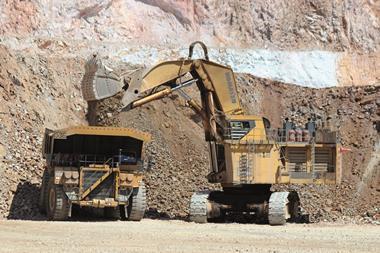
Launched in Cape Town earlier this month, the GCPB aims to integrate peacebuilding with the realities of mining and natural resource operations.
The centre grew out of the Global Investor Commission on Mining 2030, which represents about $18trn in assets and has advocated for a long-term framework to support responsible mining and reduce conflict risks.
A key feature is using faith-based networks as trusted intermediaries in areas with weak or failing governance.

The centre draws on decades of experience among global faith leaders and was inaugurated with a service at St George’s Cathedral in Cape Town led by Archbishop Thabo Makgoba.
Its guiding principle comes from Archbishop Desmond Tutu: “If you want peace, you don’t talk to your friends. You talk to your enemies.”
Matthews told IPE that the centre represents CEPB’s move from reacting to individual mining controversies towards a systemic approach.
“When conflicts arise, many investors struggle to respond positively. But they could play a very different role,” he said.
Even investors without direct holdings in conflict zones remain linked through supply chains and portfolio companies, making withdrawal unrealistic and not necessarily safer, Matthews added.
Stewardship amid conflict
The centre equips investors to understand conflict dynamics and identify economic and political levers that can support de-escalation.
Recent events in eastern DRC underscore the challenge.
Last year, Matthews called for an urgent investor briefing after Rwandan-backed M23 militia forces took control of Goma, amid a wider conflict displacing millions over the past decade. For Matthews, such events reveal the limits of purely defensive risk management.
James Megoran, GCPB’s director of peacebuilding, said the initiative fills a gap in traditional stewardship.

“Peacebuilding and business have rarely been linked in a systematic way. In a time when conflicts related to extractives are growing, combining peacebuilding with business practices is now essential,” he told IPE.
Faith-based organisations often remain active where state institutions fail, providing legitimacy and continuity that companies and investors struggle to match, Matthews noted. “Often, faith structures remain in place,” he said.
Pilot programmes are underway in northern Mozambique and eastern DRC, with expansion planned.
Early results suggest companies are willing to engage, particularly when investors are involved and can secure board-level attention, Matthews said.
Rethinking conflict risk
The GCPB is challenging investors to rethink how conflict risks are assessed in the transition minerals sector.
Matthews hopes the Mining 2030 commission and the centre can shift perceptions of mining from a source of risk to a driver of long-term value.
If critical minerals are essential for decarbonisation, investors bear responsibility for how extraction intersects with governance, inequality, and security.
“It’s not good business practice to be in a non-permissive working environment where people are set to kill you,” Megoran said.
Success, Matthews and Megoran told IPE, will be measured not only by specific conflict resolutions but by whether investors accept a more constructive role in conflict zones and whether extractive industries can become drivers of peace and value creation.