




Australia has seen the number of corporate pension funds shrink significantly over the years, but recent mergers with industry funds are giving new life to the sector
Key points
- Wave of mergers sweeps across Australia’s A$3.5trn superannuation industry as it continues to consolidate
- Qantas Super and TelstraSuper among the latest corporate funds to tie up with industry funds
- Economies of scale and better investment outcomes for members cited as the main motives for merging
Australia’s once-thriving corporate pension sector has all but vanished.
In 2023, the market share of pension funds run by public companies in Australia dropped to less than 1%. That was before two of the largest funds – covering the employees of the national carrier, Qantas, and the country’s largest telecommunications company, Telstra - moved to leave the corporate sector to merge with an industry fund.
Together, they currently have A$36bn (€21.7bn) under management on behalf of 113,000 members, but of the two funds, the loss of TelstraSuper is more significant. With A$26bn under management, TelstraSuper was one of the top 20 largest funds in Australia in 2023, according to KPMG’s ranking of super funds, published in KPMG Super Insights 2024.
In 2008, there were 143 corporate super funds in Australia, compared with 62 industry funds, according to the regulator, the Australian Prudential Regulation Authority (APRA). APRA statistics show that, by 2014, 18 corporate funds were still operating, but by then, industry funds had streaked ahead. The number continues to dwindle, and by June 2024, it was down to six corporate funds, managing 200,000 accounts with A$46bn (including Qantas and Telstra funds) in AUM.
TelstraSuper, which has agreed to merge with the industry fund, EquipSuper, to form a A$60bn fund, says the merger would achieve significant benefits of scale and deliver improved retirement outcomes for members of both funds.
The fund’s chair Anne-Marie O’Loughlin said: “This coming together signifies a new chapter of growth, strength and enhanced services for both funds’ members.”
Speaking of its merger with the Australian Retirement Trust (ART), Qantas Super chairman, John Atkin, said the agreement with ART follows a rigorous process, including a comprehensive assessment of the options available as the A$3.5trn superannuation industry continues to consolidate. This review compared a variety of merger scenarios available to Qantas Super, as well as the option of remaining an independent corporate super fund.
Atkin said that throughout the process of exploring merger options, ART had demonstrated its strong commitment to taking care of members and their best financial interests.
Members of corporate pension funds in Australia have much higher average savings than the national average of A$97,154, according to KPMG Insights. Qantas Super members had the third highest individual accounts in the country with more than A$300,000, and the average TelstraSuper members’ account was around $280,000.
Given the high balances of members, the corporate sector has become an attractive fishing ground for other funds seeking to grow their footprints in an increasingly competitive market.
Corporate funds are generally good performers, and the fact that they choose to give up their independence to come under the umbrella of a larger fund to achieve scale has been a plus.
Economies of scale
Mergers works both ways - for the acquired and the acquirer.
For Qantas Super, its A$9bn AUM will become part of a massive A$330bn pool, managed by ART. Size means greater access to assets and, more importantly, economy of scale to reduce members’ administration fees and increase investment options.
ART, the most prolific of its peers, has been seeking out mergers with corporate funds. Including Qantas Super, which has still be to fully embedded, ART has taken over nine corporate funds since 2022.
What is notable is that they were small corporate funds, the biggest of which was the super fund of the Commonwealth Bank, Australia’s largest bank. It had A$12.3bn under management for 63,700 members. The smallest was Incitec Pivot Employees Super Fund which had just 767 members managing A$2bn in assets.
“Regardless of the size of the merger, the work undertaken by the respective funds remains extensive to ensure that the merger is in the best interests of the respective members, and that equivalent rights can be maintained.”
Andrew Fisher, head of investment strategy, ART
Each merger is unique, with its own challenges and opportunities, says Andrew Fisher, ART’s head of investment strategy.
He told IPE: “Regardless of the size of the merger, the work undertaken by the respective funds remains extensive to ensure that the merger is in the best interests of the respective members, and that equivalent rights can be maintained. Even smaller funds could have complex, legacy arrangements that need to be understood and replicated.”
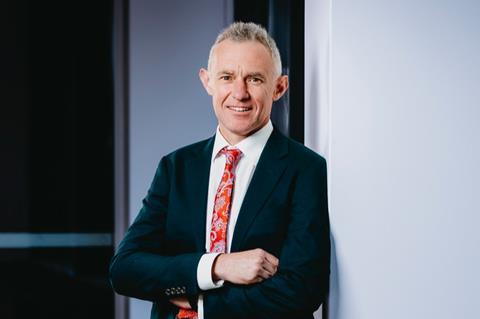
“Investments are an important aspect of due diligence, and merging funds undertake a thorough review of all associated investments,” he explains.
Synergies between investment portfolios are one of the key benefits to members, he stresses. “They include increased scale and associated pricing power and access to complementary investments and strategies. Unlocking these synergies delivers better financial outcomes to members.”
Fisher adds: “As a high-performing fund, ART seeks to merge with other high-performing funds to use our combined scale and investment expertise to seek to deliver better financial outcomes to all our members.”
Having established a track record among corporate funds, Brisbane-based ART plans to expand its presence in the corporate sector. It is entering into agreements with some of Australia’s largest corporates to use ART as their default super fund.
“We are one of the largest corporate superannuation and defined benefit providers in the Australian superannuation industry,” he says.
Fisher told IPE that ART continues to explore growth opportunities but will only proceed if it strongly believes it would be in the best interests of its nearly 2.4 million members. “This will not be growth for growth’s sake, but rather a well-considered and strategic approach to grow our fund in a way that will benefit all ART members.”
ART itself came about through the merger of QSuper and SunSuper. The union in 2022 created a A$220bn fund, rebranded Australian Retirement Trust. It is now a whisker from becoming the largest fund in Australia and steadily moving towards its goal of becoming a A$500bn fund by 2030.
Harmonising investment options
Asked to describe the experience of bringing together two large organisations with respective complex investment portfolios and perhaps different investment strategies, Fisher says simply that the fund has “a merger programme”.
“We undertook a review of the investment options we offered at the time of merger. The review incorporated detailed research across members, advisers and other key stakeholders.”
The key is harmonisation of investment options, he says. “We launched our single investment choice menu for all members in July 2024. As part of this, the MySuper (default option) investment strategies were changed to better align them across all members of ART and to reflect contemporary thinking with respect to managing member savings over their working lifetime.”
Mercer Super has expanded corporate superannuation solutions and seeks to partner with Australian businesses of all sizes. It now manages BT Super and Lutheran Super and most recently took over the A$700m Holden Employees Superannuation Fund.
The current wave of mergers in Australia kicked off in 2019, when the small A$16bn Equip Super merged with Catholic Super to create a A$26bn fund. Andrew Fairley, chairman of Equip at the time, spoke of the ambition to grow to a fund with “A$40bn-A$50bn” under management by 2025.
Fairley, who stepped down in 2021, told a newspaper: “If you’re a fund in the A$5bn-A$10bn range …you’re not going to cut it.”
In 2021, Toyota Super of the Japanese car manufacturer and BOC Super, the pension plan for employees of industrial company, BOC Ltd, joined with Equip which last year began merger discussions with TelstraSuper.
When consummated this year, Equip will become a A$60bn fund, rather than a A$35bn entity if it were to rely on organic growth.