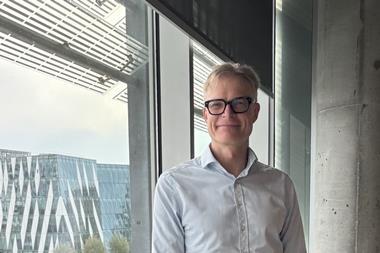






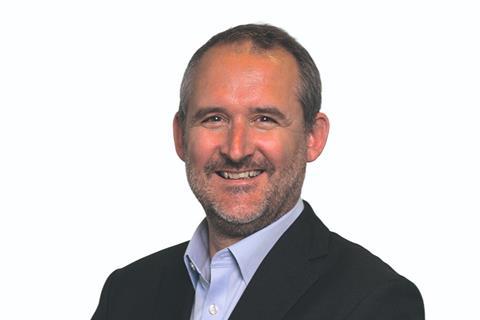
Mark Hargraves, head of international equities and private equity at AustralianSuper, compares managing concentrated equity portfolios to piloting speed boats
“We want stock selection to be the main contributor to returns”
Mark Hargraves
AustralianSuper, Australia’s largest superannuation fund, serves around one in every seven Australian workers. Nearly two-third of the assets of the default option for members, known as the ‘balanced plan’, are allocated to equities.
Mark Hargraves, head of international equities and private equity, says: “Overall, the balanced plan has a CPI-plus-4% objective, and the role of equities is really to contribute to that high return.”
Equity returns may be a volatile asset class but, as Hargraves says, “the power of compounding returns over decades is huge – highly relevant as our average member is hopefully going to be with us for 40-50-plus years. We aim to deliver consistent, repeatable returns over time. We want stock selection to be the main contributor to returns.”
Simultaneously, he emphasises risk management. “We recognise our skills and risks, and overconfidence is a big issue,” he says. “So we structure the portfolio to be diversified – across geography, sectors, and style/factor exposures.
There are just a few touches on the tiller – for instance, a thematic focus on AI. Hargraves says: “AI will create significant opportunities. The current generation with neural networks is a big step from traditional machine learning.”
But otherwise, it is a light touch. The benchmark is MSCI ex-Australia, and Hargraves seems uninterested in geographic bets. “Companies are global; revenues come from across regions, so sometimes exposure looks underweight by listing country but not revenue. We look through multiple lenses to get a true sense of risk exposure,” he adds.
Managing the speedboats
When Hargraves joined AussieSuper in 2023 he says one part of his mission was to bolster the fund’s internal asset management capabilities. Today, he can count on a team of 45 across fundamental equity managers, quantitative analysts and manager evaluation specialists.
The second part was to fine-tune a multi-manager structure, melding what Hargraves calls “a number of building blocks”. From a portfolio construction basis, he says: “The starting point is to define what those building blocks should be, and matching skills and capabilities with that. We look at both our internal and our external strategies through the same lens.” This embraces every manager’s mission, style, and track record. “They have very clearly defined roles and it’s very important that they deliver on that,” he says.
Hargraves admits this structure is “relatively concentrated”, comprising up to 10 external and six internal strategies, each averaging a weight of 7-8% of the overall portfolio. But he points out that while each strategy may be concentrated, the aggregated portfolio is diversified.
“Combining managers reduces portfolio tracking error. Besides, having more than 20 or 30 strategies would lead to over-diversification. Paying active fees without active outcomes. We prefer long-term strategic partnerships, often as their number one client. This leads to platinum relationships with trust, confidence, and shared insights,” Hargraves says.
This requires a nuanced approach to risk management. “Tracking error gives insight, but one metric isn’t enough. It can give false positives. We use multiple analytics, risk and factor models [and] fundamental perspectives. We slice and dice data through multiple lenses. This gives us a good understanding of portfolio behaviour beyond one number,” he explains.
This is where the navigation-based analogy comes in handy. He says: “There’s a trade-off: over-diversification reduces active outcomes; too concentrated increases risk. We balance a stable ‘supertanker’ core with more volatile speedboats for growth and alpha. Compounding consistently over decades yields great outcomes and comfort in the journey.”
A$385bn
AUM as of June 2025
31%
International equities allocation
6
Internal equities strategies, plus another 10 external managers
7-8%
Maximum weight of each strategy
45
Equity team members, in fundamental, quant and manager evaluation roles
Hargraves says he has evolved the portfolio strategy by creating four key building blocks, each with clear risk-return objectives and clear objectives within the portfolio. “The enhanced strategy is more about liquidity and risk management, in particular, managing exposure to mega-cap stocks as part of a construction process. For our core and core plus managers, we’re looking for consistency over time in any market environment – repeatability. Our satellite strategies are typically higher octane,” he says.
The latter group consists of managers with a variety of style or sector influences, such high-growth or deep value strategies. “We expect those to deliver a longer-term alpha target over time and recognise the journey will be a lot more volatile. It’s really thinking through the lens of: ‘What’s the risk-return profile? What’s it bringing to the portfolio?’ And then within that, [being] very clear about trying to identify people who fit really well”, Hargraves says.
The roster of managers includes those that run concentrated strategies consisting of 30-40 stocks. “Obviously, when you add all our portfolios up, you get additional diversification coming through, so there’s a balancing act,” he says. “Within our enhanced strategy, we have hundreds of holdings in that; it’s a range.”
Managers have frameworks for sizing and single stock limits as part of their approach. “We manage mega-cap exposure as an overlay. Below that level, there are no formal individual stock limits,” Hargraves adds.
Other risk factors are also monitored closely. “We think about drawdown analysis and the kinds of ‘speed bumps’ they might have,” he says. “One of our best managers over 20 years has delivered a phenomenally strong long-term return, but it’s been a rollercoaster ride.”
New tools, same principles
Hargraves has a clear vision for the future. “We constantly look to improve analytics and investment decisions, including new tools like AI,” he says. “But our principles won’t change – diversification, stock selection, long-term focus. We have a portfolio structure that’s robust for today and flexible for the medium term.”
One thing will change, however. “As we sit here today, about 70% of the portfolio is run by external managers and 30% internally. Strategically, we want to insource more assets over the coming years. The portfolio is very large now; we begin to hit capacity limits with some of our preferred managers. The risk is adding manager on manager can lead to over-diversification, paying active fees for an increasingly index-like outcome,” says Hargraves.
Insourcing assets will enable significant cost efficiencies, according to Hargraves, which allows reinvestment in other areas, for example unlisted assets. “Members look primarily at reputation and performance, but they also look at cost. We structurally focus on managing that overall cost envelope,” he adds. l