




In Depth – Page 9
-
 Features
Discerning investor sentiment: this year’s proxy season
Every annual general meeting (AGM) season has traditionally brought with it a few symbolic moments – events that serve as broader indicators of the market’s mood when it comes to environmental and social issues.
-
 Features
FX in waiting mode after lively 2022
After a long period of muted volatility, currency markets sprang back into action in 2022 as geopolitical risk and diverging monetary policy came to the fore. This year it is quieter, but markets remain rattled over the unpredictable interest rate scenarios. As a result, many market participants are waiting for a sharper picture to emerge.
-
 Interviews
Franklin Templeton’s Jenny Johnson: Finding the way through the noise
When Jenny Johnson arrives, the atmosphere changes. She is composed, smiling and friendly and her boundless energy fills the room.
-
 Features
Ahead of the curve: Is growth back or is it a trap?
It is likely you have heard about ‘value traps’. They are low-multiple companies that are priced at an ever expanding discount to the market and structurally underperform as fundamentals weaken due to new competition and, in extreme scenarios, may even face obsolescence.
-
 Features
IPE Quest Expectations Indicator: July 2023
The war in Ukraine is starting to look like a stalemate. This would be in Russia’s favour. Delivery to Ukraine of more of the tanks promised or fighters to contest Russian air control might lead to a breakthrough, but is unlikely to happen in the summer. In the US, Trump looks like a leading but weak candidate for the Republicans, even against a Democrat as unpopular as Biden. Legal pushbacks against the fight to prevent permanent climate change, notably in Texas, have the potential to cause a trade war with the EU. They illustrate how European and North American values are slowly drifting apart.
-
 Features
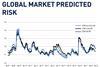
Qontigo Riskwatch – July 2023
*Data as of 31 May 2023. Forecast risk estimate for each index measured by the respective US, World and Emerging Markets Qontigo model variants
-
-
 Features
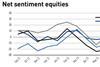
IPE Quest Expectations Indicator: August 2023
Politics is on hold until September. Normally, markets do not care and analysts reduce their activity. A political crisis in the Netherlands shows the danger. There are warnings from all sides that climate measures are ever more urgently needed. Markets need a clearer view of which products govern- ments will support with market-shaping measures and when, especially in the face of a faltering pace towards climate goals. Early signs of problems include a lack of capital for innovative start-ups and the increasingly loud voices of climate change deniers.
-
 Features
ESG comes to money market funds
Environmental, social and governance (ESG) investing has permeated every corner of the asset management universe, and money market funds (MMFs) are no exception. European funds are under much greater scrutiny than their US and UK peers thanks to the Sustainable Finance Disclosure Regulation (SFDR), which came into effect two years ago. The result is that many MMFs are busy changing their classification to meet the higher standards.
-
 Interviews
Vontobel: Builders in a changing landscape
Christel Rendu de Lint, a veteran of Swiss asset and wealth management, sees herself as a builder. This claim has justification given her track record at UBP, where she built a fixed-income capability from scratch to CHF20bn (€20.5bn) over 12 years.
-
 Features
Private equity firms vie for scarce institutional capital
Private equity needs to prove its ability to adapt to a vastly changed investment landscape to remain an attractive asset class for limited partners (LPs) such as pension funds and insurance groups.
-
 Features
Ahead of the curve: The rise of multi-manager models for alternative investing
Fifteen years after the ‘global financial crisis’, multi-manager strategies for alternative investing have not only shaken off their tarnished reputation but have evolved
-
 Features
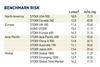
Qontigo Riskwatch – June 2023
*Data as of 28 April 2023. Forecast risk estimate for each index measured by the respective US, World and Emerging Markets Qontigo model variants
-
-
 Features
IPE Quest Expectations Indicator: June 2023
Continued loud bickering between the Wagner Group and the Russian army is protecting Putin from both, worsening the outlook for peace, while there are multiple signs that military supplies are approaching exhaustion. The coalition supporting Ukraine is stronger than ever, showing increasing willingness to provide military aircraft. Yet the offensive expected in February has not started. In the US, Florida governor Ron DeSantis is damaging his position with an unproductive row with Disney, while Trump has moved closer to a prison term. Gas consumption in the EU is falling faster than expected, due to efficiencies like heat pumps, changeover to electricity and solar panels. Macron scored nicely by sponsoring the participation of Zelensky at the Hiroshima G7; Sunak failed to centre political attention on China.
-
 Interviews
LCH: The other side of the mirror
Isabelle Girolami undoubtedly has a strong background in financial services, having worked for a range of very different institutions in very different roles. She was COO at the fixed income division of BNP Paribas, before going on to a similar role at Bear Stearns, the bank that failed early in 2008 and which was subsumed into JP Morgan. Prior to her current role at LCH she was global head of markets at Crédit Agricole.
-
 Features
IPE Quest Expectations Indicator May 2023
Russian air superiority over Ukraine is coming to an end due to lack of equipment. Destroying civilian targets is counterproductive and consumes ammunition. Bakhmut is eating into Russian resources, while Ukraine is being re-armed. History teaches that better technology, rather than numerical superiority, wins wars. But even a lopsided Ukrainian win would not automatically mean peace.
-
 Features
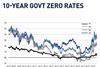
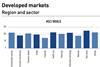
Qontigo Riskwatch – May 2023
*Data as of 31 March 2023. Forecast risk estimate for each index measured by the respective US, World and Emerging Markets Qontigo model variants
-
-
 Features
Ahead of the curve: What happened to equity volatility in 2022 and what next?
Something strange happened last year. Expectations about the future level of volatility in US equities – implied volatility – behaved in a very unusual way. In a falling market, the price of implied volatility normally rises because equity falls are associated with a worsening macroeconomic outlook, implying more market risk. Expectations of future volatility therefore increase.