The chief executive officer of Austria’s Valida Vorsorge Management said he would like to see a pension system implemented similar to the Danish model.
“In the current government coalition […] reforms are more likely than in the last decades,” Martin Sardelic told IPE.
Speaking at a press event on the future of the Austrian pension system, Sadelic confirmed that government plans to revamp the second pillar, including the provident fund system, look promising.
Valida manages Austria’s second-largest pension fund, with €8.2bn in assets under management, alongside a €5.7bn Vorsorgekasse (provident fund).
Last month, Andreas Zakostelsky, head of the pension fund association, confirmed that pension fund experts are scheduled to meet government representatives in the first quarter to finalise details of a proposed second-pillar reform.
“We think the ‘Generalpensionskassenvertrag’ is a good idea, a good first step,” said Philipp Mayer, board member at Valida, referring to government plans to introduce a pension fund to which people can transfer mandatory provident savings upon retirement.
Valida’s 2025 returns averaged 3.75%, below the industry average of 4.88%, while its Vorsorgekasse returned 3.25% versus an industry average of 3.6%.
Looking abroad for reform
Valida representatives highlighted Denmark as a model for pension reform.
“There are international examples that are less expensive for the state but at the same time also better for the pensioners,” said Sardelic.
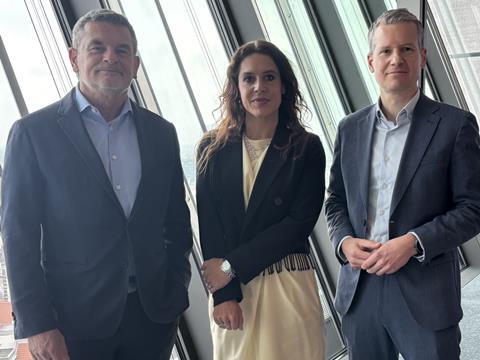
Monika Köppl-Turyna, director at economic research institute EcoAustria, noted that Austria’s pay-as-you-go first pillar consumes heavily: “Every seventh euro of the Austrian economic output is currently going into the pension system,” she said, warning that demographics will reduce contributions over time.
“The system in Austria is generous but fiscally not sustainable.”
For Köppl-Turyna, Denmark “has the best pension system in the world”, combining a strong funded second pillar with a basic first pillar and social benefits for low-income earners.
She added: “The Danish system helps to strengthen retirement provision and reduce wealth inequality. Danish pension funds are also the largest source of financing for the capital market and therefore for Danish companies.”
She drew parallels with Austria’s current situation: “Similarly to Denmark in the 1990s, we see in Austria today an attempt to increase competitiveness – pension funds would be a solution here.”
Asked whether expanding the funded second pillar is feasible amid volatile markets, Sardelic said: “Of course, in Austria we are well behind other countries when it comes to second pillar pensions. But better late than never. Better to do something rather than consciously running into a wall, leaving our children and grandchildren with a burden they never signed up for.”
Köppl-Turyna dismissed concerns that limited financial literacy would hinder reforms: “Once the people are in a funded pension system, they then start to want to know more about the system.”