
Sweden’s AP4 has emerged as the top-performer among the Nordic country’s big-four national pensions buffer funds, after a year when mandatory currency hedging appears to have paid off for the funds.
AP4 and AP3 – the remaining two Stockholm-based buffer funds after AP1 was axed in a major reform at the start of this year – posted 2025 returns of 6.3% and 6.0%, respectively, after costs, beating their Gothenburg-based peer AP2, which earlier this month reported a 4.6% gain for last year.
Meanwhile, the now-defunct AP1 generated a 5.6% return, according to its 2025 report – its final annual report.
Staffan Hansén, AP3’s chief executive officer, said today: “It has been an eventful year in which the fund’s employees delivered excellent results on several fronts at the same time.
“This is also true of navigating the financial markets, where after a weak return in the first half of the year, the fund rebounded strongly in the second half, posting a 6% return.”
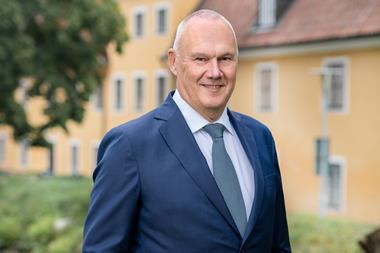
At AP4, CEO Niklas Ekvall commented on Friday that 2025 had been characterised by uncertainty and with the new administration in the US at the centre of events.
“A return of 6.3% after costs is good, given the uncertain and rapidly changing market situation during the year,” he stated.
AP3 said that during the year, the Swedish krona had strengthened significantly, especially against the US dollar.
“This means that the currency hedges the fund has applied have fulfilled their purpose and protected the portfolio,” it said. The fund reported that currency changes had dented its return by -3.4 percentage points in 2025, while AP4 said its return had taken a -3.2 percentage point hit from currency exposure.
By law, the AP funds which are buffer funds for Sweden’s first-pillar income pension may have no more than 40% of their assets exposed to foreign currency. This is in contrast to AP7, Sweden’s largest AP fund, which manages the default option in the defined contribution premium pension system and does not hedge currencies in its equities portfolio.
Last week, AP7 cited the krona’s strength against the dollar as the main negative factor behind its 2025 return, which fell to 4.2% from a buoyant 27.3% the year before for the geared SEK1.5trn (€140bn) pension fund.
The legal requirement for the buffer funds to rein in currency exposure was called into question by consultancy McKinsey in its officially commissioned evaluation of the AP funds in 2023, after a year when potential profits from krona weakness had been missed because of the obligation to hedge.
Following the buffer fund reform, which has seen AP1’s assets divided between AP3 and AP4, and the assets of private equity specialist buffer fund AP6 absorbed by AP2, AP3 and AP4 are almost the same size, according to the annual reports, with total capital of SEK832.8bn and SEK 833.8bn, respectively.
AP2 – once the same size as its Stockholm-based peers – is now clearly the smaller of the three remaining funds with SEK558.5bn to manage.