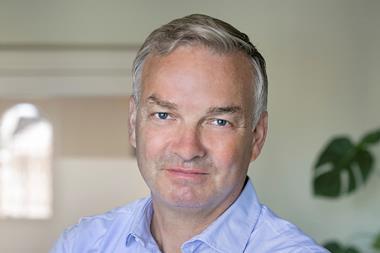
Swedish pension providers must redesign products, advice models and asset allocation frameworks as the system shifts decisively into a payout phase, according to a recent report by consultancy Arkwright.
In a report led by veteran Mats Langensjö on structural changes in the pension market, Arkwright argues that the traditional focus on capital accumulation is no longer sufficient. With 1.3 million Swedes expected to retire over the coming decade and more than SEK1.8trn (€168.5bn) moving into decumulation, providers need to prioritise income stability, risk management and portfolio resilience.
At the core of its recommendations is a shift from product-centric design to outcome-oriented pension solutions. Rather than framing choices as a binary between traditional insurance and unit-linked funds, providers should focus on expected income levels, income stability and how long capital will last.
A central element of Arkwright’s argument concerns lifecycle or generation funds, which account for almost a third of Sweden’s pension capital. While automatic age-based de-risking has become standard, the consultancy claims it often results in overly cautious total portfolios.

Because the public income pension already provides 50–60% of retirement income for many individuals and carries low risk, further mechanical de-risking in premium and occupational pensions can suppress long-term returns.
Arkwright proposes that providers adopt a holistic total-portfolio perspective, assessing risk across all pension components rather than in silos.
In practice, this could mean more flexible glidepaths, delayed de-risking for members planning later retirement, and risk budgets tailored to individual longevity expectations and health status. The aim is to avoid reducing equity exposure at ‘peak capital’, when assets are largest, if doing so materially lowers expected lifetime income.
On the asset side, Arkwright recommends a structurally higher allocation to unlisted assets. Drawing on international experience, the report suggests leading pension institutions target around 20% exposure to private equity, private debt, infrastructure and other private market strategies to meet return targets in a lower-growth environment.
The consultancy argues that value creation is increasingly concentrated in private markets, as high-growth companies remain unlisted for longer. Without meaningful exposure to private assets, pension portfolios risk missing early-stage growth and diversification benefits.
However, integrating illiquid assets into portfolios entering decumulation requires new fund structures. Arkwright calls for improved liquidity planning, cashflow forecasting and governance frameworks to ensure private market allocations do not force sales of listed assets during market stress. It also stresses the need for deeper in-house expertise in transaction execution, legal structuring and operational oversight.
Another proposed shift is away from fee-driven selection towards demonstrable investment quality. After years of price compression, Arkwright argues the decisive differentiator will be sustainable net returns, underpinned by robust governance, repeatable processes and effective risk control.
For pension platforms and selection bodies, this implies more rigorous due diligence on managers’ organisational strength and investment philosophy rather than defaulting to lowest-cost options.
Finally, Arkwright sees scalable, AI-supported advice as critical to implementing these allocation shifts. Automated modelling and scenario analysis could enable providers to personalise withdrawal strategies and dynamic asset mixes, particularly in the five to ten years before retirement.
The report maintains that to remain competitive as the payout phase gathers pace, Swedish providers must adapt allocation frameworks and product design to a maturing market. Collectively, the proposals point to a more individualised, return-oriented and structurally diversified pension system.