
A court has today ruled in favour of the European Commission in two legal challenges over what it defines as ‘green’ under its Taxonomy Regulation.
The regulation lays out which business activities are aligned with the European Union’s environmental objectives, and encourages institutional investors to be transparent about how their portfolios stack up against the framework.
But Austria was unhappy with the Commission’s decision to deem certain nuclear and gas activities as eligible, which it made under pressure from the German and French governments back in 2022.
As a result, the state filed a legal challenge requesting that the delegated act that added nuclear and gas into the Taxonomy Regulation be annulled.
At the same time, for-purpose law firm ClientEarth filed a case against the Commission for allegedly “unlawfully labelling the burning of forest biomass to produce energy, and the manufacture of bio-based plastics and chemicals used to make plastics as ‘sustainable’ in the EU taxonomy”.
The two cases were heard this morning by the General Court of the EU, which ruled against both.
In respect of the case brought by Austria, the court stated that the Commission “was entitled to take the view that nuclear energy generation has near to zero greenhouse gas emissions and that there are currently no technologically and economically feasible low-carbon alternatives at a sufficient scale”.
“The General Court endorses the view that economic activities in the nuclear energy and fossil gas sectors can, under certain conditions, contribute substantially to climate change mitigation and climate change adaptation,” it added.#

Mounting opposition to the EU Omnibus
The rulings come in the midst of a troubled period for sustainable finance lawmaking in the EU.
After the August recess in Brussels, negotiations have just resumed on the ‘omnibus’ initiative – a law that will dramatically pare back the existing Corporate Sustainability Reporting Directive (CSRD) and Corporate Sustainability Due Diligence Directive (CS3D).
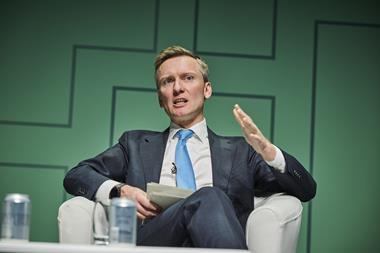
Speaking on a webinar on Tuesday, Mathilde Dufour, the head of sustainability research at French asset manager Mirova, warned against the moves.
“Investors need two things: stability and access to information,” she said, adding that the current omnibus undermined both.
“The feeling we have is that we’re in the middle of a pendulum swing. We went maybe too far in terms of what we can ask [for from companies]. But now the challenge is to avoid swinging back too hard.”
Dufour’s comments echo those made in a statement published last week, signed by 180 institutional investors including Allianz, Nordea and Federated Hermes.
The statement, which was also signed by the Dutch Federation of Pension Funds, argues that CSRD and CS3D must not be ripped apart during the current political negotiations.

Günther Thallinger, former chair of the Net-Zero Asset Owner Alliance (NZAOA) and a board member at Allianz, said the firm “supports simplifying the CSRD and CS3D” but that “it’s important to keep the key rules”.
“These ensure companies provide complete and reliable data for investment decisions and transformative actions,” he said.
“Companies must still have a climate transition plan. Companies must take steps in line with the Paris Agreement’s decarbonisation goals.”
In August, European Central Bank (ECB) chair Christine Lagarde issued a similar warning to members of the European Parliament, ahead of their return to the negotiating table.
“[T]he ongoing legislative process to amend certain corporate sustainability reporting and due diligence requirements has significant implications for the Eurosystem,” she wrote in a letter.“
In particular, the proposed reduction in the scope of undertakings subject to sustainability reporting requirements under the CSRD would limit the availability of firm-level data, thereby weakening the Eurosystem’s ability to perform a granular assessment of climate-related financial risks on its balance sheet and within its collateral framework.”
Read the digital edition of IPE’s latest magazine