
Germany’s second pillar reform will offer international companies the chance to integrate their occupational pension structures within their global benefits strategies, an expert has said.
Coming into effect in January, the reform introduced numerous changes that will impact the architecture, processes and governance of occupational pensions.
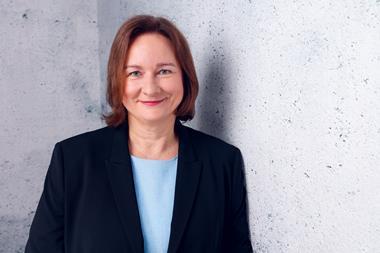
International companies in Germany should, therefore, review their internal processes and occupational pension structures, according to Hanne Borst, head of retirement Germany at consultancy WTW.
“The expansion of subsidies for low-income earners makes it necessary to adjust payroll systems and benefits strategies, if companies intend to use new funding opportunities,” she told IPE.
For multinational companies, the expansion of subsidies creates incentives to integrate company pension schemes more fully as part of their compensation strategy, she added.

Under the new law, corporates with different working models within their global organisations can make use of increasing flexibility in terms of retirement options to better align workforce planning and models for the transition to retirement.
This will, however, require effort from companies in terms of workforce planning, a reassessment of internal guidelines and communication to employees choosing between diverse options for transitioning into retirement, Borst said.
Under the second pillar reform, to support employer-financed company pensions, subsidies for low earners increase from €288 to €360 per year from January 2027, and tax-deductible employers’ contributions from €960 to €1,200 annually.
The reform also introduces a new severance pay option allowing employers to pay out a lump sum with the employee’s consent, but only if the money is used for contributions to the state pension.
The severance pay affects operational processes and requires careful coordination with global governance and compliance structures, Borst said, recommending international corporations to opt for a “two-track” approach.
Pros and cons of pure DC
While the reform limits opt-out mechanisms in companies, it makes it easier to join social partner models that offer defined contribution (DC) plans by waiving collective bargaining agreements, which are often time-consuming and a cause of dispute for representatives of employers and employees.
International companies are showing interest in DC plans under the social partner model, but Borst says the jury is still out for many, despite the clear benefits of DC schemes.
“Many globally operating employers first examine which form of occupational pension scheme is suitable for their company. The social partner model is just one of several options,” she said.
Next year, the labour ministry will assess whether the introduction of the social partner model option has borne fruit and, if not, take further measures.
But German chancellor Friedrich Merz has already announced there will be a “paradigm shift in German pension policy”, with private and company pensions playing a significantly larger role than state pensions in the future.