
A recent project by the Dutch pension fund for retail workers found members across the political spectrum support an increase in impact investing. Pensioenfonds Detailhandel partnered with academics to develop a way to better integrate the beliefs of its members into its strategy.
The results of the project were presented last week by researchers from the Massachusetts Institute of Technology (MIT), Cranfield University, Maastricht University School of Business and Economics, and the University of Amsterdam.
In 2024, nearly 50 members were selected to participate in an in-person assembly, nicknamed a ‘mini public’, in which they were taught about their chosen sustainability and finance topics.
While most participants said they didn’t know whether Pensioenfonds Detailhandel should be doing more or less sustainable investment before the ‘mini-public’, more than 60% opted for the fund increasing its allocation after the event.
Members were split into three categories, based on their investment motives. The biggest group at the start of the experiment was the ‘deontological’ group.
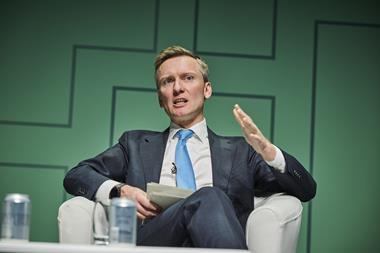
“Those are people that care about not doing something bad, and want to invest for ethical reasons,” explained Bram van der Kroft, a sustainable finance specialist at MIT.
“They’re willing to sacrifice returns, but they do not necessarily care about the impact they make.”
The second group is known as “consequentialist participants”, and they care about the impact they make and are also willing to sacrifice returns to make it.
The third group was composed of members with profit-oriented motives.
“After participants become better informed, you see a big shift in their sustainable investment preferences,” said van der Kroft.
“There’s about a 72% decline in the amount of the deontological investors, the largest share of which becomes consequentialist – so people go from wanting to invest ethically to wanting to have a positive impact.”

Impact investing
At the end of the ‘mini public’, members were asked to develop a shared set of requests for Pensioenfonds Detailhandel’s board.
One “key recommendation” from the group was to increase the fund’s allocation to impact investments.
The board decided it needed broader member support before implementing such a change, because of the potentially lower return profile of impact investments.
The academics consequently developed a ‘maxi public’ or ‘maxi vote’ process, through which they proactively sought input from as many members as possible, via email campaigns, newsletters and employer engagement.
“It’s difficult to say if the preferences of the small group of participants are accepted by the broader group that they represent, and that is exactly what we’re able to test,” said van der Kroft.
“On average, people [participating in the ‘maxi public’] are more right wing, substantially older, more male, have slightly lower income, and are mostly retired participants rather than active participants.”
Two thirds said they voted centre-right or right in recent Dutch elections.
The respondents were asked whether Pensioenfonds Detailhandel should stop its current impact investing efforts, maintain existing levels (1% of the portfolio), or increase them to 2-5%.
They were told that 1% was equivalent to $3 per pension saver, per month.
“The recommendation from the ‘mini public’ was supported by the broader maxi-vote public,” van der Kroft explained. “About 42% of participants voted to expand impact investing.”
The category with the least support was to stop impact investing.
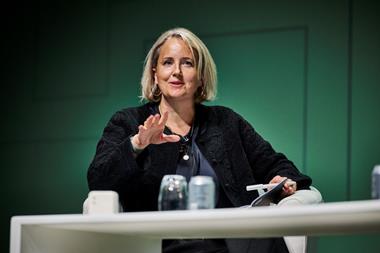
Louise Kranenburg, head of responsible investment at Detailhandel, said that in addition to the increase in the impact allocation to 2-5%, the pension fund’s board had also decided to follow a wider membership vote on geographical preferences and impact themes.
“Members/beneficiaries have expressed a preference in mixing both geographies (making impact closer to home and in emerging markets) and themes (by pursuing both social and environmental impact objectives),” she told IPE in a statement.
“The board is currently working on Pensioenfonds Detailhandel’s impact investment case in line with these preferences, ultimately leading to investment decisions in line with the votes of the members.”