





Extreme heat and rainfall are by far the largest physical climate risks the listed equity portfolios of global pension funds are exposed to, a study by MSCI has found.
Listed companies across the globe risk losing over $1000bn in aggregate revenues per year due to business interruption caused by climate-related events.
For its study, MSCI examined the listed equity portfolios of 18 large asset owners, most of which are pension funds in Europe, North America, Australia and Colombia, with combined assets of more than $4trn. These include the Pension Protection Fund, PensionDanmark, Pensionskasse des Bundes PUBLICA, Universities Superannuation Scheme, Norges Bank Investment Management and Stichting Pensioenfonds ABP, among others.
Having analysed half a million physical assets of over 11,000 companies across the globe, MSCI’s report found that 55% of these companies “face significant and active physical hazards today.”
Moreover, nearly two-thirds of holdings face three or more types of physical hazards, such as heat stress, water scarcity, and flood risk.
MSCI also found that around a quarter of companies’ assets are concentrated in what it calls high-hazard zones that have a relatively high risk of being affected by extreme weather events. Examples of such zones include the US Gulf Coast, coastal China and India.
“When these hubs are hit by multi-hazard events, disruption can propagate outward through supplier tiers and transport nodes,” MSCI noted.
MSCI did not provide a breakdown of the climate risk exposures of the individual asset owners, but noted that some portfolios are much more exposed than others.
“Some portfolios carry as little as 14% exposure, while others shoulder up to 61%,” the index provider said.
Separately, MSCI found that, perhaps counterintuitively, the physical damage caused by climate events, estimated at some €76bn per year globally, is not the most concerning. Only for coastal and pluvial flooding, the majority of expected financial losses concern physical damage to assets.
$1.07trn of revenue loss
For all other climate-related events, including storms, business disruptions caused by lost output, delayed shipments and customer churn can be far greater and have much more material financial consequences, according to the study.
Total expected revenue loss from business interruptions amounts to $1.07trn, according to the research. But, as MSCI warned, the consequences of business interruptions may receive less focus from managers, “especially in companies that have not recently faced a major event or assume insurance provides adequate protection.”
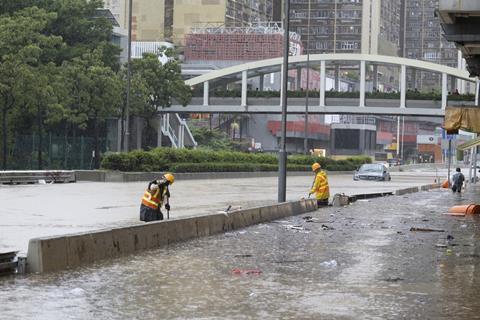
Of all climate-related hazards, extreme heat and extreme rainfall are responsible for most financial damage, with expected annual revenue losses of at least 2.2% and 1.1% for the 10% most impacted companies, and are also most common with over 94% of companies having exposure to both hazards.
River low flow caused by extreme drought is a noteworthy third-biggest hazard, with annual revenue losses of up to 0.75%. Only 2.4% of assets are affected by this risk though, as it is particularly relevant for power-generation companies.
Despite the widespread nature of climate-related risks, only 16% of the most exposed companies disclose integration of physical risk into risk management.
“Country and sector labels routinely understate exposures, while operations, outputs and supply chains span the globe,” according to MSCI. The index provider therefore urges companies to improve “transparency and management of physical risk in portfolios […] to quantify and address these challenges”.
The latest digital edition of IPE’s magazine is now available